Delhi HC directs daily medical monitoring of Sonam Wangchuk amid indefinite hunger strike
Source Entity
India Latest News: Top National Headlines Today & Breaking News | The Hindu
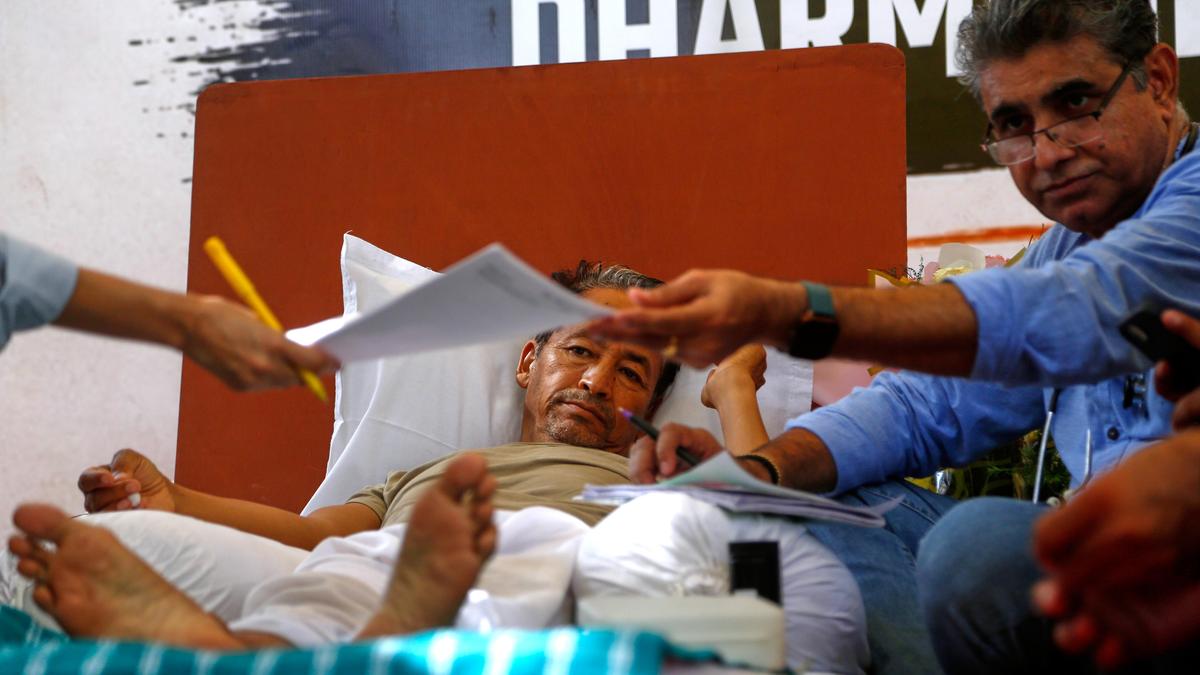
The Delhi High Court has directed that activist Sonam Wangchuk undergo daily medical monitoring during his indefinite hunger strike. This order follows a petition arguing that the government's passivity toward the strike could be legally interpreted as 'abetment of suicide' under Section 108 of the Bharatiya Nyaya Sanhita, 2023.
Judicial Intervention in Civil Disobedience: The Case of Sonam Wangchuk
The Delhi High Court's recent directive for the daily medical monitoring of activist Sonam Wangchuk marks a critical intersection of judicial oversight, human rights, and state accountability. By ordering the government to ensure Wangchuk's health is monitored throughout his indefinite hunger strike, the court has acknowledged the extreme nature of his protest. This intervention is not merely a medical precaution; it is a legal safeguard designed to prevent a potential tragedy that could lead to systemic instability and severe legal liability for the state administration.
The Legal Pivot: Section 108 of the BNS
A pivotal and highly analytical aspect of this case is the invocation of Section 108 of the Bharatiya Nyaya Sanhita (BNS), 2023. The petition's argument—that government inaction could constitute "abetment of suicide"—is a sophisticated legal strategy. By framing the state's role as a "passive spectator," the petitioners are attempting to shift the burden of responsibility. Under the new BNS framework, if the state is found to have intentionally ignored a foreseeable risk of death during a protest, it could potentially be held criminally liable. This forces the government to move from a position of strategic silence to one of active protection, creating a legal imperative for the state to either intervene medically or engage in political negotiations to end the strike.
Contextualizing the Protest: The Ladakh Struggle
To fully understand the gravity of this event, one must consider the motivations of Sonam Wangchuk. An educator and innovator known for his work in Ladakh, Wangchuk has been leading a movement demanding that Ladakh be included in the Sixth Schedule of the Indian Constitution. This constitutional provision would grant the region greater autonomy to protect its fragile high-altitude ecology and indigenous cultural identity. The hunger strike is the culmination of years of perceived neglect following the 2019 reorganization of Jammu and Kashmir, which stripped the region of its special status. Wangchuk's protest is thus a symbolic and physical manifestation of the tension between regional aspirations and central governance.
The Judiciary as a Safeguard
The Delhi High Court's intervention reflects the broader role of the Indian judiciary as a "sentinel on the qui vive." In cases involving hunger strikes, courts often face a paradox: balancing the fundamental right to protest under Article 19 with the fundamental right to life under Article 21. By mandating medical checks, the court is attempting to preserve the individual's life without necessarily suppressing the political expression of the protest. This approach allows the court to maintain a neutral stance on the political demands while fulfilling its primary duty to prevent the loss of human life under state watch.
Broader Implications and Future Trends
Looking forward, this case sets a significant precedent for how the Bharatiya Nyaya Sanhita will be interpreted in the context of civil disobedience. If the courts continue to view state passivity during hunger strikes as potential "abetment," it may compel the Indian government to adopt a more proactive diplomatic approach toward activists. We may see a trend where the state is forced to enter dialogue earlier in the protest cycle to avoid the legal risks associated with a protester's deteriorating health. Conversely, this could lead to more frequent use of preventive detention to move activists away from public view, thereby avoiding the "abetment" trap entirely.
Conclusion
In summary, the Delhi High Court's order is a vital check on state indifference. While the daily medical monitoring ensures the physical survival of Sonam Wangchuk, it does not resolve the underlying political crisis in Ladakh. The resolution of this standoff will ultimately depend on whether the government views the legal pressure from the judiciary as a catalyst for meaningful political dialogue or simply as a procedural hurdle to be managed through medical compliance.
Verification Required?