Delhi-Meerut RRTS: From 47,000 to nearly a lakh, daily ridership doubles in a year
Source Entity
Devansh Mittal
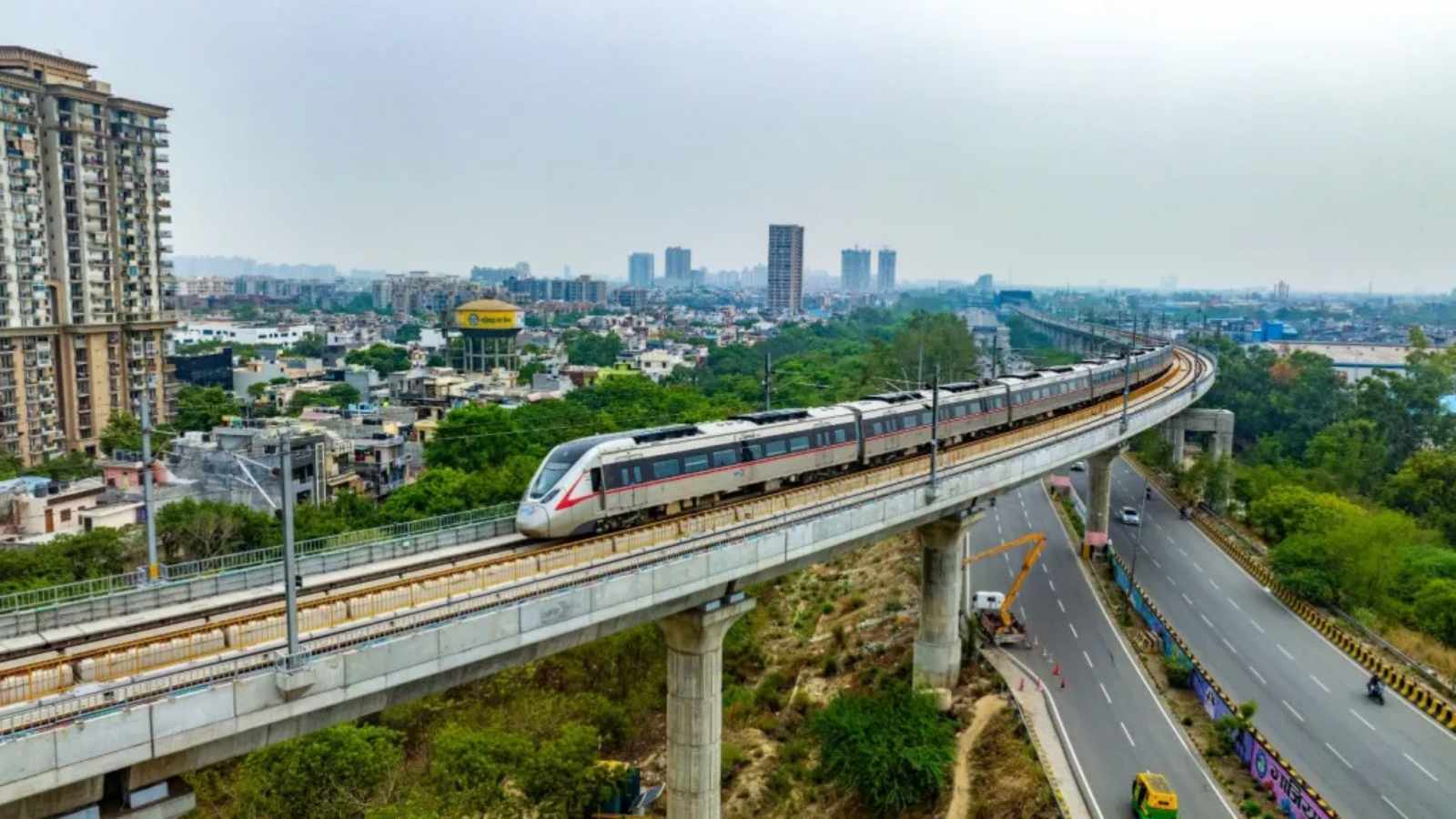
The Delhi-Meerut Namo Bharat rapid rail corridor has seen daily ridership nearly double in one year, reaching over 94,000 passengers by July 2026. This surge follows the completion of the full 82-km line, significantly enhancing connectivity for commuters.
The Rapid Transformation of Delhi-NCR Transit
The Delhi-Meerut Namo Bharat corridor has emerged as a transformative force in regional connectivity, with ridership figures demonstrating a dramatic shift in commuter behavior. Between July 2025 and July 2026, the average daily ridership on the rapid rail network surged from 47,745 to 94,936 passengers. This near-doubling of usage highlights the growing reliance on high-speed regional transit as a viable alternative to traditional road-based commuting between the National Capital and the peripheral satellite city of Meerut.
Operational Milestones and Accessibility
This growth trajectory is intrinsically linked to the corridor's phased completion. While initial operations commenced on a modest 17-km stretch between Sahibabad and Duhai Depot in October 2023, the subsequent full operationalization of the entire 82-km corridor in February 2026 served as a pivotal catalyst. By providing a seamless, high-speed link across the entire length, the system transitioned from a local novelty into a critical backbone for regional logistics and human mobility.
Redefining the Commuter Experience
For residents like Shweta Sharma and her son, who commutes from Partapur to Kalkaji, the Namo Bharat service has effectively erased the traditional geographic barriers between Meerut and Delhi. By integrating the rapid rail with the Delhi Metro network, students and professionals can now traverse significant distances—reaching institutions like JIMS Kalkaji by 10 am—with a level of reliability previously unavailable. The sentiment that traveling via this corridor is "as good as staying in Delhi" underscores the project's success in shrinking the perceived distance between these two urban hubs.
Socio-Economic Implications
The ability to commute from Meerut to Delhi in a timeframe that supports a standard academic or professional day is fundamentally altering the regional labor market. As the system becomes more deeply embedded in the daily routines of thousands, it acts as a decentralizing force for the National Capital Region. By enabling residents to live in more affordable peripheral areas while maintaining access to the capital's educational and economic opportunities, the corridor is facilitating a more balanced distribution of urban growth.
Future Trends and Sustainability
Looking ahead, the success of the Delhi-Meerut corridor suggests that future infrastructure projects will likely prioritize these high-speed, multi-modal integration models. The transition from partial to full operational status has clearly unlocked latent demand, suggesting that as urban sprawl continues, the reliance on such rapid transit will only intensify. The project serves as a blueprint for future regional transit systems, proving that high-speed connectivity can effectively mitigate the congestion and housing pressures typically associated with rapid urban expansion.