How Gurugram plans to fight waterlogging menace after children get stuck in buses
Source Entity
Abhimanyu Hazarika
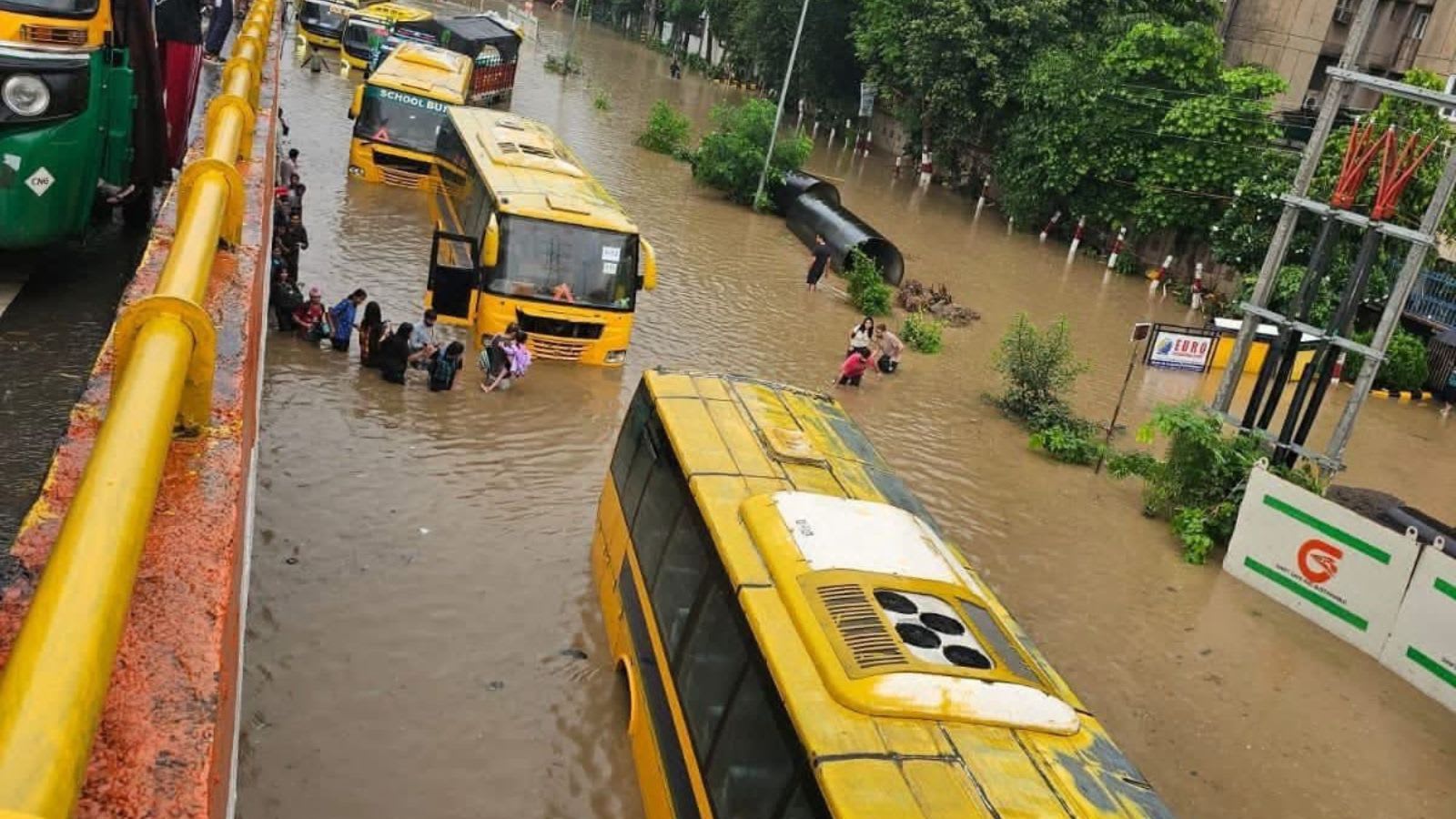
Heavy rainfall in Delhi-NCR has caused severe waterlogging, forcing authorities to mandate remote work and online schooling. The recurring infrastructure failures have sparked public outrage among residents and business leaders over the state of civic services.
Infrastructure Crisis in Delhi-NCR: A Recurring Monsoon Failure
The recent deluge in Delhi-NCR has once again exposed the fragile state of urban infrastructure in the region. Following intense rainfall on Monday and Tuesday, the district administration was compelled to issue a work-from-home advisory for private offices and shift schools to online learning modes. This reactive measure highlights a systemic inability to manage the monsoon season, as residents grapple with widespread waterlogging and paralyzing traffic snarls that have brought the capital to a standstill.
The Human and Economic Toll
Beyond the logistical disruptions, the human cost has been significant. Reports indicate that at least 12 school buses were stranded near Subhash Chowk for over two hours, forcing parents and children to navigate knee-deep water. Such incidents represent a severe safety hazard, compounded by concerns over exposed electrical infrastructure. The economic impact is equally concerning; as businesses are forced into remote operations, the productivity loss and the disruption to daily commerce underscore the vulnerability of the region's urban planning to even moderate weather events.
Public Frustration and the 'Venice' Critique
Social media has become a primary outlet for the growing discontent among residents and the business community. Dr. Shivin Chaudhary, a Gurgaon-based founder, recently captured the public sentiment by sharing footage of flooded streets, sarcastically labeling the experience as the 'Venice experience.' His critique touches on a fundamental point of contention: the disconnect between the taxes paid by citizens and the quality of civic services provided. The suggestion that such conditions could drive entrepreneurs to look abroad reflects a broader, long-term risk to the city’s reputation as a business hub.
Systemic Governance Failures
This week’s flooding is not an isolated incident, as residents faced similar conditions just weeks earlier. This pattern suggests that despite the efforts of civic agencies to focus on drainage clearing and road restoration after the fact, the underlying infrastructure is fundamentally ill-equipped to handle the volume of rainfall experienced by a rapidly expanding metropolis. The reliance on 'urgent' restoration work rather than proactive, long-term drainage engineering remains the primary point of failure.
Future Trends and Outlook
Looking ahead, the recurring nature of these floods poses a critical challenge for urban planners in Delhi-NCR. If the current trajectory of rapid urbanization continues without a proportional upgrade to water management systems, the region risks further economic stagnation and social unrest. Future trends likely point toward a permanent shift in how corporate entities perceive the safety and reliability of operating in the region, potentially leading to a decentralization of offices if infrastructure stability cannot be guaranteed during the monsoon months.
Multiple Citing Sources