Protesters were 'unruly, aggressive and violent': Delhi Police on CJP protest
Source Entity
Latest News: Today's Latest News Headlines from India & World | Hindustan Times | Hindustan Times
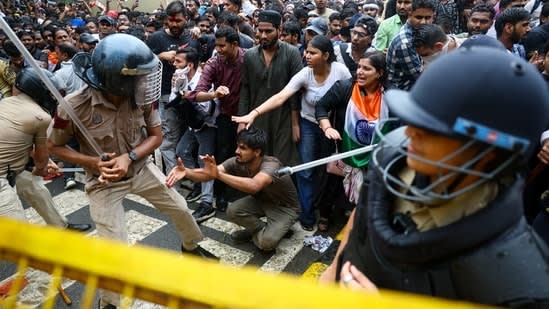
A massive protest march in Delhi led by the CJP ended in violent clashes between demonstrators and police, resulting in hundreds of injuries. The unrest, fueled by demands for the Education Minister's resignation, saw Sonam Wangchuk moved to a hospital by authorities.
The Delhi Protest Crisis: A Breakdown of Recent Unrest
Escalation on Parliament Street
On a tumultuous afternoon in the heart of Delhi, what began as a protest march organized by the CJP transformed into a site of significant civil unrest. Thousands of demonstrators gathered near Parliament Street with the primary demand for the resignation of Education Minister Dharmendra Pradhan. The atmosphere, initially defined by slogans and collective action, quickly deteriorated as police forces intervened, leading to a chaotic scene characterized by the sound of ambulance sirens, teargas deployment, and widespread physical confrontation.
The Role of Public Spaces as Refuges
As the situation escalated, the iconic Gurdwara Bangla Sahib became an unexpected sanctuary for hundreds of protesters fleeing the violence. The imagery of individuals clutching handkerchiefs to protect themselves from teargas and carrying placards in support of Sonam Wangchuk highlights the desperation of the crowd. This incident underscores the precarious nature of public protests in urban centers, where religious and civic landmarks often serve as the final line of defense for demonstrators seeking to escape police lathi-charges.
Conflicting Perspectives on Accountability
The aftermath of the march has sparked a sharp divide in narratives regarding responsibility. The Delhi Police have reported that over 118 personnel, including senior officers, sustained injuries due to what they describe as "large-scale violence" and the use of stones by protesters. Conversely, protesters have voiced deep distress over the treatment of participants, with reports of parents witnessing their children being injured during the melee. The physical toll is significant on both sides, with approximately 60 protesters also documented as injured.
The Legal and Political Implications
Authorities have defended their actions by citing the violation of prohibitory orders and the destruction of public property. The Delhi Police statement emphasizes that the crowd's "unruly and aggressive" behavior necessitated a firm response to protect government vehicles and infrastructure. This legal framing sets the stage for potential future arrests and a tightening of protest regulations in the capital, as the state attempts to manage civil disobedience that threatens public order.
The Status of Key Figures
Central to the protest movement is the figure of Sonam Wangchuk, whose presence served as a rallying point for the demonstrators. Following the intensification of the clashes, reports confirmed that the Delhi Police shifted Wangchuk to Safdarjung Hospital. The removal of such a high-profile figure from the protest site marks a critical turning point in the movement's trajectory, likely influencing the morale and future strategic decisions of the CJP and its supporters.
Looking Ahead: The Future of the Movement
As the dust settles, the core demands of the protest—specifically the resignation of the Education Minister—remain unaddressed. The combination of state-enforced order and persistent public dissent suggests a period of prolonged political friction. Future trends likely point toward increased scrutiny of how Delhi manages large-scale demonstrations, with the events of this Monday serving as a stark reminder of the volatility inherent in current political grievances.
Multiple Citing Sources
Verification Required?