Bengaluru rallies behind Delhi student protest, demand resignation of Dharmendra Pradhan
Source Entity
India Latest News: Top National Headlines Today & Breaking News | The Hindu
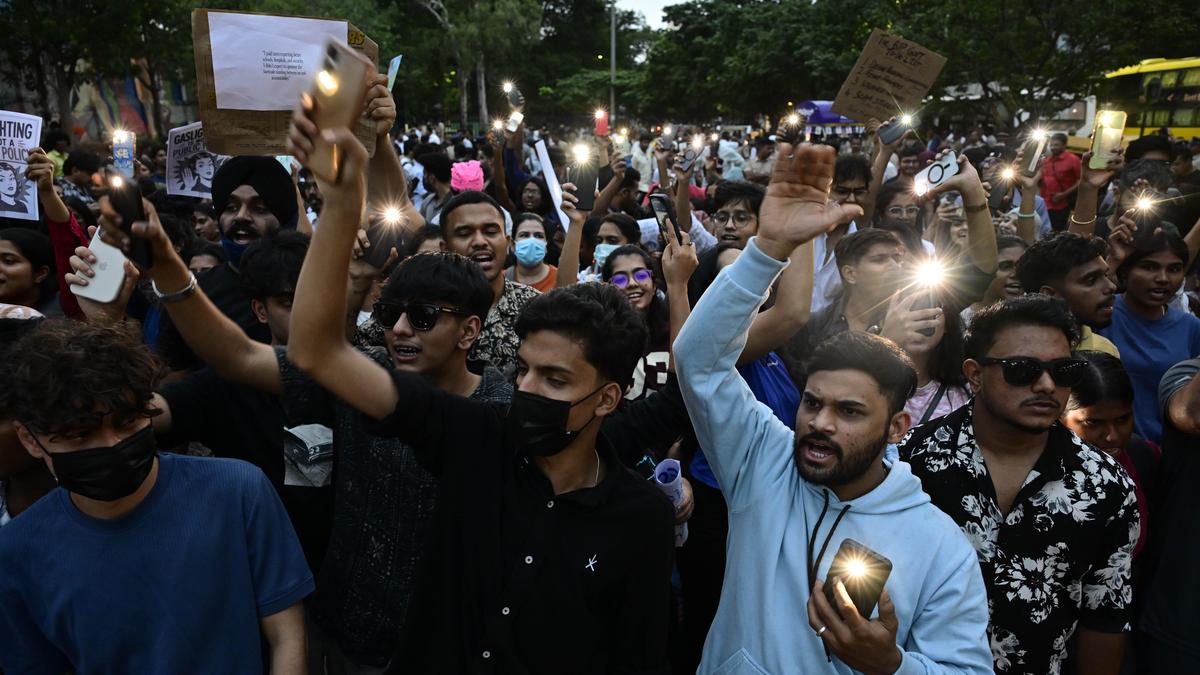
The Monsoon Session of Parliament faced immediate disruptions on its first day due to massive protests over the NEET paper leak and Ram Temple donation theft. While police utilized force to contain demonstrators in New Delhi, legislative business remained stalled, save for a bill to increase Supreme Court judges.
Parliamentary Standoff: Monsoon Session Begins in Chaos
The Monsoon Session of Parliament commenced on July 20, 2026, under a cloud of intense political volatility. The proceedings, intended to address the nation's legislative agenda, were effectively paralyzed on the very first day. The Lok Sabha and Rajya Sabha saw repeated adjournments as a unified Opposition, including members from the Congress, Samajwadi Party, and Trinamool Congress, stormed into the Well of the House. This collective action signifies a deepening rift between the government and the Opposition regarding executive accountability.
The Core Catalysts: NEET and Ayodhya
The primary drivers of this legislative gridlock were the alleged NEET paper leak and the reported theft of donations at the Ayodhya Ram Temple. The NEET controversy, in particular, has become a focal point of public ire, with the Opposition demanding the resignation of Union Education Minister Dharmendra Pradhan. By linking the systemic failure of examination integrity with the security concerns regarding the Ram Temple, the Opposition is attempting to frame the current administration as being unable to safeguard both the future of Indian youth and the sanctity of religious institutions.
Street Protests and Security Response
Beyond the chambers of Parliament, the heart of Lutyens’s Delhi witnessed unprecedented scenes of civil unrest. Estimates suggest that over 50,000 protesters, led primarily by the Cockroach Janta Party (CJP), engaged in a direct confrontation with security forces. The intensity of the protests—characterized by the breaking of barricades across major arteries like Ashoka Road and Janpath—necessitated a heavy-handed response, including the use of lathicharge, tear gas, and water cannons. This street-level friction highlights the extreme social pressure mounting against the government.
Legislative Stagnation vs. Judicial Expansion
Amidst the chaos, the government managed a singular, albeit significant, legislative act. Union Law Minister Arjun Ram Meghwal introduced a Bill aimed at replacing an existing Ordinance that increases the strength of the Supreme Court of India from 34 to 38 judges. This move reflects the government's attempt to address the judiciary's capacity to handle mounting caseloads, yet the timing of its introduction in a disrupted session underscores the difficulty the government faces in passing substantive legislation without consensus.
Shifting Alliances and Future Outlook
The session also highlighted internal political complexities, such as the DMK’s decision to raise the specific issue of the Mekedatu project while simultaneously distancing itself from Congress-led meetings. Furthermore, the visual spectacle of changed seating arrangements for rebel Trinamool Congress MPs indicates that the session is as much about internal party management as it is about national policy. As the session progresses, the government will likely face continued pressure to address the NEET crisis, failing which the legislative calendar for the monsoon period risks being entirely compromised.
Concluding Summary
The first day of the Monsoon Session serves as a microcosm of the current Indian political landscape: a mix of high-stakes public protests, intense parliamentary confrontation, and a government struggling to maintain a narrative of normalcy. Unless the administration finds a way to address the specific demands regarding examination irregularities and security lapses, the upcoming days are likely to witness further disruptions, potentially stalling critical national reforms and judicial expansion efforts.
Multiple Citing Sources
Verification Required?