AIIMS doctors appeal to President over inquiry into events at Jantar Mantar, Wangchuk's hospitalisation
Source Entity
India Latest News: Top National Headlines Today & Breaking News | The Hindu
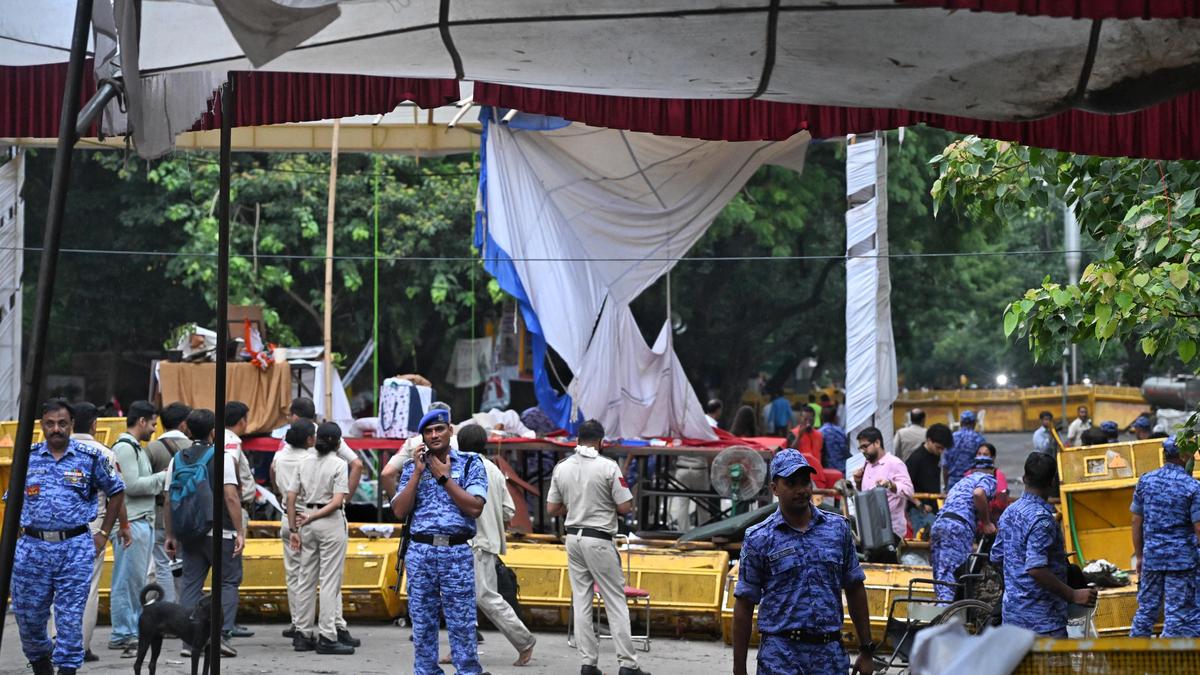
A CJP-led protest march in Delhi demanding the resignation of Education Minister Dharmendra Pradhan descended into violence, resulting in injuries to over 118 police personnel and numerous protesters. Sonam Wangchuk was removed from the site by authorities and shifted to Safdarjung Hospital amid the chaos.
Turmoil on Parliament Street: A Clash of Perspectives
The political landscape in Delhi witnessed a significant escalation on Monday as a march organized under the banner of the CJP (Climate and Justice Protest/March) turned into a scene of widespread chaos. Thousands of demonstrators gathered to voice their demands for the resignation of Union Education Minister Dharmendra Pradhan. The atmosphere, initially characterized by slogans and political fervor, rapidly deteriorated into a confrontation between protesters and law enforcement, centered around the iconic Parliament Street.
The Human Cost and the Search for Refuge
As the situation intensified, the area surrounding the historic Gurdwara Bangla Sahib became a critical refuge for those caught in the crossfire. Reports describe a harrowing scene where protesters, struggling against the effects of teargas and fleeing police lathi-charges, sought sanctuary within the gurdwara walls. The emotional toll was palpable, with witnesses recounting scenes of mothers devastated by the injuries sustained by their children, framing the event as a direct assault on the citizenry. This highlights the deep polarization and the intense emotional stakes driving the demonstrators.
Conflicting Accounts of Violence
Contradictory narratives have emerged regarding the origins of the violence. The Delhi Police have issued a formal statement asserting that the protesters engaged in "large-scale violence," claiming that over 118 police personnel—including senior officers—were injured by stones and projectiles. Furthermore, officials allege that the crowd ignored prohibitory orders, vandalized government property, and posed a serious threat to public order. Conversely, protesters maintain that they were the victims of unprovoked police aggression, necessitating their retreat into nearby religious sites for safety.
The Removal of Sonam Wangchuk
Central to the day's events was the role of activist Sonam Wangchuk, who was a key figure in the demonstration. During the height of the scuffle, police intervened to remove Wangchuk from the protest site, ultimately shifting him to Safdarjung Hospital. While the specific reasons for his removal and his current status remain part of the broader administrative and legal scrutiny following the march, his departure marked a turning point in the day’s activities.
Broader Implications and Future Trends
This event underscores a growing trend of civil unrest in the capital, where demands for administrative accountability are increasingly met with heavy-handed law enforcement responses. The scale of the injuries on both sides suggests that the gap between civil society groups and the government is widening. Moving forward, the incident is likely to spark intense debates regarding the right to protest in high-security zones and the appropriate use of force by the state. As the legal fallout from the detentions and injuries unfolds, the central government will face mounting pressure to address the specific grievances regarding the Education Minister, while simultaneously managing the fallout from the violent suppression of the march.
Multiple Citing Sources
Verification Required?