Delhi BJP leader burns cockroach effigy; Dipke responds with SRK’s 'Swades' song
Source Entity
VIJAYA SRIVASTAVA
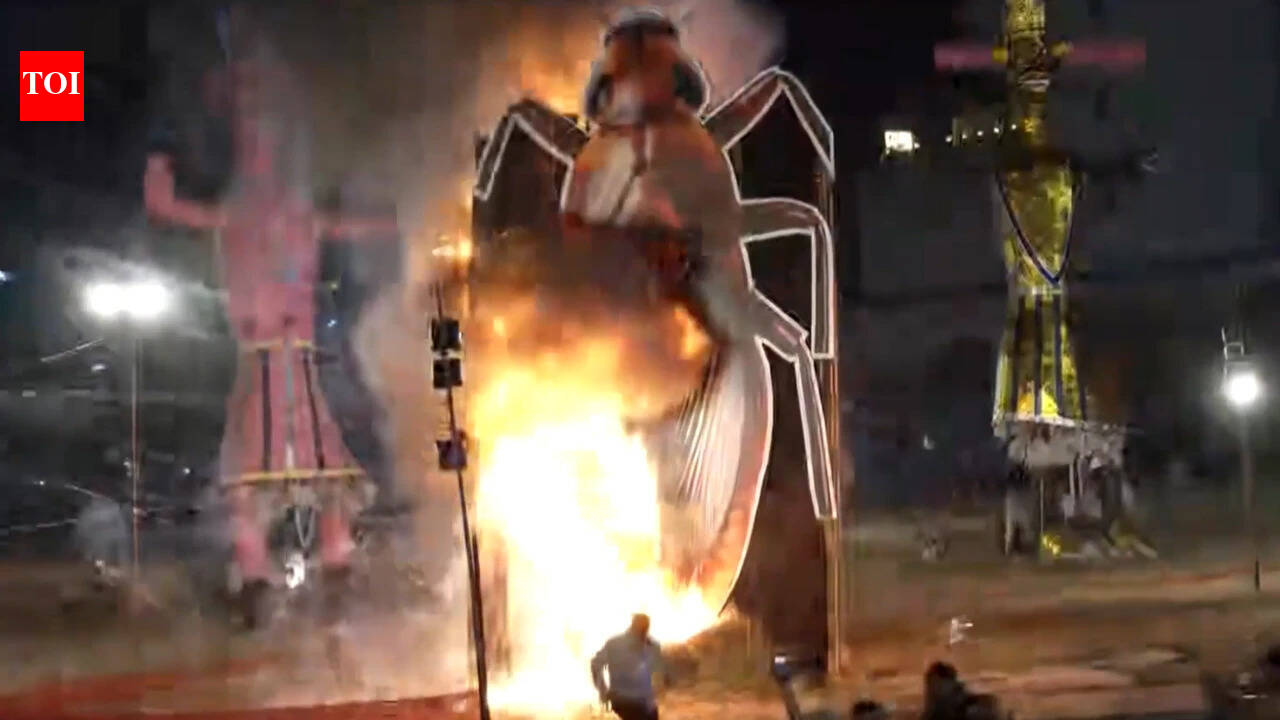
The Shree Keshav Ramlila Committee in Delhi is set to burn a 30-foot cockroach effigy to promote cleanliness campaigns. This has triggered a response from the Cockroach Janata Party (CJP), which claims the act serves as free publicity for their cause.
The Intersection of Satire and Tradition in Delhi's Ramlila
In a unique convergence of traditional cultural festivities and modern political satire, the Shree Keshav Ramlila Committee in Pitampura, Delhi, has announced plans to burn a 30-foot cockroach effigy. This unconventional addition to the annual Dussehra celebrations—traditionally reserved for the effigies of Ravana, Meghnad, and Kumbhakaran—is intended to serve as a symbolic representation of filth and dirt. According to the organizers, the act is explicitly tied to the national and regional cleanliness drives known as the Swachh Bharat and Swachh Delhi campaigns.
The Cockroach Janata Party's Strategic Response
The announcement has inadvertently thrust the Cockroach Janata Party (CJP), a political entity founded by Abhijeet Dipke in May 2026, into the spotlight. Following the circulation of a video showcasing the giant effigy at the Netaji Subhash Place (NSP) grounds, Dipke took to social media to thank the committee for what he termed "free publicity." This reaction highlights the CJP’s tactical approach to political messaging, where they appear to leverage public events to amplify their brand presence.
Organizational Intentions vs. Political Perception
While the CJP and its legal head, Ratna Singh, have characterized the event as a "tamasha" or drama, the organizers remain firm on their stated objectives. Committee president and BJP MLA Ashok Goel has publicly maintained that the inclusion of the cockroach effigy is an initiative aimed at social hygiene awareness rather than a politically motivated jab at any specific organization. This assertion attempts to decouple the symbolic act from the ongoing protests and activities of the CJP.
Broader Implications for Public Discourse
This incident underscores the evolving nature of public demonstrations in the capital. By integrating modern social issues—such as urban sanitation—into centuries-old religious traditions, the Ramlila committee is attempting to use the massive public platform of the festival to influence civic behavior. However, the presence of a political party whose name directly mirrors the symbol being burned creates an unavoidable layer of political friction.
Future Trends in Satirical Political Engagement
As political groups continue to explore non-traditional avenues for exposure, we are likely to see more instances where public festivals and political agendas intersect. The CJP’s ability to pivot a localized environmental symbol into a moment of brand recognition suggests a growing trend of "guerilla" political marketing. Whether such symbols will continue to be viewed as harmless civic reminders or as lightning rods for political controversy remains to be seen as the capital prepares for this year's Dussehra observances.
Multiple Citing Sources