Vice-President calls for stronger Centre-State coordination for legal reforms
Source Entity
India Latest News: Top National Headlines Today & Breaking News | The Hindu
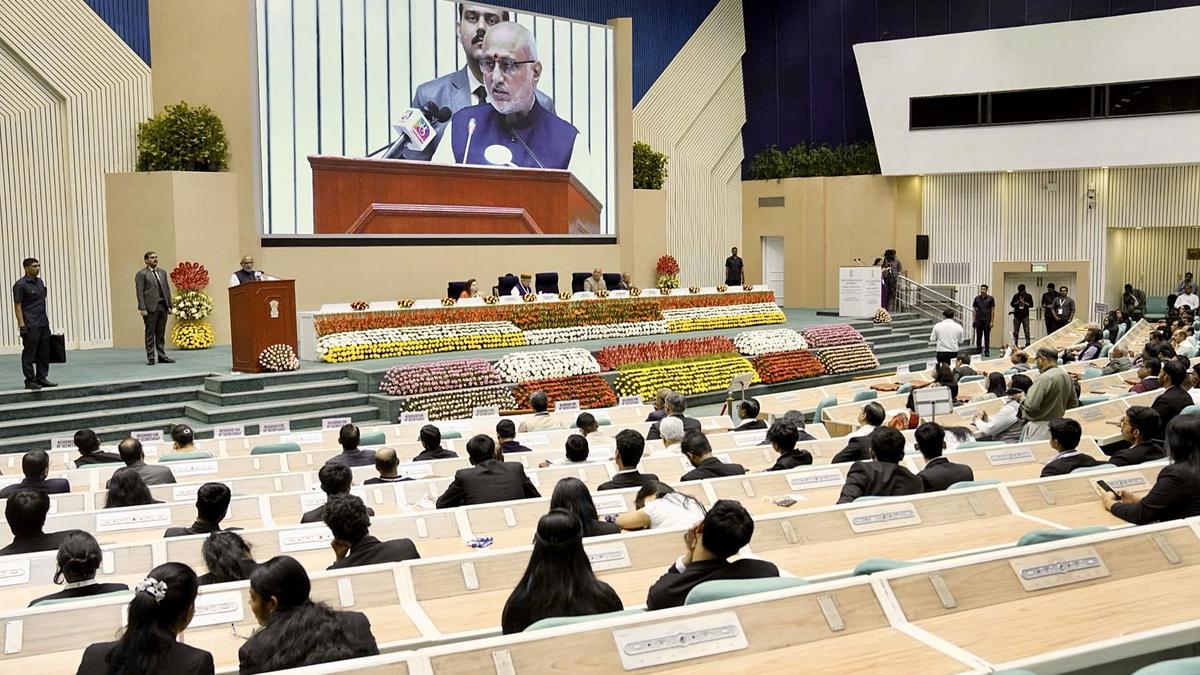
Vice-President C.P. Radhakrishnan has called for enhanced Centre-State cooperation to repeal outdated laws and streamline governance. He emphasized that cooperative federalism requires balancing national standards with the flexibility to address state-specific needs.
Strengthening Governance Through Cooperative Federalism
On October 22, 2026, Vice-President C.P. Radhakrishnan addressed the conference on ‘Cooperative Federalism and Law Reforms: National and State Perspectives,’ hosted by the Law Commission of India. His call for a systematic review and repeal of archaic legislation marks a significant push toward modernizing India’s legal framework. By urging states to identify and remove obsolete laws, the Vice-President is highlighting a critical barrier to the 'ease of living' initiative, which seeks to reduce bureaucratic hurdles that often stem from colonial-era or redundant statutes.
The Essence of Cooperative Federalism
Central to the Vice-President’s message is a nuanced understanding of 'cooperative federalism.' Mr. Radhakrishnan clarified that this concept should not be mistaken for forced uniformity. Instead, he argued that states must retain the legislative flexibility necessary to address their unique socio-economic and regional requirements. This distinction is vital for a country as diverse as India, where a one-size-fits-all approach to lawmaking often fails to account for local complexities.
Prioritizing Public Interest Over Politics
One of the most poignant aspects of the Vice-President's address was his firm stance on the separation of governance from political friction. He explicitly stated that political differences between the Centre and the States should never impede the progress of public interest. This appeal serves as a reminder that the ultimate purpose of the law is to ensure a secure, just, and dignified life for every citizen, rather than serving as a tool for political posturing.
The Role of Coordination and Consultation
Legal reform in a federal structure is inherently collaborative. Mr. Radhakrishnan highlighted that effective governance relies on a foundation of consultation, coordination, and shared responsibility. By bringing together perspectives from both national and state levels, the Law Commission of India is facilitating a dialogue that is essential for harmonizing the legal ecosystem. This collaborative spirit is intended to bridge the gap between central policy objectives and ground-level implementation.
Future Trends in Legal Reform
Looking ahead, this push for reform suggests a shift toward a more dynamic and responsive legislative environment. As the legal landscape evolves to keep pace with changing times, we can expect a greater emphasis on digital-first governance and the simplification of compliance requirements. The Vice-President’s emphasis on periodic review cycles for laws suggests that India is moving toward a more iterative legislative process, where statutes are frequently assessed for their relevance in a modern, technological, and globalized society.
Conclusion
In summary, Vice-President C.P. Radhakrishnan’s address underscores a vital pathway for India's administrative evolution. By advocating for the removal of outdated laws while upholding the autonomy of states, he has provided a roadmap for a more agile and citizen-centric governance model. Moving forward, the success of these reforms will depend on the sustained commitment of both Central and State governments to prioritize collaborative policy-making over partisan interests.
Verification Required?