I built an AI Tamagotchi before Meta could
Source Entity
Sean Hollister
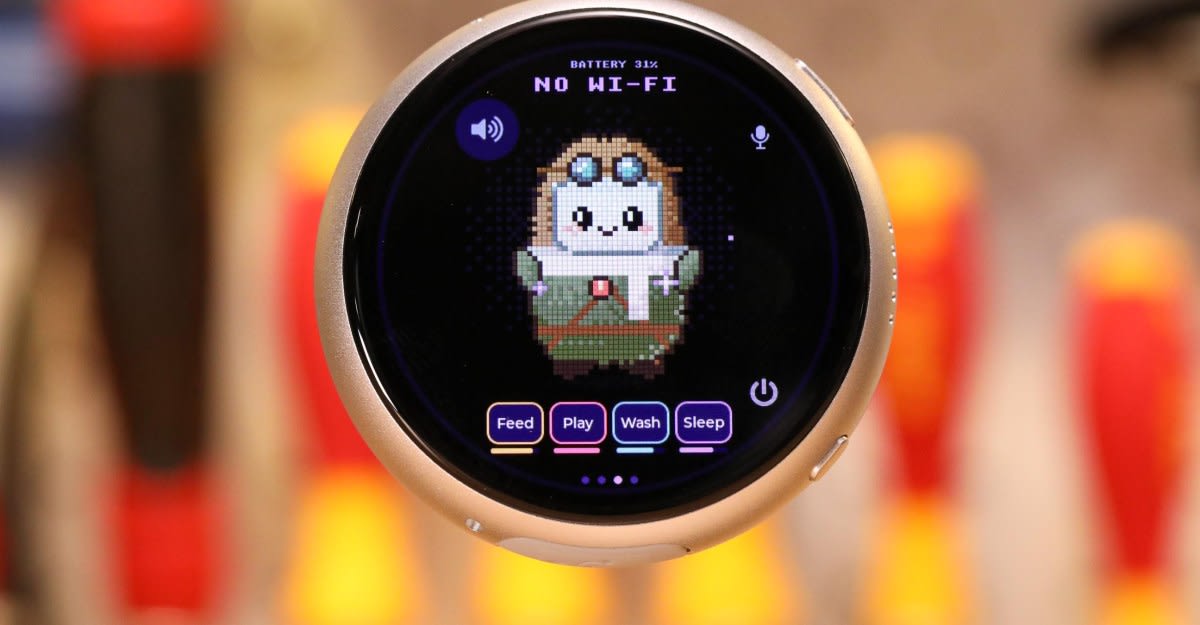
A tech editor DIY-engineered a personal AI companion device to mimic Meta's Muse Charm for a fraction of the cost. This project highlights the growing trend of consumer-grade AI hardware and the DIY community's response to big tech wearables.
The Rise of DIY AI Companions
As Meta prepares to roll out its 'Muse Charm'—a wearable AI device designed to bring artificial intelligence into the physical realm via a Tamagotchi-like interface—the tech community is responding with a wave of grassroots innovation. By prioritizing aesthetic appeal and a 'squishy' user interface, Meta aims to normalize AI as a constant, friendly companion. However, for many tech enthusiasts, this commercial push has sparked a trend of DIY alternatives that challenge the necessity of high-priced, proprietary hardware.
Challenging the Commercial Narrative
The core of this debate lies in the accessibility and necessity of AI-integrated wearables. While Meta’s Muse Charm leverages 5G connectivity and integrated cameras to provide a seamless user experience, independent developers are proving that the essential functionality of these devices can be replicated for as little as $50. By building 'home-grown' versions, enthusiasts are bypassing the premium costs associated with branded tech, focusing instead on the functional core of AI interaction.
Functionality vs. Form Factor
These DIY projects, while lacking the polished cellular radios and sophisticated camera arrays of Meta’s offering, successfully integrate key features such as conversational AI, custom avatars, and smart home control. The use of 'vibe code'—a colloquial term for the custom scripting and API integration required to make these disparate parts communicate—highlights the technical ingenuity required to bridge the gap between off-the-shelf components and a cohesive, functional AI assistant.
The Historical Context of Digital Pets
The comparison to the original Tamagotchi is not merely aesthetic; it taps into a deep-seated cultural nostalgia for pocket-sized companions. By framing AI as a digital pet, Meta and its DIY rivals are attempting to lower the barrier to entry for complex technology. This emotional framing transforms AI from an abstract, daunting utility into a manageable, tactile experience that fits in a pocket, effectively gamifying the interaction with LLMs.
Broader Implications for Tech Sovereignty
This movement signifies a broader shift toward 'technological sovereignty' among power users. When a $50 DIY device can theoretically perform similar functions to a proprietary gadget costing significantly more, it raises questions about the value proposition of big tech hardware. If consumers can build their own AI interfaces, the incentive to buy into closed, monitored ecosystems diminishes, potentially forcing companies to justify their hardware pricing through better privacy standards or unique software ecosystems rather than just the novelty of the AI itself.
Future Trends in Wearable AI
Looking ahead, we can expect a tug-of-war between polished, proprietary devices and modular, open-source alternatives. While the average consumer may prefer the 'plug-and-play' convenience of a Muse Charm, the existence of successful DIY projects ensures that the market remains competitive. This trend suggests that the future of AI wearables will not be defined solely by the tech giants, but by the community-driven innovations that push the boundaries of what is possible with accessible hardware.