Drought-stricken Beed: Land of parched fields and broken promises
Source Entity
India Latest News: Top National Headlines Today & Breaking News | The Hindu
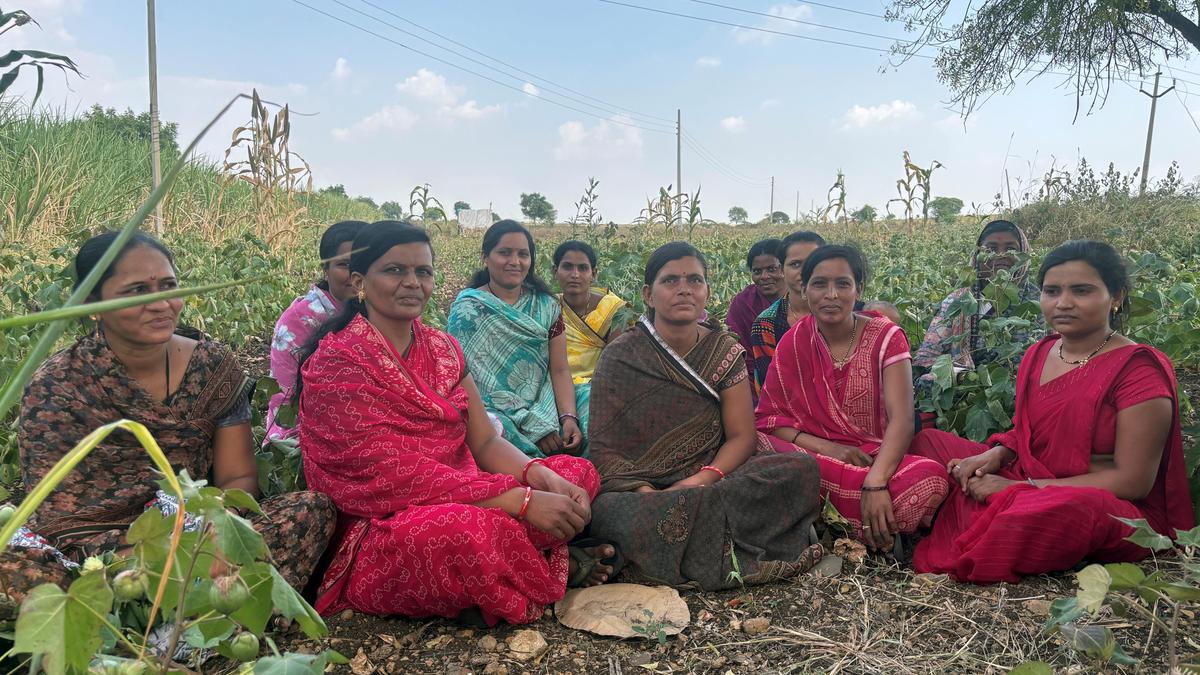
The Beed district in Maharashtra is facing a severe agricultural crisis due to drought, leaving farmers like Vanita Chauhan with failed harvests. Despite a promised government relief package of ₹6,728 crore, villagers report a lack of effective employment and support.
The Parched Reality of Beed
The Beed district in Maharashtra has become a stark symbol of the escalating agrarian crisis in India. In fields across Majalgaon, the promise of a bountiful cotton harvest has been replaced by the grim reality of stunted plants and empty bolls. For families like the Chauhans, who rely on their four-acre plots for survival, the absence of rain has turned the season of harvest into a desperate search for whatever little remains of their crop, highlighting the fragility of rain-fed agriculture in the region.
The Human Cost of Climate Stress
The visual of Vanita Chauhan, laboring under an unforgiving October sun with improvised protective gear, underscores the physical toll of this drought. Her experience reflects a broader trend of distress among women farmers and laborers who are forced to adapt to increasingly hostile climatic conditions. As the environment becomes less hospitable, the lack of viable yields forces these families into a cycle of poverty, where even the basic act of harvesting becomes a struggle for survival rather than a celebration of labor.
Failed Guarantees and Administrative Gaps
While the state government has announced a relief package totaling ₹6,728 crore, the disconnect between policy and ground reality remains profound. Villagers in Beed report that government-mandated job guarantees are failing to provide the promised safety net. This administrative vacuum is not merely a bureaucratic failure; it is a catalyst for distress migration, as families are forced to abandon their ancestral lands to seek work in urban centers, further destabilizing the rural economy.
Structural Vulnerabilities in Agriculture
The situation in Beed highlights the inherent risks of relying on traditional farming practices in an era of unpredictable climate patterns. Cotton, a thirsty crop, is particularly susceptible to the erratic rainfall cycles that have plagued Maharashtra. When the rains fail, the financial burden on farmers—compounded by the costs of seeds, fertilizers, and labor—often leads to a debt trap that local government interventions have struggled to mitigate effectively.
The Path Forward and Future Implications
For Beed to recover, the response must move beyond periodic financial packages toward sustainable water management and crop diversification. The current failure of job schemes suggests that local implementation requires more transparent and direct oversight to ensure funds reach those most affected by the drought. Without structural reform, the region risks losing a generation of farmers to migration, permanently altering the agricultural landscape of the district.
Conclusion
The plight of the Chauhan family serves as a microcosm of a larger systemic failure. As climate change continues to exacerbate drought conditions, the gap between government promises and the reality on the ground in Beed must be bridged. True recovery for the district requires a holistic approach that integrates climate-resilient farming, reliable employment, and long-term socio-economic support to prevent the further erosion of rural livelihoods.
Verification Required?