Why early humans avoided Arabian desert interiors despite ancient lakes
Source Entity
TOI SCIENCE DESK
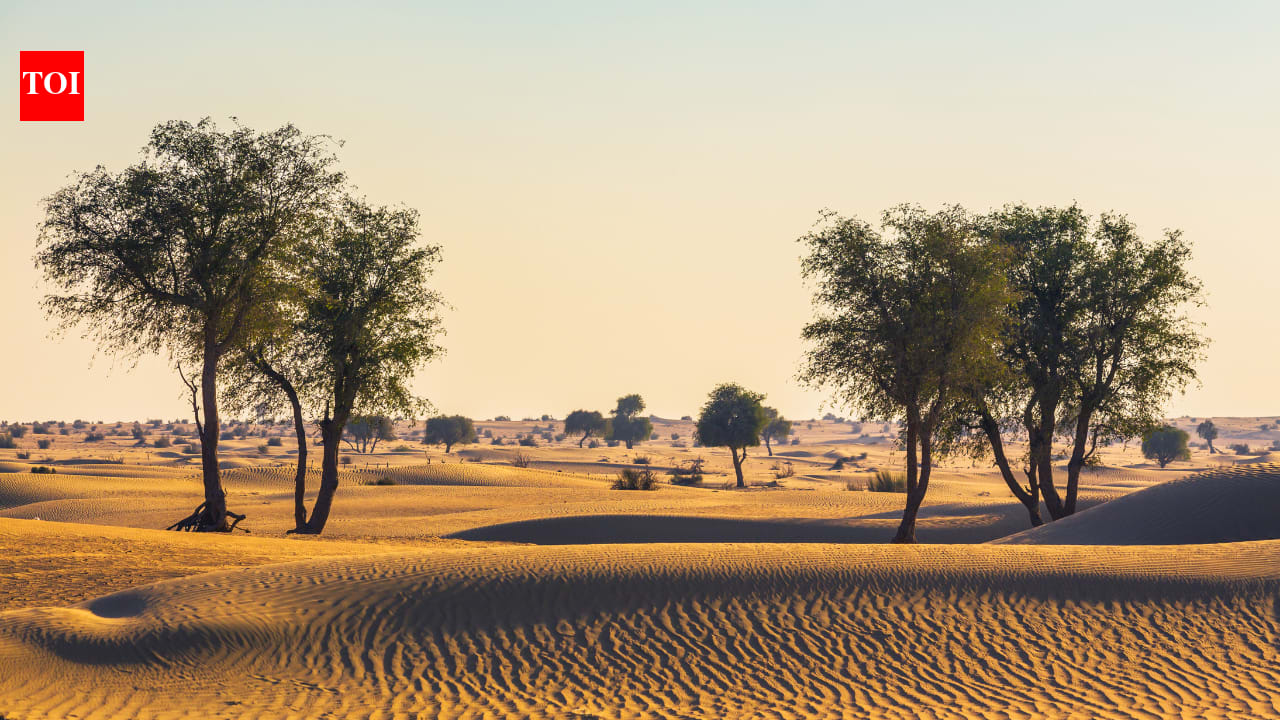
New research suggests that early humans avoided the interior of the Arabian Peninsula not just due to water availability, but because of a lack of suitable stone for toolmaking. Despite the presence of ancient lakes, the absence of lithic resources rendered these areas uninhabitable for early populations.
The Hidden Constraints of Early Human Migration
Recent archaeological investigations into the Arabian Peninsula have challenged the long-held assumption that the presence of freshwater was the sole determinant for early human settlement. By surveying 1,500 kilometers of the vast Rub' al Khali sand sea, researchers have provided a more nuanced perspective on how our ancestors navigated arid environments. While the discovery of evidence for ancient lakes at 55 of the 125 examined sites confirms that the region was once significantly wetter, the total absence of stone tools at these locations reveals a critical, previously overlooked limitation.
The Necessity of Lithic Resources
For early hominids, survival was inextricably linked to the availability of high-quality raw materials. Stone tools were not merely supplemental; they were essential for hunting, butchering, and processing plant materials. The study highlights that even when water was abundant, the interior of the Arabian desert lacked the specific geological formations necessary to produce lithic tools. This suggests that early humans were highly selective, choosing to settle only in areas where both hydration and the materials for technology were simultaneously available.
Rethinking Migration Patterns
This finding forces a re-evaluation of how we map the movement of early humans out of Africa and into Eurasia. If the availability of tool-grade stone acted as a 'bottleneck' for expansion, then our understanding of 'habitable zones' must be updated to include geological criteria. It is no longer sufficient to look for ancient water tables; researchers must now integrate paleogeology into their models to predict where human populations could have sustained themselves for extended periods.
Environmental Adaptation and Constraints
The Rub' al Khali serves as a natural laboratory for studying the limits of human adaptation. The data suggests that early inhabitants were not simply following water sources blindly, but were making calculated decisions based on the long-term viability of an area. The absence of tools in the interior, despite the presence of lakes, indicates that the region may have been utilized as a transient corridor rather than a site for long-term habitation, as the lack of stone would have made life unsustainable.
Future Implications for Archaeology
Moving forward, these findings suggest that future archaeological surveys in arid regions should prioritize geological mapping alongside hydrological studies. By understanding the distribution of specific stone types, scientists can better predict the movement of early human populations across shifting landscapes. This study underscores the reality that technological dependency was a major limiting factor in human colonization, effectively keeping the interior of the Arabian desert a frontier that was visited but rarely settled.