How Long Can Life Wait?
Source Entity
Hacker News
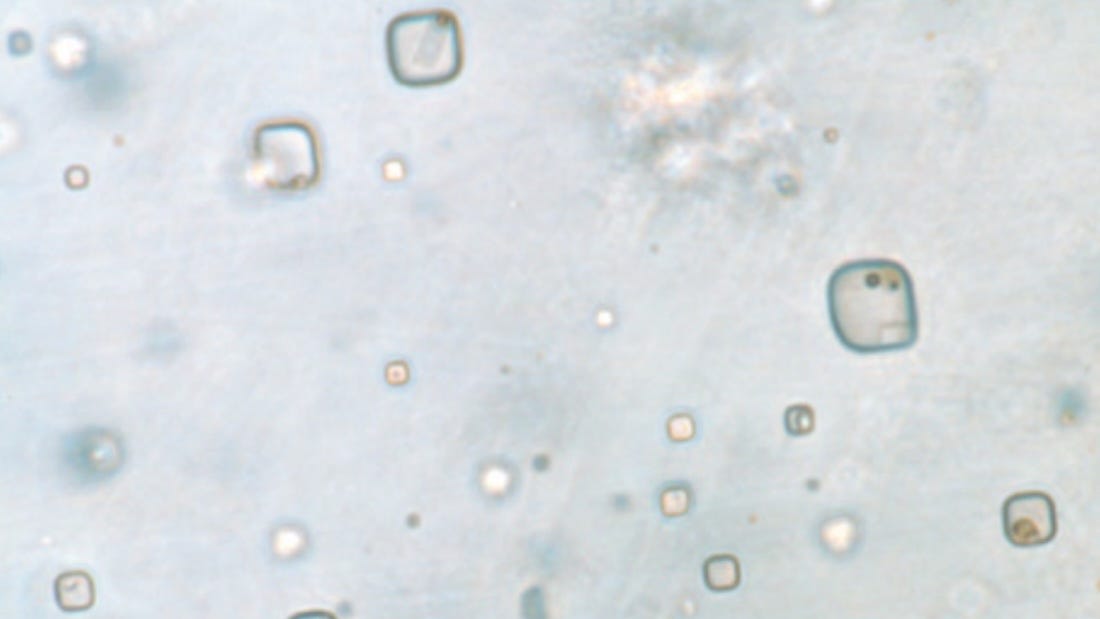
The viability of dormant organisms over vast timescales is a critical factor in space exploration. These findings influence planetary protection protocols, the theory of panspermia, and the search for ancient life on Mars or asteroids.
The Longevity of Life: Implications for Space Exploration
The fundamental question of how long an organism can remain inert while retaining viability is not merely a biological curiosity; it serves as a cornerstone for modern astrobiology and planetary exploration. As we push the boundaries of human reach into the cosmos, understanding the limits of cellular dormancy allows us to calibrate our expectations and our protocols when searching for life beyond Earth.
Contamination and Planetary Protection
On the immediate horizon of space missions, the concern of microbial contamination is paramount. Rockets and probes are built in environments that, while clean, are not sterile. These structures inevitably carry terrestrial microbes that could potentially survive the launch and space transit. If these organisms remain viable for years or decades, they threaten to contaminate pristine celestial environments, potentially masking or destroying native extraterrestrial biosignatures. Consequently, strict sterilization protocols are essential to ensure we do not conflate hitchhiking Earth life with genuine discoveries on moons or planets.
Panspermia and Solar System History
When we extend our temporal scope to centuries or millennia, the conversation shifts toward the hypothesis of panspermia—the theory that life could be transferred between celestial bodies via debris. If organisms can survive these durations in the harsh vacuum of space, it suggests that the early Solar System was a dynamic environment where biological material could have migrated between planets. This challenges our understanding of life's origin, implying that the history of life on Earth might be inextricably linked to the history of life on other bodies within our planetary neighborhood.
Geological Timescales and the Search for Life
Perhaps the most profound implications involve the potential for life to survive for geological timescales, spanning tens to hundreds of millions of years. If dormant organisms—such as extremophiles trapped in salt crystals or permafrost—can remain viable over these vast epochs, the probability of discovering life on Mars or within asteroids increases exponentially. This shift in perspective transforms our search strategy, moving from seeking active, flourishing ecosystems to identifying ancient, preserved remnants of life that have been waiting in stasis.
Future Trends in Astrobiology
As our technology for deep-space sampling improves, the ability to analyze these dormant states will become a primary driver of mission design. We are moving toward a future where robotic missions are equipped with specialized instruments designed to detect biological potential in seemingly lifeless geological samples. The intersection of molecular biology and space engineering will be critical in determining whether we find a barren universe or one that has been quietly waiting for discovery for millions of years.
Conclusion
The capacity for life to survive in an inert state dictates the urgency and methodology of our extraterrestrial endeavors. By mapping the survival limits of these organisms, we gain a clearer roadmap for planetary protection, a better understanding of the distribution of life in the early Solar System, and a more optimistic outlook for finding evidence of biology on Mars and beyond.