Earthquake in Peru leaves at least six dead
Source Entity
Associated Press
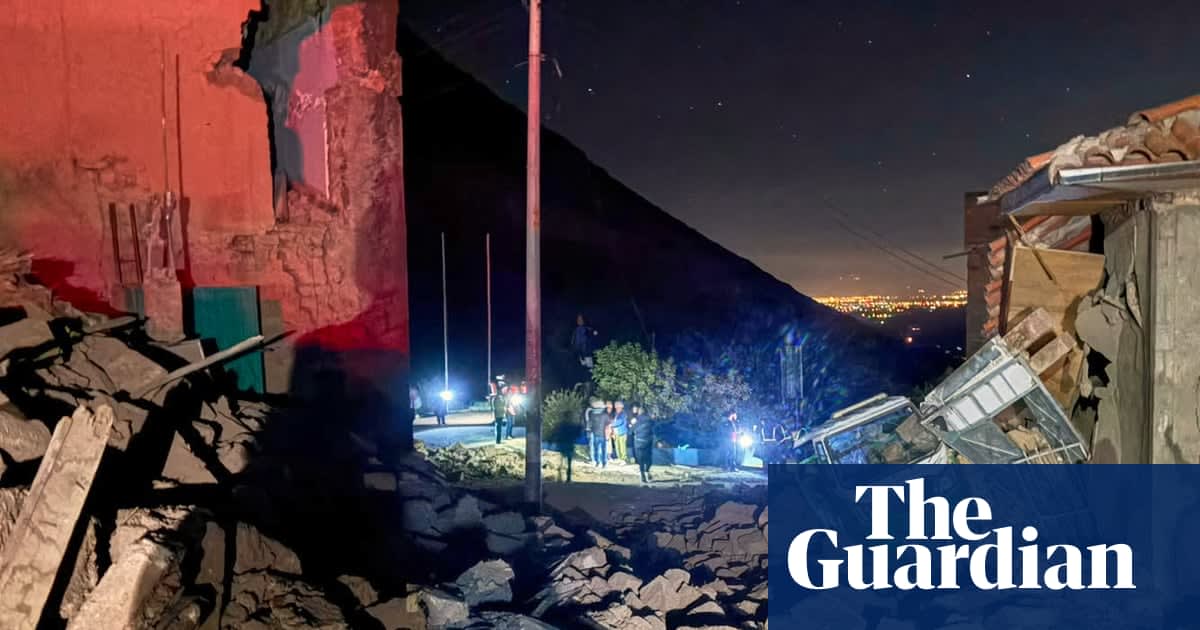
A 5.5-magnitude earthquake in Peru's Andes region has resulted in at least six deaths and widespread displacement. Rescue efforts are underway as authorities assess structural damage in the affected provinces.
Earthquake Devastates Peru's Andean Region
A powerful 5.5-magnitude earthquake struck the Andean region of Peru on Saturday night, resulting in a tragic loss of life and significant displacement of residents. According to the United States Geological Survey (USGS), the seismic event occurred at 9:24 p.m. local time, with its epicenter pinpointed just 2 kilometers west-south-west of the city of Sicaya in the Huancayo province. With a shallow depth of only 10 kilometers, the intensity of the shaking was magnified, leading to immediate structural failures across the region.
Immediate Humanitarian Impact
The human cost of this disaster has been severe. Authorities have confirmed at least six fatalities, while more than 30 individuals have sustained injuries requiring medical attention. Furthermore, the displacement of 300 people highlights the sudden loss of shelter and essential infrastructure for the local population. As emergency services continue their assessment, the National Civil Defence Institute has warned that the total number of missing persons remains unknown, suggesting that the casualty figures could potentially rise as search and rescue operations penetrate deeper into the debris.
Structural and Cultural Damage
The earthquake’s impact is visible not only in the displacement of people but also in the destruction of local landmarks. Reports indicate that several buildings have collapsed or suffered critical structural damage, including significant harm to the local church and convent. These structures often serve as the heart of Andean communities, and their loss represents a major setback for the social and historical fabric of the region. The visual accounts from the main square of Chupuro further underscore the gravity of the destruction faced by local inhabitants.
Geological Context and Risk Factors
Peru is situated along the Pacific 'Ring of Fire,' a region known for intense seismic and volcanic activity. The Andes mountains are formed by the subduction of the Nazca Plate beneath the South American Plate, creating a high-stress tectonic environment. A 5.5-magnitude quake at a shallow depth of 10 kilometers is particularly dangerous because the energy is released closer to the surface, causing more violent ground motion than deeper earthquakes. This geographical reality makes the region perpetually vulnerable to such natural catastrophes.
Challenges for Emergency Response
Managing a disaster in the Andes presents unique logistical challenges. The mountainous terrain can hinder the delivery of aid, while the sudden nature of the event tests the preparedness of local civil defense offices. Luis Vásquez, head of the local civil defence office, is leading the coordination of these efforts, but the scale of the damage—ranging from destroyed homes to compromised public buildings—suggests that a sustained recovery effort will be required to stabilize the affected communities and provide long-term housing solutions for the displaced.
Conclusion and Future Outlook
As the region begins the difficult process of recovery, the focus remains on locating the missing and ensuring that those displaced have access to basic necessities. The tragic events in Huancayo serve as a stark reminder of the unpredictable seismic risks inherent to the Andean landscape. Future efforts will likely focus on reinforcing building codes in rural provinces and improving early warning systems to mitigate the impact of future tectonic shifts in this high-risk zone.