ECI issues fresh work allocation order; brings back oversight on IT head
Source Entity
India Latest News: Top National Headlines Today & Breaking News | The Hindu
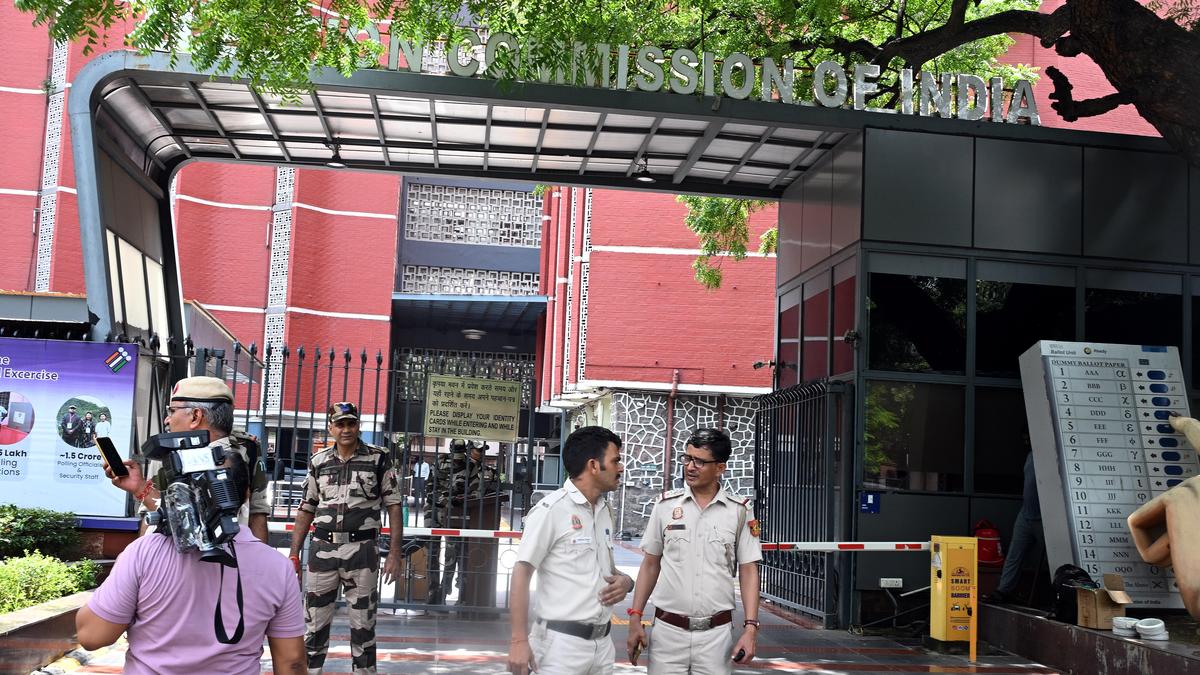
The Election Commission of India has reinstated supervisory oversight over IT head Seema Khanna following a controversial July order that previously allowed her to report directly to the Commission. This change restores the standard reporting hierarchy, placing her under the supervision of a Deputy Election Commissioner.
Institutional Reorganization within the Election Commission
The Election Commission of India (ECI) has recently finalized a significant administrative adjustment regarding the internal reporting structure of its Information Technology department. An order dated October 4 mandates that the IT Head, Seema Khanna, must now route files concerning IT, ICT, and grievance systems through a designated Deputy Election Commissioner. This decision effectively reverses a controversial policy shift initiated in late July, which had momentarily granted the IT division unprecedented autonomy.
The July Controversy and Administrative Friction
The necessity for this October correction stems from an internal directive issued on July 28 by Senior Deputy Election Commissioner (DEC) Maneesh Garg. That order had removed the oversight of Deputy Election Commissioner Sanjay Kumar, effectively providing Dr. Khanna with a 'free hand' to report directly to the Commission. This move sparked immediate friction within the constitutional body, leading Election Commissioners S.S. Sandhu and Vivek Joshi to escalate the matter by writing to Cabinet Secretary T.V. Somanathan. The intervention suggests that the internal autonomy granted to the IT head was viewed by leadership as a departure from established administrative protocols.
Restoring Institutional Hierarchy
By re-establishing a supervisory layer between the IT head and the Commission, the ECI is reverting to a traditional bureaucratic model designed to ensure checks and balances. The transition from the July arrangement—where the IT department operated with direct access to the Chief Election Commissioner and other commissioners—to the current structure involving a Deputy Election Commissioner reflects a concerted effort to maintain standard administrative accountability. The ECI has emphasized that this move is a procedural refinement meant to ensure that technical operations remain under consistent oversight.
Implications for IT and ICT Governance
As the Election Commission increasingly relies on complex IT/ICT infrastructure for the integrity of the electoral process, the management of these departments becomes a critical concern. The 'ECINet' and various grievance redressal mechanisms are foundational to the ECI's functional efficiency. By placing these responsibilities under the purview of a Deputy Election Commissioner—specifically noted in recent updates as Prakash Raj Purohit—the ECI aims to ensure that the IT department operates within a framework that allows for continuous monitoring and vetting of digital protocols.
Future Trends in ECI Administration
This administrative recalibration signals a broader trend of tightening internal governance within the ECI. In an era where digital security and election technology are subjects of intense public and political scrutiny, the Commission appears to be prioritizing a chain-of-command approach. Moving forward, the ECI will likely continue to emphasize these hierarchical structures to prevent internal policy disputes from surfacing in the public domain, ensuring that critical departments like IT remain integrated into the Commission's broader executive framework rather than operating as independent silos.
Verification Required?