Collision of two trains in Egypt kills at least four
Source Entity
Associated Press
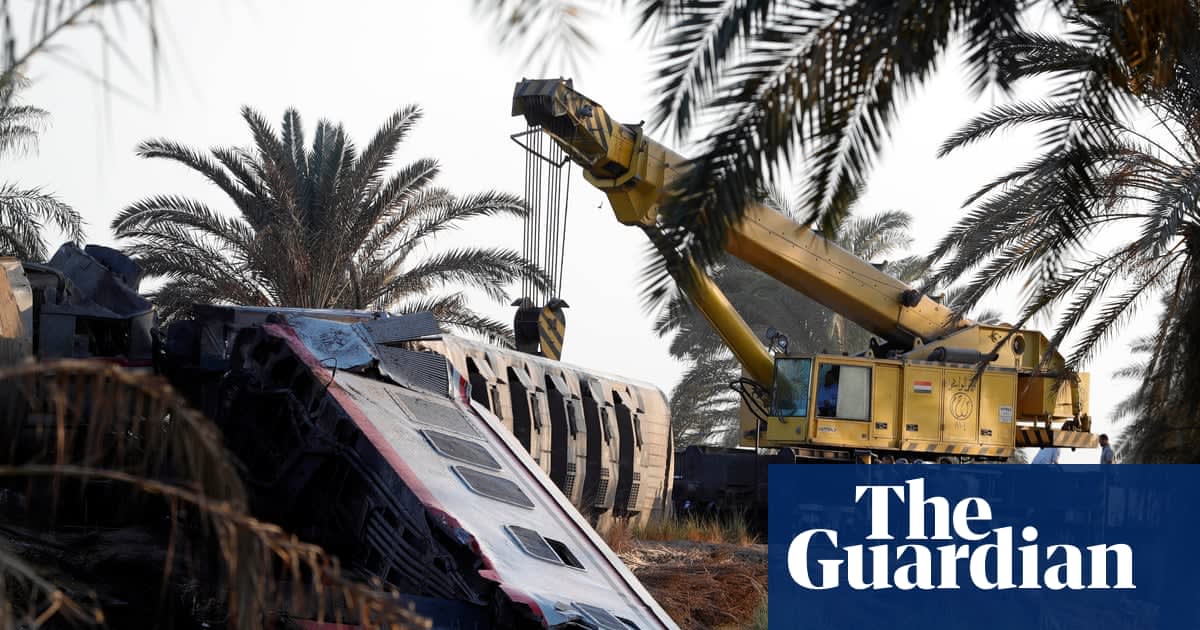
A fatal train collision in Egypt's Giza province has resulted in multiple deaths and over 100 injuries. President Abdel Fattah al-Sisi has ordered an investigation into the crash, which occurred when a Giza-Fayoum train struck a Cairo-Aswan train.
Tragedy in Giza: A Critical Analysis of Egypt's Latest Rail Disaster
On Sunday, a devastating train collision occurred in the Al-Ayyat district of Egypt's Giza province, approximately 30 miles south of Cairo. The incident involved a passenger train traveling from Giza to the Fayoum oasis, which collided with the rear of a train heading toward the southern province of Aswan. The impact was severe enough to cause one of the trains to derail, resulting in overturned carriages and a significant loss of life and injuries.
Scale of the Incident and Emergency Response
Initial reports have provided varying figures regarding the casualties, reflecting the chaos of the immediate aftermath. While early assessments suggested at least 64 injuries, updated reports from the health ministry have confirmed at least four fatalities, with total injury counts reaching as high as 120 according to some sources, and 88 according to others. Emergency services were promptly dispatched to the scene in Al-Ayyat, transporting the injured to nearby medical facilities to receive urgent care.
The Mechanics of the Collision
The accident occurred on a critical transit corridor connecting the capital to the southern provinces. By ramming into the rear of the Cairo-Aswan train, the Giza-Fayoum train caused a structural failure that led to derailment. The visual evidence from the scene, including footage of overturned carriages, underscores the high velocity and force involved in the collision, which turned a routine transit route into a site of national tragedy.
Presidential Directive and Accountability
In response to the disaster, Egyptian President Abdel Fattah al-Sisi has taken a firm public stance, ordering an immediate and comprehensive investigation into the causes of the crash. The President explicitly stated that his administration would "hold accountable anyone who proves their negligence." This directive highlights the high-level concern regarding the safety standards of the national rail network and the political pressure to address potential systemic failures.
Broader Implications for Egyptian Infrastructure
This incident brings renewed scrutiny to Egypt’s aging railway infrastructure. For years, the transport ministry has faced the challenge of maintaining and upgrading a vast network that serves millions of passengers daily. The recurrence of such accidents often sparks national debates regarding the need for modernization, improved signaling systems, and stricter adherence to safety protocols to prevent human error or mechanical failure.
Looking Forward: Safety and Reform
As the investigation proceeds, the focus will likely shift toward identifying the root cause—whether it was signaling failure, human error, or mechanical malfunction. The outcome of this inquiry will be pivotal in determining whether the government accelerates infrastructure reforms. The tragedy serves as a grim reminder of the vital importance of safety oversight in large-scale public transportation networks, and the public will be closely watching for the findings of the presidential probe to ensure that such a catastrophe is not repeated.
Multiple Citing Sources