‘EC owes apology to nation’: Shashi Tharoor over report of 97 eligible Goa voters left out of electoral roll
Source Entity
Latest News: Todays Latest News Headlines from India & World | Hindustan Times | Hindustan Times
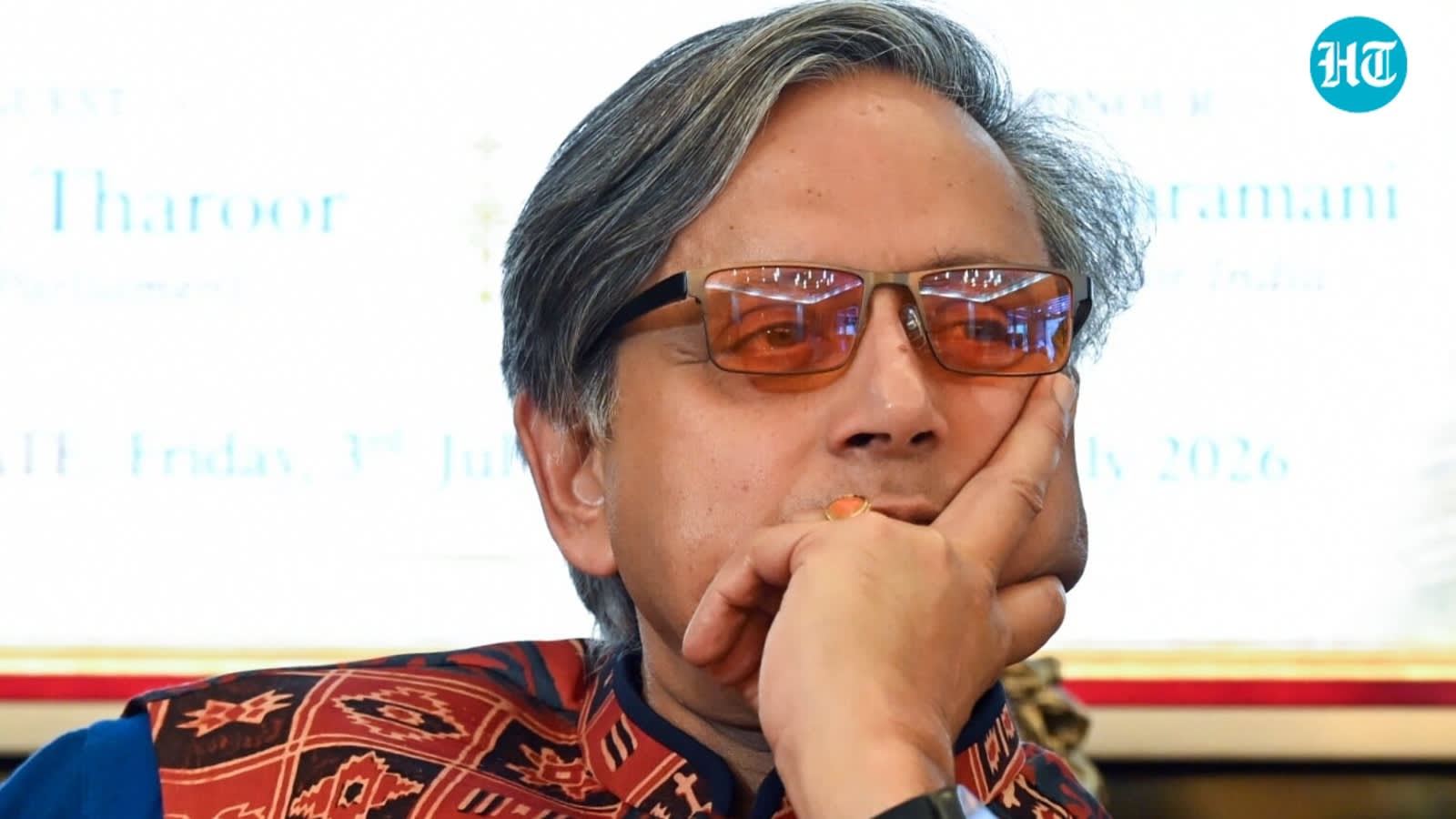
Union Minister Chirag Paswan has urged the Election Commission to address growing public and political skepticism regarding its operations. The poll body attributed recent scheduling changes to routine logistical factors, amid rising calls for greater transparency.
The Growing Scrutiny of the Election Commission
The Indian political landscape is currently witnessing a period of heightened sensitivity regarding the functional autonomy and transparency of the Election Commission (EC). Recent discourse has been ignited by the postponement of an event in Uttar Pradesh featuring Election Commissioner Gyanesh Kumar. While the poll body has officially characterized this adjustment as a routine procedure necessitated by logistical and administrative requirements, the incident has served as a catalyst for broader questions about the institution's operational consistency.
The Necessity of Institutional Trust
Union Cabinet Minister Chirag Paswan has emerged as a significant voice in this dialogue, emphasizing that the Election Commission must proactively maintain the public's trust. Paswan's position is rooted in the principle that an independent constitutional body must be the primary custodian of its own credibility. By stating that the EC must make its stand clear, Paswan underscores the reality that in a democracy, the perceived neutrality of the poll body is as critical as its actual performance.
Navigating Political Rhetoric and Accountability
Paswan has distinctly separated his call for accountability from typical partisan bickering. He noted that while the Opposition often attempts to manufacture issues, the recurrence of public skepticism necessitates a direct response from the Chief Election Commissioner. Paswan explicitly stated that political parties lack the access to the internal deliberations of the EC, and therefore, it is incumbent upon the Commission itself to defend its integrity against mounting criticism.
Logistical Realities vs. Public Perception
The Election Commission’s explanation regarding 'scheduling factors' highlights the gap between administrative processes and public perception. In modern electoral management, logistical shifts are common due to security, weather, and administrative constraints. However, when these shifts occur in a climate of political tension, they are often misinterpreted as deviations from standard practice. The challenge for the EC lies in bridging this gap through proactive communication.
The Path Forward for Electoral Integrity
Moving forward, the Election Commission faces the complex task of balancing operational efficiency with the need for radical transparency. As Paswan articulated, there should not be 'an iota percent of suspicion' regarding the Commission's functions. Future trends suggest that the EC will likely need to adopt more robust public relations strategies to explain scheduling or procedural changes to mitigate the risk of political weaponization of these administrative decisions.
Conclusion
The ongoing debate serves as a reminder of the fragility of institutional trust in a highly polarized political environment. Whether the recent event postponements were purely logistical or symptomatic of wider issues, the demand from political stakeholders for the Election Commission to defend its own reputation signals a shift toward higher expectations of accountability. For the democratic process to remain robust, the Commission must ensure that its internal administrative logic is communicated with clarity to the electorate it serves.
Multiple Citing Sources
Verification Required?