Farage unveils small boats deal with French National Rally party
Source Entity
BBC News
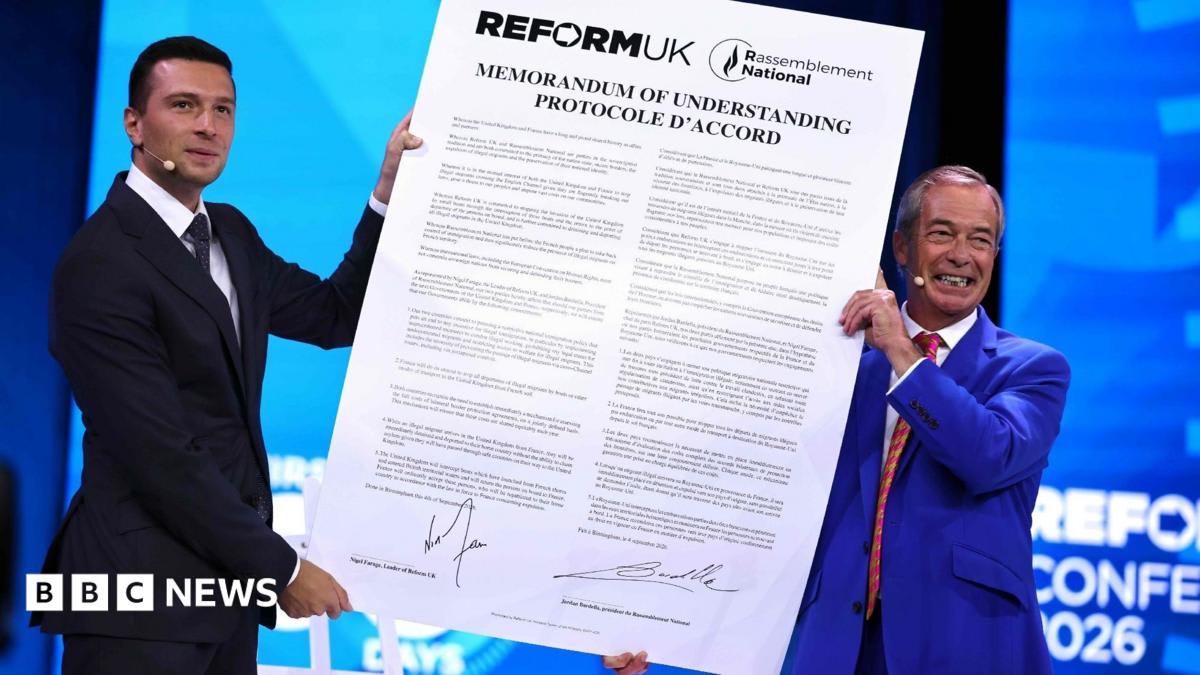
Reform UK leader Nigel Farage has unveiled a proposed migration deal with France's National Rally and outlined radical plans to overhaul British governance. The strategy includes intercepting migrant boats and implementing aggressive internal reforms to ensure campaign promises are met within 100 days.
Nigel Farage’s Strategic Pivot: Migration and Governance Overhaul
A Transnational Approach to Migration
Nigel Farage, leader of Reform UK, has unveiled a significant political memorandum of understanding with the French National Rally, signaling a desire to shift the UK's approach to the small boats crisis. The core of this agreement involves a commitment to intercepting migrant vessels in British territorial waters and returning them directly to France. By proposing this cross-channel cooperation, Farage is attempting to create a framework that could theoretically evolve into a formal legal agreement between two future governments, should both parties ascend to power in their respective nations.
The Mechanism of Return and Repatriation
Under the proposed terms, France would theoretically accept the repatriated individuals, who would subsequently be processed for return to their home countries in accordance with French law. This represents a departure from current status-quo policies, aiming to disrupt the cycle of illegal crossings by removing the incentive of successful arrival. The plan functions as a two-pronged strategy: immediate maritime interception coupled with an expectation of French cooperation in the expulsion process.
Domestic Enforcement and Deportation
Beyond the maritime interception strategy, Reform UK has clarified its internal stance on migration. For those individuals who manage to successfully reach the UK, the party plans to move away from the current administrative delays. Instead, the proposal involves immediate detention followed by direct deportation to their countries of origin. This policy is designed to bypass the complexities of returning migrants to France once they have already established a presence within British borders.
Radical Governance and the 100-Day Pledge
Farage has also set his sights on the machinery of the British state, threatening to overhaul the House of Lords and the judiciary to meet his legislative agenda. In a direct challenge to the perceived failures of previous Conservative administrations and current Labour leadership, Farage has pledged to deliver on key priorities within the first 100 days of a potential government. His rhetoric suggests a fundamental impatience with traditional parliamentary procedure, which he views as a barrier to effective governance.
The 'National Emergency' Framework
To ensure these ambitious goals are met, Farage has introduced the concept of a 'national emergency' to expedite lawmaking. This includes the possibility of Parliament sitting for 24 hours a day, six days a week, to fast-track necessary legislation. Furthermore, he has threatened to sack ministers who fail to deliver on their mandates within the initial 100-day window, replacing them with personnel he deems more courageous. This approach highlights a clear intention to centralize authority and enforce strict accountability for cabinet members.
Implications for Future British Policy
These proposals underscore a growing trend in populist politics: the rejection of incrementalism in favor of rapid, structural change. By linking international cooperation with domestic institutional reform, Farage is attempting to present a comprehensive vision that addresses both border security and the perceived stagnation of the British political system. As the political landscape evolves, these ideas will likely serve as a litmus test for the electorate's appetite for radical institutional change versus traditional administrative reform.