'Our neighbour protecting us': Farooq makes shocking remark on J&K; BJP hits back
Source Entity
KARAN MANRAL
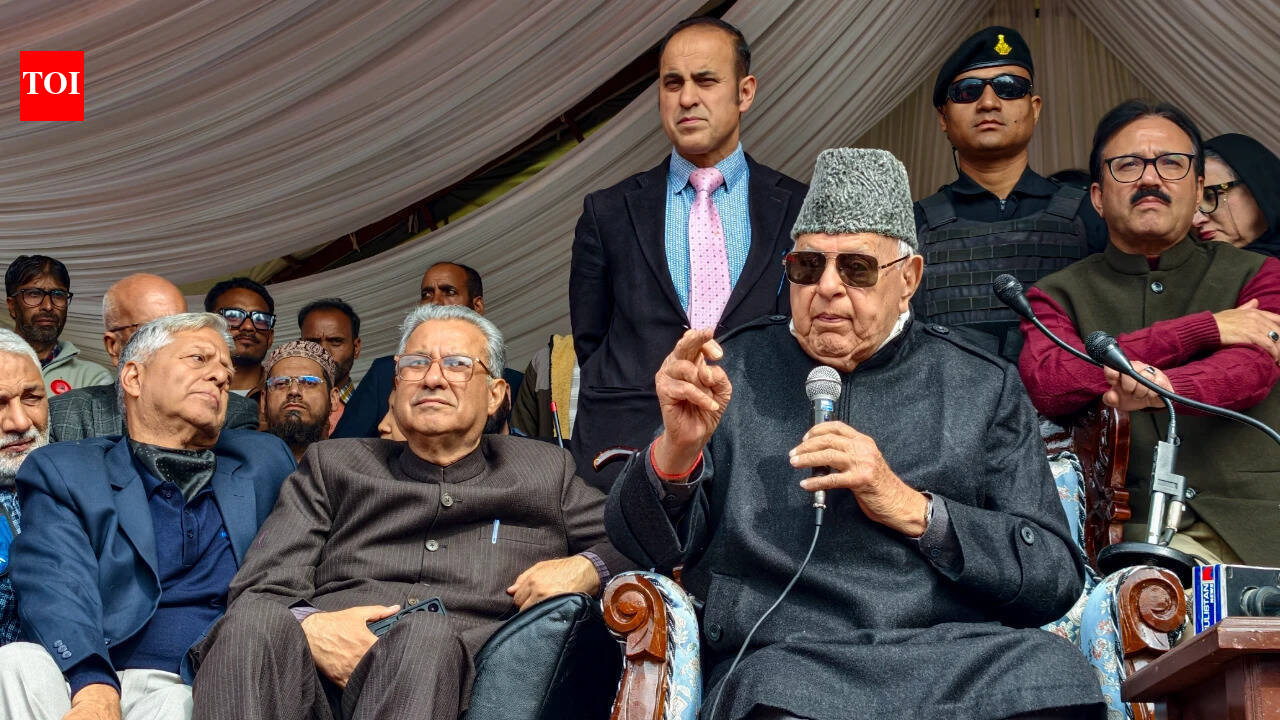
National Conference leader Farooq Abdullah has sparked a major political controversy by attributing the international visibility of Kashmiri issues to Pakistan's diplomatic efforts. The BJP has strongly condemned these remarks, labeling them as treasonous and an attempt to echo hostile narratives.
The Farooq Abdullah Controversy: A Deep Dive into Political Tensions
The Catalyst for Conflict
National Conference leader and veteran politician Farooq Abdullah recently ignited a firestorm of controversy following remarks made during a workers' gathering. Abdullah suggested that the Indian government’s intentions toward the people of Jammu and Kashmir were fundamentally flawed, further asserting that the global attention currently focused on the region is largely a result of Pakistan's diplomatic maneuvering. These statements have effectively placed him at the center of a volatile national debate, drawing sharp rebukes from across the political spectrum.
BJP's Reaction: Allegations of Treason
The Bharatiya Janata Party (BJP) has responded with unprecedented intensity, characterizing Abdullah’s comments as an "act of treason." BJP leadership argues that by crediting Pakistan for the internationalization of the Kashmir issue, Abdullah is not only undermining India's sovereign stance but is also actively echoing a hostile neighbor's propaganda. The party maintains that such rhetoric serves to weaken India's diplomatic position and internal security narrative, framing the former Chief Minister's words as a direct affront to national integrity.
Historical Context and Political Polarization
This incident highlights the long-standing, often fraught relationship between regional political leaders in Jammu and Kashmir and the central government in New Delhi. Abdullah’s skepticism regarding the central government's commitment to justice for Kashmiris is rooted in decades of regional political friction. Conversely, the BJP's aggressive stance reflects its policy shift post-2019, emphasizing a unified national narrative that leaves little room for dissent regarding the status of the Union Territory or the role of external actors like Pakistan.
The Diplomatic Implications
By suggesting that Pakistan is "protecting" or amplifying the voices of Kashmiris on the global stage, Abdullah has touched upon the sensitive nerve of India’s foreign policy. For decades, India has maintained that the Kashmir issue is an internal matter, consistently rejecting any external mediation or international scrutiny. Abdullah’s remarks risk providing leverage to international critics who question India's human rights record in the region, thereby complicating the government's efforts to project a narrative of normalcy and development in the valley.
Future Trends and Political Fallout
Looking ahead, this controversy is likely to deepen the divide between the National Conference and the BJP as regional elections approach. The exchange illustrates a broader trend in Indian politics where domestic disagreements are increasingly framed through the lens of national security. As the BJP continues to label such rhetoric as "treasonous," the space for moderate regional discourse may continue to shrink, potentially leading to increased polarization among the Kashmiri electorate who find themselves caught between competing narratives of sovereignty and local grievances.
Conclusion
In summary, the remarks made by Farooq Abdullah represent a significant escalation in the ongoing battle over the narrative of Jammu and Kashmir. While Abdullah insists he is voicing the concerns of his constituents, the BJP’s staunch opposition underscores the high stakes involved in defining the region's geopolitical identity. This conflict serves as a critical case study in how domestic political debates in India are inextricably linked to the complex, historical, and sensitive realities of the nation's borders and international standing.