Fed Chair Kevin Warsh, Welcome to Your No-Win Scenario, Courtesy of President Donald Trump
Source Entity
Yahoo Finance
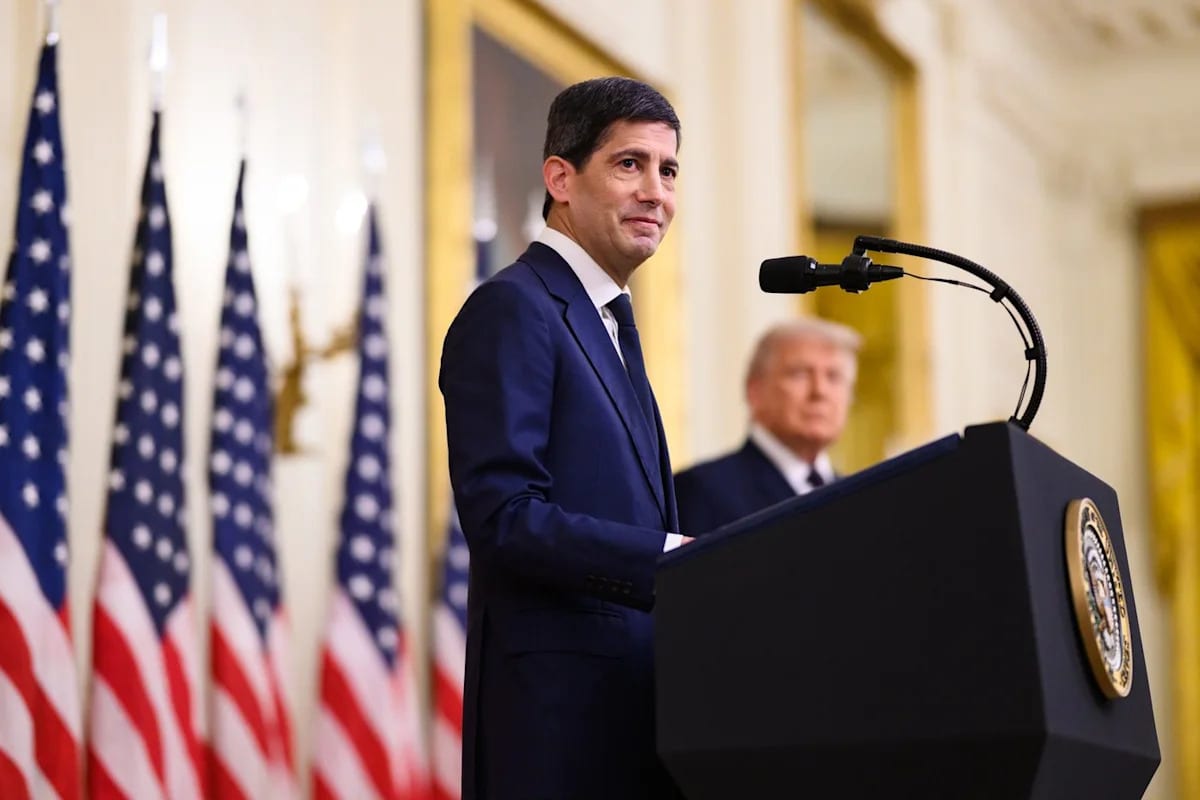
As the stock market reaches record highs in mid-2026, concerns regarding persistent inflation and the nomination of Kevin Warsh as Fed Chair loom. Investors are weighing current market momentum against the potential policy challenges of a new Federal Reserve leadership under political pressure.
The 2026 Market Paradox: Record Highs and Looming Uncertainties
As we pass the midpoint of 2026, the financial landscape presents a striking paradox. The major indices—the Dow Jones Industrial Average, the S&P 500, and the Nasdaq Composite—have demonstrated remarkable resilience, consistently pushing toward record highs since early June. This growth, largely fueled by aggressive market optimism, suggests a robust economy. However, seasoned market observers remain wary, noting that these headline figures often obscure the underlying structural vulnerabilities that could threaten this period of prosperity.
The Inflationary Shadow Over Wall Street
While equity markets continue to climb, inflation remains the primary threat to sustained growth. Historically, periods of rapid market appreciation accompanied by high valuations have left investors susceptible to volatility if inflationary pressures force central bank intervention. The market is currently grappling with the reality that even in a 'stellar' year, the cost of living and the cost of capital remain volatile variables that can shift investor sentiment overnight.
The Federal Reserve and the Warsh Appointment
Against this backdrop, the potential appointment of Kevin Warsh as Federal Reserve Chair introduces a complex layer of political and economic uncertainty. The narrative surrounding Warsh is framed as a 'no-win scenario,' particularly given the political dynamics involving President Donald Trump. A Fed Chair must balance the mandate of price stability with the pressures of executive influence, and in the current climate, any policy shift by Warsh will be heavily scrutinized by a market that is already trading at historically expensive levels.
Technical Indicators and Market Sentiment
Beyond macroeconomic policy, technical indicators are providing mixed signals. The recent emergence of rare market signals—reminiscent of historical patterns seen in high-growth stocks like Nvidia in 2009—suggests that while some sectors are poised for continued expansion, the risk of over-extension is high. These 'Total Conviction' signals are often double-edged swords; they indicate strong momentum but also warn that the market may be approaching a point of exhaustion where a correction becomes inevitable.
Navigating the Future
Looking ahead, the interaction between Fed policy under new leadership and the cooling or heating of inflation will dictate the next phase of the 2026 market cycle. Investors are currently at a crossroads: betting on the continuation of the current growth trend or preparing for a potential mean reversion. The 'no-win' nature of the Fed's position suggests that regardless of the policy path chosen, the market will likely experience heightened volatility in the coming months as it tests the sustainability of these record-breaking valuations.
Conclusion
In summary, while 2026 has been a year of significant wealth generation, the convergence of high valuations, inflationary risks, and a shifting Federal Reserve leadership creates a precarious environment. The market's ability to maintain its current trajectory will depend heavily on the incoming Fed Chair's ability to navigate political pressure while effectively managing the monetary levers that keep inflation in check.