Finland’s radical answer to renewable energy’s biggest headache: The world’s largest sand battery
Source Entity
US Top News and Analysis
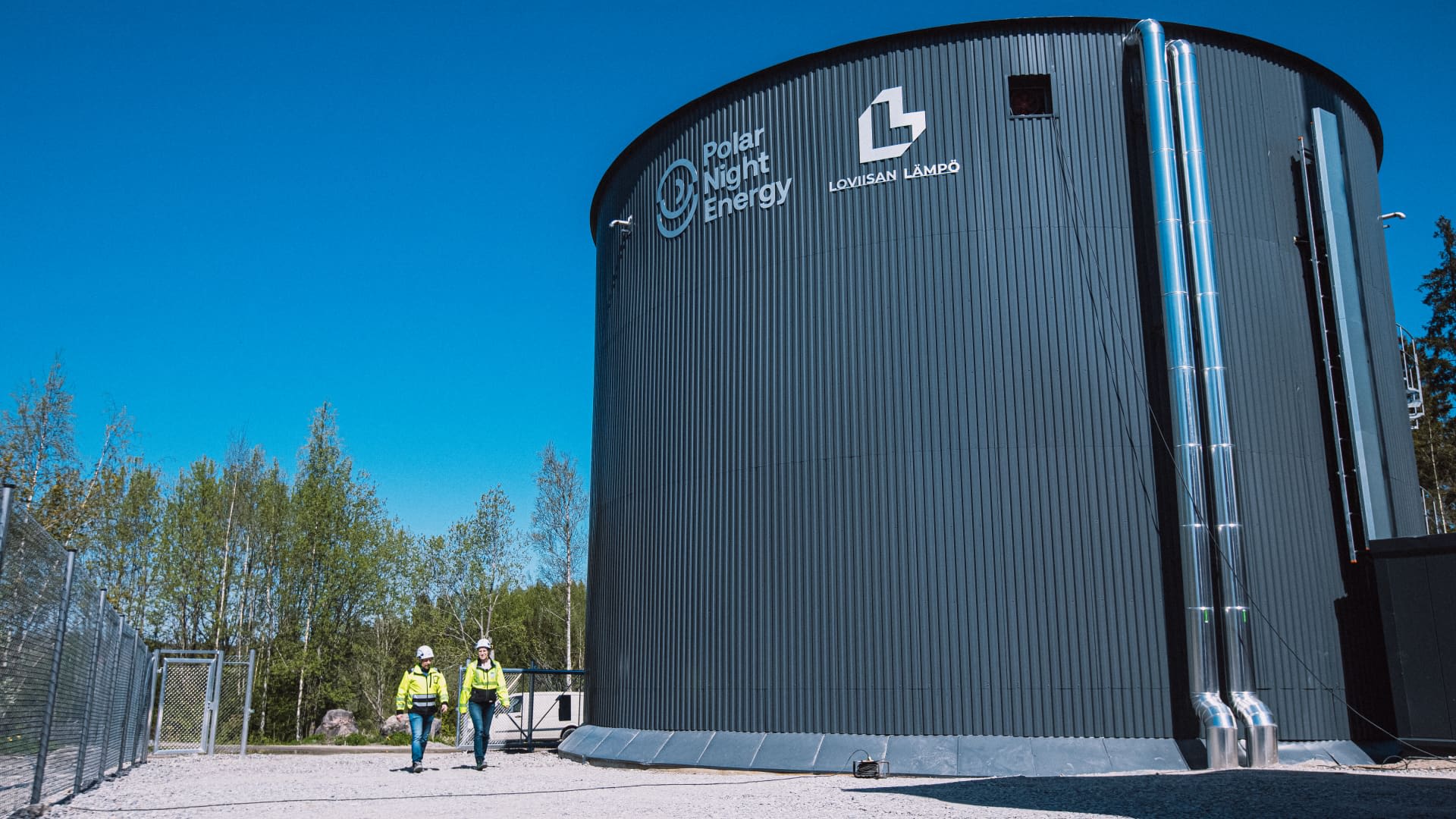
Finland has deployed the world's largest commercial sand battery in Pornainen to combat renewable energy intermittency. This 100-megawatt-hour facility uses crushed soapstone to store thermal energy, significantly bolstering local district heating reliability.
The Sand Battery Revolution: Finland's Thermal Breakthrough
In a significant development for renewable energy integration, the Finnish town of Pornainen has successfully commissioned the world’s largest commercial sand battery. This facility represents a novel approach to addressing the 'intermittency problem'—the inherent challenge of maintaining a steady energy supply when wind and solar sources are not actively generating power. By utilizing thermal storage, this project offers a scalable solution to stabilize energy grids that are increasingly reliant on variable renewable inputs.
Engineering and Scale of the Pornainen Facility
Standing as an impressive feat of industrial engineering, the battery measures 13 meters in height and 15 meters in width. The facility utilizes 2,000 metric tons of crushed soapstone as its storage medium. Unlike chemical lithium-ion batteries, which are costly and resource-intensive to produce, this sand battery relies on the high heat-retention properties of soapstone to store energy in the form of thermal heat. This design allows for 100 megawatt-hours of thermal energy to be held for extended periods, effectively bridging the gap between energy production and consumer demand.
Addressing Seasonal Heating Demands
The practical application of this technology is tailored to Finland's harsh climate and district heating needs. The system is designed to meet the heating demands of the town's 5,000 residents with remarkable efficiency: it can cover nearly one month of heat demand during the summer months and approximately one week during the peak of winter. By commissioning this project, the district heating company Loviisan Lämp is pioneering a transition away from fossil fuel-based heating systems toward a cleaner, more reliable thermal grid.
The Future of Thermal Energy Storage
The broader implications of this project are substantial for the global energy transition. As nations strive to meet climate goals, the ability to store energy for weeks rather than hours is essential. Sand batteries provide a low-cost, durable alternative to electrochemical storage, particularly for industrial or residential heating applications where electricity can be converted directly into heat. This model could eventually be replicated in other northern climates or regions where district heating infrastructure is prevalent.
Economic and Environmental Implications
Beyond the immediate benefits to Pornainen, the use of crushed soapstone—a widely available and non-toxic material—highlights a shift toward circular economy principles in energy technology. This project demonstrates that renewable energy does not always require high-tech, rare-earth mineral components to succeed. As the facility integrates into the local infrastructure, it serves as a proof-of-concept for how localized energy solutions can reduce reliance on volatile energy markets and lower carbon footprints across entire municipalities.
Conclusion
The deployment of this sand battery in Finland marks a pivotal moment in the fight against energy intermittency. By successfully utilizing 2,000 metric tons of soapstone to provide reliable, carbon-neutral heat, Pornainen is setting a global benchmark. As energy providers monitor the long-term performance of this facility, it is likely that similar thermal storage systems will become a foundational component of modern, sustainable urban heating strategies.