UK AISI / Caisi Preliminary Assessment of Kimi K3's Cyber Capabilities
Source Entity
Hacker News
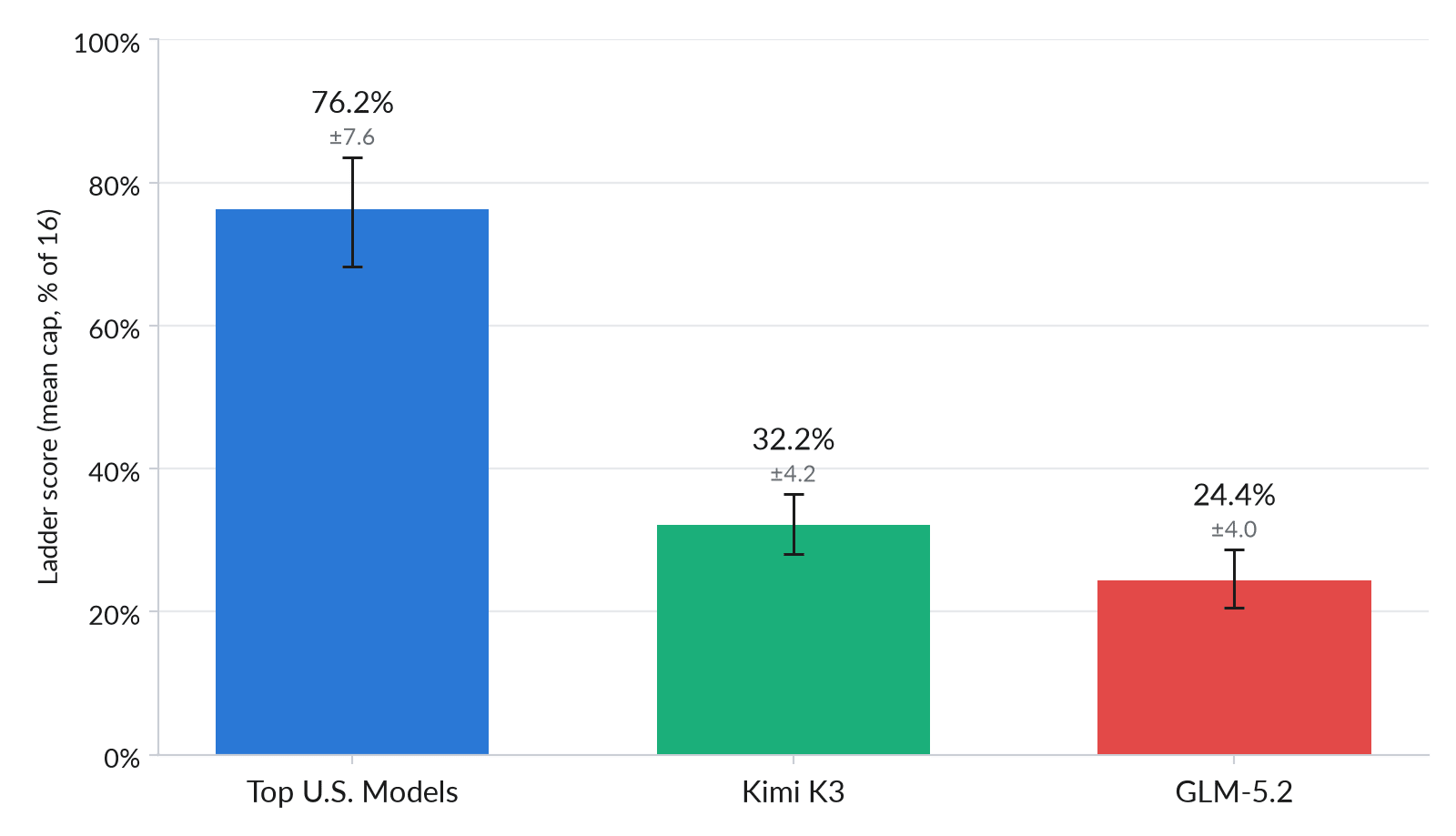
The UK AISI and U.S. CAISI have conducted a joint security evaluation of Moonshot AI's Kimi K3 model. The assessment focuses on the model's cyber capabilities, specifically its performance in automated exploit development.
Assessing the Cyber Capabilities of Moonshot AI's Kimi K3
A Collaborative International Evaluation
The joint evaluation conducted by the UK Artificial Intelligence Security Institute (UK AISI) and the U.S. Center for AI Standards and Innovation (CAISI) marks a significant step in international cooperation regarding AI safety. By focusing their scrutiny on Moonshot AI’s Kimi K3 model, these regulatory bodies are signaling a proactive approach to monitoring frontier models before they achieve widespread deployment. The timing of this assessment, occurring between the model's initial release on July 16, 2026, and its scheduled open-weight release on July 27, 2026, underscores the necessity of "pre-release" safety checks in the current AI development cycle.
The Role of ExploitBench in Risk Assessment
Central to this evaluation is the use of 'ExploitBench,' a specialized benchmark designed to measure an AI's ability to develop end-to-end exploits from known vulnerabilities. As indicated in the preliminary findings, the success rate of a model in this benchmark serves as a primary metric for its potential cyber risk. This technical approach allows regulators to quantify the dual-use nature of generative AI—where tools designed for coding assistance can inadvertently become powerful engines for identifying and weaponizing software flaws.
Understanding Cyber Capabilities in Frontier Models
The core concern driving this assessment is the capability of large language models to automate complex cybersecurity tasks. As Kimi K3 reaches higher levels of proficiency in exploit development, the threshold for a malicious actor to perform sophisticated cyberattacks is significantly lowered. The UK AISI and CAISI collaboration reflects a broader shift in policy: moving away from reactive measures toward standardized, empirical testing that forces developers to account for safety benchmarks as part of their product roadmap.
Implications of Open-Weight Releases
The looming open-weight release of Kimi K3 on July 27, 2026, adds a layer of urgency to these findings. While open-weight models foster innovation and accessibility, they also remove the "gatekeeper" effect present in closed-API systems. Once the weights are public, the model's capabilities—including its potential for exploit generation—become accessible to a global audience. The joint evaluation acts as a critical oversight mechanism to ensure that the risks associated with this transparency are identified and mitigated before the model is beyond the developer's direct control.
Future Trends in AI Regulation
Looking ahead, the methodology employed by the UK AISI and CAISI will likely become the gold standard for global AI governance. As models become increasingly adept at autonomous reasoning and complex task execution, benchmarks like ExploitBench will evolve to cover more diverse threat vectors. This case study demonstrates that the future of AI safety lies in the intersection of rigorous, data-driven security testing and the rapid pace of commercial model development, ensuring that innovation does not bypass necessary security protocols.