How French solar farms are reviving wildflowers, supporting bees and butterflies
Source Entity
TOI TECH DESK
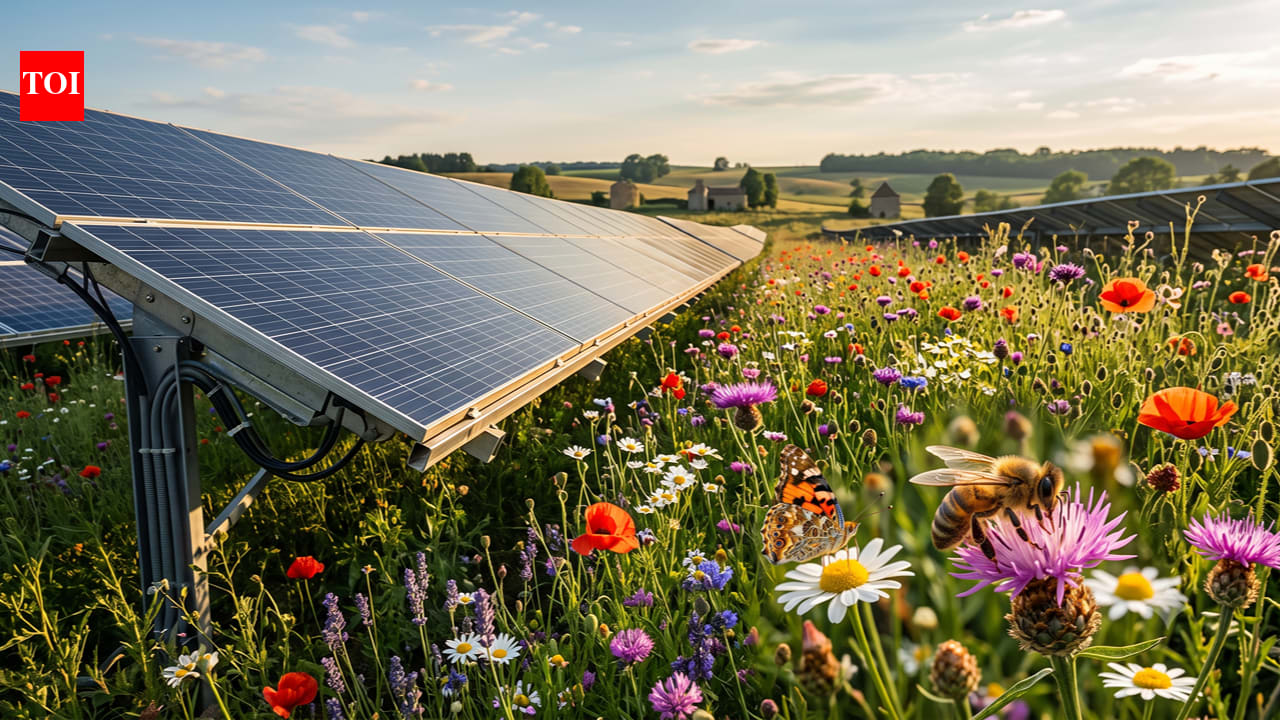
Research in France reveals that solar farms can foster native wildflower growth and support pollinator populations. While panel shade impacts insect behavior, strategic planting in sunny inter-row spaces creates vital habitats for bees and butterflies.
The Dual Role of Solar Infrastructure in Ecosystem Restoration
Recent investigations into French solar farms have uncovered a complex relationship between renewable energy infrastructure and local biodiversity. Contrary to the assumption that industrial-scale solar developments are inherently destructive to local flora and fauna, the findings suggest that these sites can act as unexpected sanctuaries for native wildflowers. By carefully managing the land beneath and between arrays, solar operators are discovering that they can foster environments that support bees, butterflies, and other essential pollinating insects.
The Impact of Microclimates on Pollinator Behavior
The research highlights the critical role of 'microclimates' created by the physical presence of solar panels. The study identifies a distinct contrast in pollinator activity based on light exposure: while flora situated directly beneath the shade of panels attracts fewer pollinators, the vegetation thriving in the bright 'inter-row' spaces serves as a magnet for biodiversity. These zones, protected from extreme weather but exposed to ample sunlight, allow native plants to flourish, thereby maintaining the delicate plant-pollinator interactions necessary for a healthy ecosystem.
Navigating the Challenges of Physical Barriers
While the potential for ecological benefit is significant, the research does not ignore the challenges posed by solar installations. The panels act as a 'physical barrier' and create shade changes that fundamentally alter how plants and insects interact. If not managed properly, these shifts can lead to a potential 'net loss of pollinator biodiversity.' The study emphasizes that solar farms are not a uniform solution; their impact is highly dependent on how the surrounding landscape is managed to mitigate the cooling and shading effects that might discourage insect visitation.
Strategic Design for Pollinator-Friendly Sites
To maximize the ecological value of these sites, the focus must shift toward 'pollinator-friendly' design principles. By intentionally selecting native wildflowers that thrive in the specific light conditions of solar inter-rows, developers can transform traditional energy sites into robust habitats. This approach challenges the binary view that solar energy and nature conservation are mutually exclusive, suggesting instead that with proper planning, energy production can coexist with, and even encourage, the restoration of native plant life.
Future Trends in Renewable Ecology
Looking ahead, the integration of ecological management into solar farm operations is likely to become a standard practice. As the global demand for clean energy grows, so too does the need for land-use efficiency. The French model provides a blueprint for how renewable energy projects can contribute to broader conservation goals, such as the protection of endangered pollinator species. Future policies may increasingly mandate that solar projects include biodiversity net-gain strategies, turning energy infrastructure into a multifunctional tool for environmental restoration.