What do the next 4000 emoji look like?
Source Entity
Hacker News
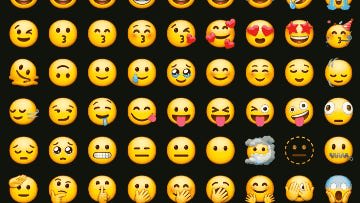
The expanding library of nearly 4,000 emojis reflects the evolving nature of digital communication. As we reach the limits of literal representation, future symbols may shift toward complex metaphors and nuanced emotional expression.
The Evolution of Digital Hieroglyphs
In our modern digital landscape, the emoji has transcended its origins as a niche Japanese mobile feature to become a universal shorthand. With nearly 4,000 unique icons currently integrated into our devices, users are finding that the sheer volume of choices can paradoxically hinder communication. The struggle to locate specific symbols—like a trophy or a heart—amidst a sprawling library highlights a growing friction between the desire for expressive precision and the limitations of user interface design.
Historical Context: From Clay to Code
To understand the future of emojis, we must look at the history of human writing. Ancient systems, such as Sumerian cuneiform, began as a method for cataloging physical objects—tracking grain, livestock, and trade. Much like our current emoji library, these early systems were limited by the physical constraints of the medium. When the inventory of objects became too vast to manage through simple pictographs, civilizations were forced to evolve, stretching literal images into abstract metaphors to represent concepts, sounds, and ideas.
The Metaphorical Pivot
We are currently standing at a crossroads similar to the transition from ideograms to phonetic alphabets. As we approach the threshold of 4,000 emojis, the 'literal' phase of digital iconography is nearing exhaustion. It is increasingly difficult to add new, distinct physical objects without creating redundancy or clutter. Consequently, the next wave of development will likely pivot toward the metaphorical, where symbols represent complex emotional states, social dynamics, and nuanced interactions rather than just nouns.
Psychological Implications of Digital Language
Human brains are hardwired for visual processing, which explains the rapid adoption of emojis as a supplement to text. However, as the library grows, the cognitive load required to parse these symbols increases. We are essentially building a new, non-linear language. The challenge for developers and linguistic committees like the Unicode Consortium is to maintain a balance where these symbols remain intuitive enough to be understood without requiring a manual.
Predicting the Future of Expression
Looking ahead, the next 4,000 emoji will likely be defined by scalability and context-awareness. Rather than adding more obscure objects, future updates might focus on dynamic icons that change based on user context or sentiment. This shift mirrors the historical progression of language, where humanity moved from cataloging the tangible world to conceptualizing the abstract. By embracing metaphor, digital communication will continue to bridge the gap between static text and the fluid, emotive nature of human speech.