GE boosts profit outlook, but stock falls as booming order growth cools
Source Entity
Tomi Kilgore
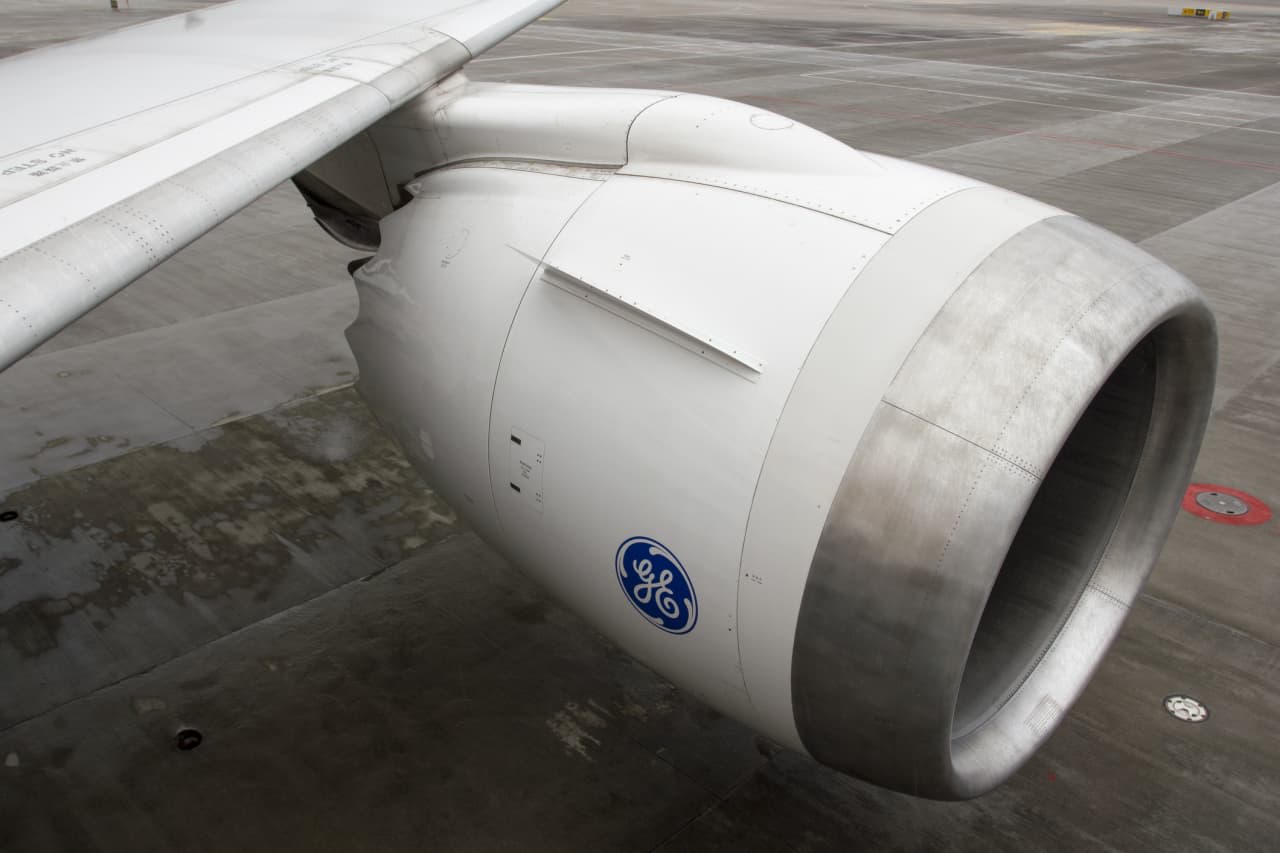
GE Aerospace raised its profit outlook, yet its stock price declined following its earnings report. The market reaction is driven by a cooling trend in the company's previously rapid order-book growth.
Market Paradox: GE Aerospace Profit Guidance vs. Stock Performance
In a striking example of market psychology, GE Aerospace has found itself in a paradoxical position where positive financial forecasting has led to a negative stock reaction. Despite the company boosting its profit outlook—a move that typically signals confidence and operational strength—the stock price fell following its latest earnings release. This divergence highlights the critical distinction between current profitability and the forward-looking growth trajectories that institutional investors prioritize when valuing high-cap industrial stocks.
The Tension Between Profits and Growth Momentum
The core of the issue lies in the cooling of GE Aerospace's order-book growth. While the company is currently making more money and expects to increase its profit margins, the rate at which new orders are being added is slowing down. In the aerospace industry, the order book serves as a primary leading indicator of future revenue. When growth in this area cools, investors often perceive it as a sign that the peak of a demand cycle has been reached, leading to a preemptive sell-off even if the current balance sheet remains robust.
Historical Context: The GE Transformation
To understand the stakes, one must look at GE's broader strategic evolution. The company has recently undergone a massive structural transformation, splitting into three distinct entities: GE HealthCare, GE Vernova, and GE Aerospace. This strategic pivot was designed to unlock shareholder value by allowing each business to operate with agility and focus. As the remaining core of the original conglomerate, GE Aerospace now carries the burden of proving it can sustain hyper-growth independently. The stock's sensitivity to order-book fluctuations is a direct result of this new, singular focus on aviation.
Broader Industry Implications
The cooling growth in orders likely reflects a normalization of the aviation sector. Following the pandemic-induced slump, the industry experienced a massive surge in demand for new aircraft and engine upgrades as travel rebounded. However, as the market stabilizes, the "booming" phase of this recovery naturally transitions into a steadier growth phase. Furthermore, global supply chain constraints continue to plague the aerospace sector, meaning that even if demand exists, the ability to convert that demand into firm, rapid order growth is often throttled by production bottlenecks.
Investor Sentiment and the "Priced for Perfection" Trap
The fact that the stock fell "again" suggests that GE Aerospace may be caught in a "priced for perfection" scenario. When a company's stock reaches high valuations based on expectations of continuous, rapid expansion, any signal of deceleration—even if the company is still growing and profitable—is viewed as a failure to meet the highest possible expectations. Investors are not reacting to a decline in absolute value, but rather to a decline in the acceleration of that value.
Future Outlook and Strategic Sustainability
Looking ahead, GE Aerospace must shift the investor narrative from one of rapid expansion to one of sustainable, high-margin dominance. By boosting its profit outlook, the company is signaling that it can extract more value from its existing operations and services. The long-term health of the company will likely depend on its ability to maintain service contracts and engine maintenance (aftermarket services), which provide steadier cash flows than the volatile cycle of new aircraft orders.
Conclusion
GE Aerospace's current situation underscores a fundamental truth of the modern stock market: profitability is necessary, but growth momentum is what drives price. While the boosted profit outlook is a strong indicator of operational health, the cooling order-book growth has triggered a cautious reaction from shareholders. The company remains a powerhouse in the aviation sector, but it is now entering a phase where it must balance the transition from post-pandemic volatility to long-term industrial stability.
Verification Required?