German Peasants' War
Source Entity
Hacker News
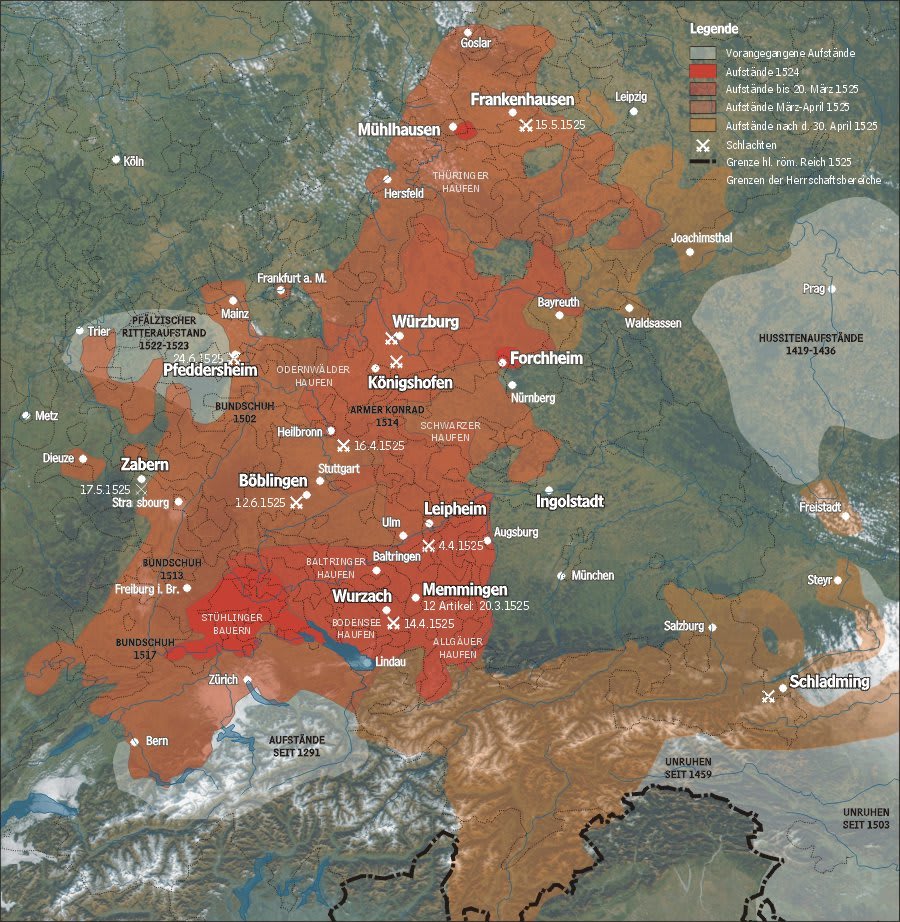
The German Peasants' War was a widespread, decentralized uprising across central Europe characterized by a lack of military resources and leadership among the peasantry. Despite initial momentum, the movement was ultimately suppressed by the disciplined and well-funded forces of the establishment.
The German Peasants' War: A Historical Analysis
The German Peasants' War, also known as the Great Peasants' Revolt or Deutscher Bauernkrieg, represents one of the most significant social upheavals in early modern European history. This series of insurrections, which spanned across modern-day Germany, Alsace, and parts of Austria, reflected deep-seated grievances among the rural population against the prevailing feudal order. While the movement sought systemic change, it was fundamentally hampered by its own structural deficiencies and the overwhelming military superiority of the ruling classes.
Structural Limitations and Organizational Failure
One of the most critical factors in the failure of the uprising was the democratic, yet disorganized, nature of the peasant movement. Unlike the professional armies they faced, the peasants lacked a unified command structure. This decentralized approach meant that individual groups often acted in isolation, unable to coordinate their efforts or form a cohesive strategic front. Without a centralized hierarchy, the movement struggled to maintain momentum or respond effectively to the tactical maneuvers of their opponents.
The Asymmetry of Conflict
Beyond organizational issues, the military disparity between the two sides was profound. The peasants were largely untrained, possessing little to no military experience, and lacked the essential components of early modern warfare: artillery and cavalry. In stark contrast, their opposition was composed of disciplined, well-equipped professional armies led by experienced military commanders. Furthermore, the ruling powers benefited from ample funding, which allowed them to sustain long-term campaigns and secure the necessary logistics to suppress the revolt.
Geographical Scope and Evolution
The conflict did not ignite in a single location but rather began with a series of separate insurrections in the southwestern regions of modern-day Germany and Alsace. From these initial sparks, the fire of rebellion spread rapidly, engulfing central and eastern Germany and extending into present-day Austria. Even after the primary uprisings in Germany were systematically suppressed, the spirit of revolt proved resilient, briefly flaring up in several cantons of the Old Swiss Confederacy, demonstrating the widespread nature of the underlying social unrest.
Broader Implications and Historical Legacy
Though the Peasants' War was ultimately unsuccessful in achieving its immediate political goals, it remains a landmark event in European history. It highlights the inherent dangers of asymmetrical conflict where the socio-economic desperation of the masses clashes with the rigid, well-funded structures of the state. The suppression of the revolt solidified the power of the nobility for decades to come, yet the event itself planted the seeds for future discourse regarding class rights, land reform, and the limits of feudal authority.
Conclusion
In summary, the German Peasants' War serves as a cautionary historical study of how internal disorganization and a lack of military resources can undermine even the most widespread and passionate social movements. While the peasants were unified by their grievances, they were ultimately defeated by the superior discipline and material advantages of their adversaries. The legacy of the conflict continues to be analyzed as a pivotal moment in the transition toward modern societal structures.