Chip firms fall in US and Asia as AI jitters rattle investors
Source Entity
BBC News
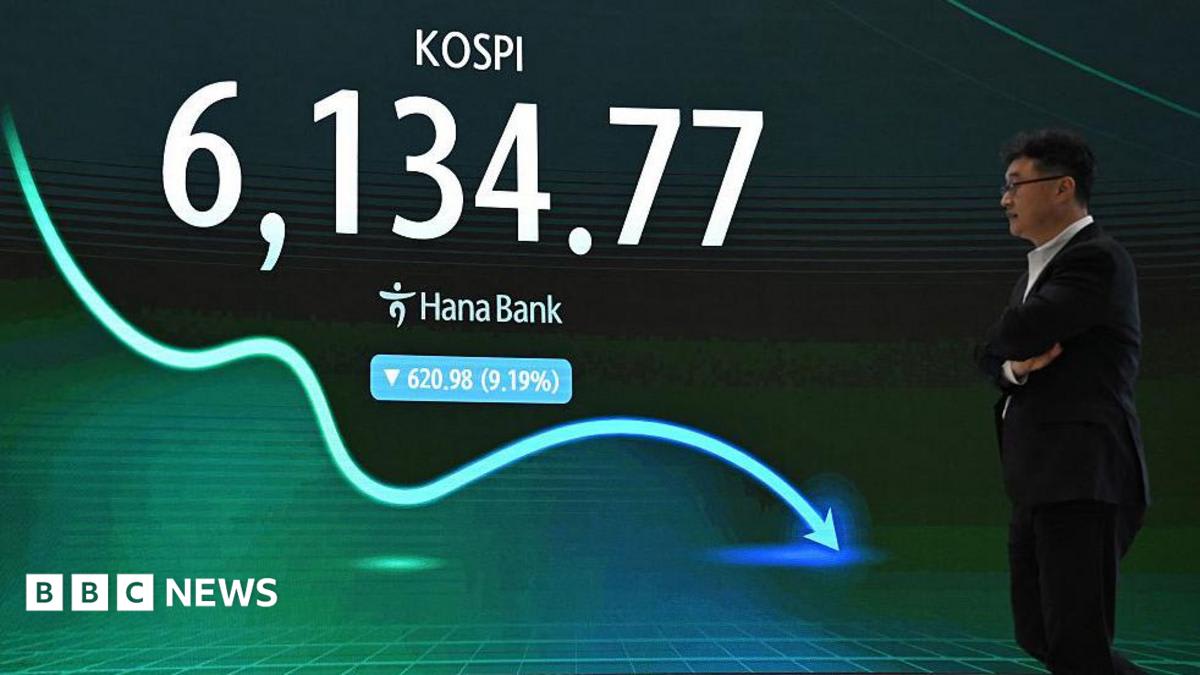
Global chip stocks have plummeted as investor confidence in the AI sector wanes, causing significant market volatility in South Korea and the US. The sell-off, led by major memory chipmakers like Samsung and SK Hynix, reflects mounting concerns over AI-related financing and unsustainable capital expenditure.
The Global Chip Rout: AI Optimism Faces a Reality Check
The recent, sharp decline in semiconductor stocks across the United States and Asia signals a profound shift in investor sentiment regarding the artificial intelligence boom. For months, the market has been driven by insatiable demand for AI infrastructure, but the current sell-off suggests that the 'AI trade' is undergoing a painful reassessment. As chip giants like Nvidia, Samsung Electronics, and SK Hynix see their valuations compress, investors are increasingly scrutinizing the sustainability of the massive capital expenditures currently fueling the industry.
The Epicenter of the Sell-off: South Korea
South Korea’s financial markets have become the primary battleground for this correction. The Kospi index experienced a dramatic 10% plunge, triggering circuit breakers—a mechanism designed to curb panic selling—eight times this year alone. The intensity of this decline, particularly for industry titans like Samsung Electronics and SK Hynix, underscores the vulnerability of the memory chip sector. Because these firms are critical suppliers of high-bandwidth memory (HBM) chips for AI servers, their stock performance serves as a direct proxy for the health of global AI spending.
Contagion Spreads to Japan and the US
The volatility has not been contained within the Korean peninsula. Across the Pacific and in Japan, the sentiment is similarly bearish. Tokyo Electron, Advantest, and Kioxia have all recorded double-digit declines, while SoftBank Group—a major proxy for AI investment—has faced significant pressure. In the United States, Nvidia’s recent dip, which saw it surrender the title of the world’s most valuable company to Apple, has acted as a catalyst for broader tech-heavy index declines, as seen in Nasdaq-100 futures.
Concerns Over 'Circular Financing'
A critical, emerging narrative behind this sell-off is the concern over 'circular financing' deals. Reports indicating that Nvidia may be exploring a massive $250 billion funding backstop for OpenAI have sparked fears that the AI ecosystem is being artificially propped up. Investors are questioning whether the revenue generated by AI companies is sufficient to justify the astronomical investments being made by hyperscalers, or if the industry is trapped in a loop of self-referential capital allocation.
Historical Context and Future Trends
The semiconductor industry is historically cyclical, characterized by periods of intense over-investment followed by supply gluts. While the current demand for AI-specific hardware is unprecedented, the market is now demanding proof of tangible returns on investment (ROI). Moving forward, we can expect increased volatility as analysts wait for earnings reports to confirm whether the demand for AI infrastructure will continue to outpace supply or if the current valuation multiples were simply unsustainable.
Conclusion
The ongoing rout in chip stocks represents a critical juncture for the global technology market. While the long-term potential of artificial intelligence remains a significant technological driver, the immediate financial reality is one of caution. The market is currently pivoting from a phase of irrational exuberance to one of fundamental analysis, where the primary focus is shifting away from growth at any cost toward sustainable profitability and verifiable market demand.
Multiple Citing Sources