‘Free Umar Khalid’ placard draws police action at Goa protest
Source Entity
Pavneet Singh Chadha
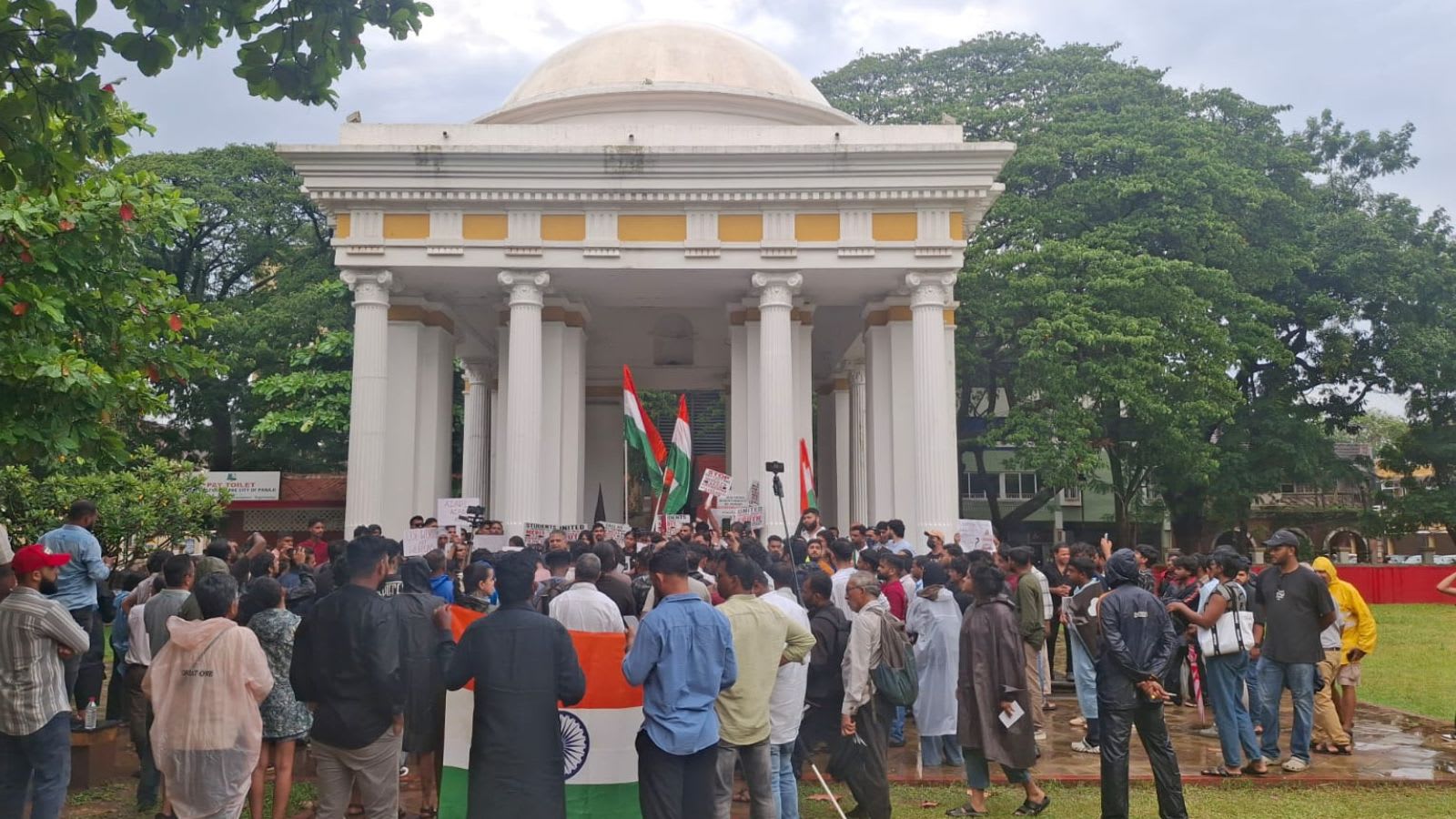
Goa Police have detained individuals and filed an FIR following a protest in Panaji where participants displayed placards demanding the release of activist Umar Khalid. The incident occurred during a demonstration celebrating the resignation of former Education Minister Dharmendra Pradhan.
Tensions Flare in Panaji Over Activist Support
The recent events at Azad Maidan in Panaji have highlighted the ongoing friction between civil liberty advocacy and state regulatory enforcement in Goa. Following a gathering intended to mark the resignation of former Education Minister Dharmendra Pradhan—a development stemming from the nationwide NEET paper leak controversy—the atmosphere shifted significantly when participants began displaying placards calling for the release of jailed activist Umar Khalid, Sharjeel Imam, and the 'Bhima Koregaon 16'.
Police Action and Legal Ramifications
Goa Police responded swiftly to the demonstration, citing the lack of prior authorization for the assembly as the primary justification for their intervention. An FIR was registered against unknown supporters of the Cockroach Janta Party (CJP) and other protesters for unlawful assembly. The detention of individuals, including a youth identified as Danish, was executed after placards were displayed at the protest site, sparking a follow-up march by other attendees to the Police Headquarters to demand the detainees' immediate release.
The Context of the Protests
The demonstrations in Panaji were part of a broader, nationwide wave of activism spearheaded by the CJP, specifically targeting the perceived systemic failures in the education sector, exemplified by the NEET paper leak. The resignation of Dharmendra Pradhan became a focal point for these groups, who used the public space of Azad Maidan to channel grievances against the central government's handling of academic integrity.
Umar Khalid and the Legal Landscape
Umar Khalid, a central figure in the controversy, remains incarcerated in connection with the 2020 northeast Delhi riots. The inclusion of his name, alongside other high-profile detainees from the Bhima Koregaon case, suggests that the protesters were aiming to create a broader coalition of dissent, linking regional educational concerns with national-level civil rights issues. This tactic often results in heightened police scrutiny, as authorities categorize such demonstrations as potential threats to public order.
Broader Implications for Civil Expression
The incident underscores a recurring trend in Indian political discourse where local protests are quickly met with administrative obstacles, such as the requirement for 'prior permission.' By filing an FIR against 'unknown supporters,' the police have signaled a strict approach to managing public dissent in the state. This legal maneuver serves as a deterrent against the convergence of disparate political causes in public squares.
Looking Ahead: The Future of Public Dissent
As the fallout from the NEET controversy continues to reverberate, it is likely that similar clashes between activists and law enforcement will persist. The demand for the release of Umar Khalid and others acts as a lightning rod for broader anti-establishment sentiment. Future trends indicate that authorities will likely maintain a heavy presence at public gatherings, while activists may continue to test the boundaries of permitted speech in their pursuit of judicial and systemic reform.