Modi govt says no ‘goli’ fired at CJP protest, but Rahul sticks to ‘pellets’ claim, cites medical evidence
Source Entity
Latest News: Todays Latest News Headlines from India & World | Hindustan Times | Hindustan Times
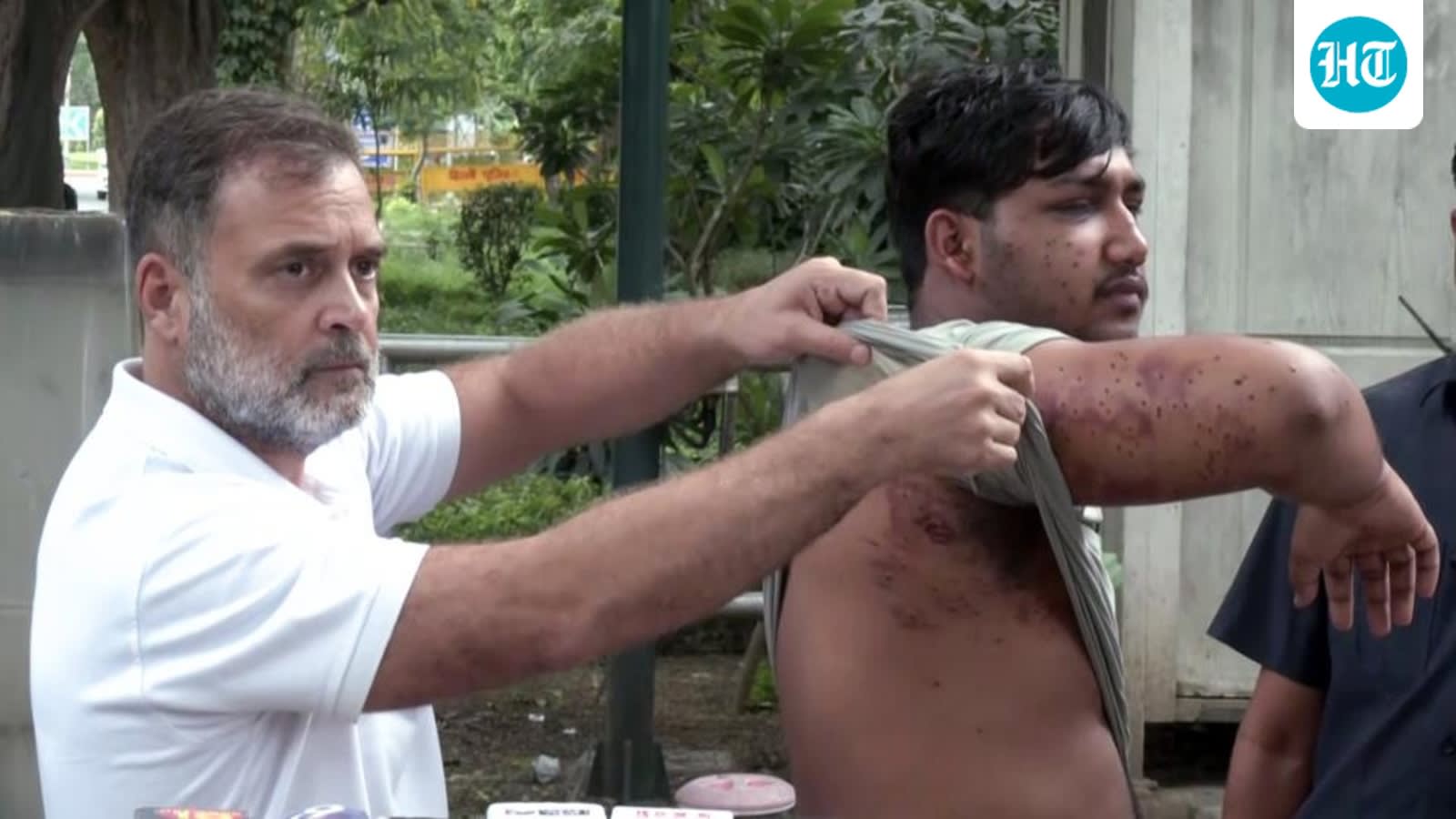
The Indian government has denied using bullets against Cockroach Janta Party protesters, asserting only tear gas was deployed. However, opposition leader Rahul Gandhi maintains that pellet injuries suggest excessive force, highlighting a growing parliamentary divide.
Parliamentary Standoff Over Security Crackdown
The ongoing Monsoon Session of Parliament has been marked by a sharp confrontation between the Union government and the Opposition regarding the security response to the 'Chalo Sansad' march organized by the Cockroach Janta Party (CJP) on July 20. At the center of the dispute is the nature of the force used against student protesters, with the government categorically denying the use of live ammunition while the Opposition insists that medical evidence points to the use of pellets.
Government Stance vs. Opposition Claims
Minister of State Jitendra Singh, speaking in the Lok Sabha, addressed allegations that the Union Home Ministry ordered a violent crackdown. Singh firmly asserted that no 'goli'—interpreted as live bullets—was fired at the protesters. According to the government's official account, the security forces restricted their crowd-control measures to the deployment of tear gas shells. This narrative is intended to deflect accusations of state-sanctioned brutality against students exercising their right to protest.
Conversely, Congress leader Rahul Gandhi has challenged this account, presenting physical evidence to support claims of excessive force. By appearing alongside an individual who allegedly sustained pellet injuries during the July 20 march, Gandhi has sought to ground the political debate in tangible medical documentation. Independent reporting, including findings from HT, corroborates that at least five individuals suffered injuries consistent with pellet fire, creating a direct contradiction between government testimony and on-the-ground reports.
The Role of Negotiations and Accountability
Jitendra Singh’s role as a key negotiator with the CJP adds a layer of complexity to the discourse. By positioning himself as a primary point of contact during the unrest, his denial of gunfire carries significant weight within the administration's defensive strategy. However, the Opposition continues to demand clarity from Union Home Minister Amit Shah, arguing that the buck for security operations must stop at the highest level of the Ministry of Home Affairs.
Broader Implications for Civil Discourse
The intensity of this debate reflects a broader trend of polarization within Indian legislative proceedings, where the interpretation of protest-related violence becomes a proxy for larger ideological battles. The disagreement over the specific weaponry used—bullets versus pellets versus tear gas—is not merely semantic; it touches upon the fundamental protocols of state-citizen engagement and the boundaries of permissible force in a democracy.
Future Trends in Parliamentary Oversight
As the Monsoon Session progresses, this incident will likely serve as a blueprint for future parliamentary inquiries into law enforcement conduct. The reliance on medical evidence to counter official statements suggests that the Opposition will continue to leverage forensic and visual data to challenge government narratives. If the discrepancy between the government’s claims and the reported injuries remains unresolved, it risks further eroding trust in institutional accountability mechanisms and could lead to more frequent disruptions in the House as the Opposition demands a full-scale investigation into the security crackdown.
Verification Required?