Realtor says facilities at ‘premium Gurgaon societies’ are everyday part of life in Canada
Source Entity
Latest News: Todays Latest News Headlines from India & World | Hindustan Times | Hindustan Times
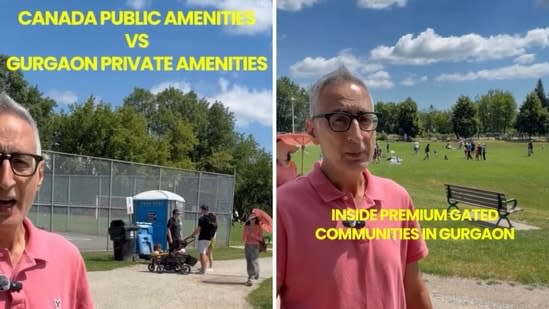
A viral video by a Delhi-NCR realtor highlights the disparity between 'luxury' private amenities in Gurgaon and standard public infrastructure in Canada. The commentary sparks a broader debate on urban planning and the definition of premium living in Indian real estate.
The Luxury Paradox in Indian Real Estate
In a thought-provoking social media discourse, Arun Prakash, a seasoned Delhi-NCR realtor with over two decades of experience, has ignited a debate regarding the conceptualization of 'premium' living in India. By contrasting the gated community lifestyle of Gurgaon with the standard public infrastructure observed in Canada, Prakash highlights a stark divergence in urban philosophy. The core of his argument rests on the observation that amenities like expansive parks, pedestrian-friendly sidewalks, and recreational spaces—often marketed as high-end 'luxury' features in Indian residential projects—are essentially foundational public goods in the Canadian urban landscape.
Defining the Premium Standard
The real estate market in Gurgaon has long relied on the 'gated community' model to provide residents with a sanctuary from the city's chaotic urban sprawl. In this context, private developers have successfully monetized basic infrastructure by bundling it into premium packages. These packages typically include private parks, jogging tracks, and manicured green spaces. Prakash’s commentary suggests that what Indian homebuyers are paying a premium for is essentially a substitute for the failure of public infrastructure to provide such spaces as a standard of living.
The Urban Planning Disconnect
This comparison underscores a deeper systemic issue within Indian urban planning: the reliance on private entities to facilitate a high quality of life. While Canada’s urban design prioritizes public accessibility as a fundamental right of the citizen, Gurgaon’s development model is heavily privatized. When public spaces are relegated to private developer control, it inevitably leads to a socio-economic divide where only those who can afford luxury real estate gain access to basic environmental and recreational standards. This creates a cycle where 'luxury' is defined not by exclusivity of design, but by the presence of basic civic amenities.
Historical Context and Expectations
The evolution of the Indian middle-class aspiration has been inextricably linked to the 'gated community' concept. Over the last twenty years, as the NCR region underwent rapid modernization, the marketing of 'luxury' became the primary driver for high-value real estate transactions. Prakash’s insights reflect a growing awareness among urban dwellers who are increasingly exposed to global standards of living. As connectivity and international migration increase, the threshold for what constitutes a 'premium' property is likely to undergo a significant shift, forcing developers to look beyond internal gated amenities and toward more sustainable, integrated urban development.
Future Trends in Residential Development
Looking ahead, the real estate sector may face pressure to pivot. If consumers begin to view basic public amenities as a standard requirement rather than a luxury, developers may struggle to justify exorbitant prices for gated facilities that merely mimic public infrastructure. We may see a future trend where value is derived from true architectural innovation, sustainability, and connectivity rather than just the enclosure of standard amenities. This shift could potentially influence local government policies, encouraging a transition toward more inclusive, public-facing urban environments that do not require a luxury price tag for access.
Conclusion
Ultimately, Arun Prakash’s viral observation serves as a mirror for India's rapidly evolving real estate market. It challenges the status quo of the Delhi-NCR property sector and forces a conversation about whether the current model of 'luxury living' is sustainable or merely a stop-gap for broader urban deficiencies. As the market matures, the definition of a 'premium' home will likely need to evolve from a private, enclosed experience to one that integrates seamlessly with a well-planned, high-quality public domain.
Verification Required?