The Daily Catch-Up: Gurgaon rain crisis, Bihar student protests, Supreme Court OBC row and more
Source Entity
The Indian Express
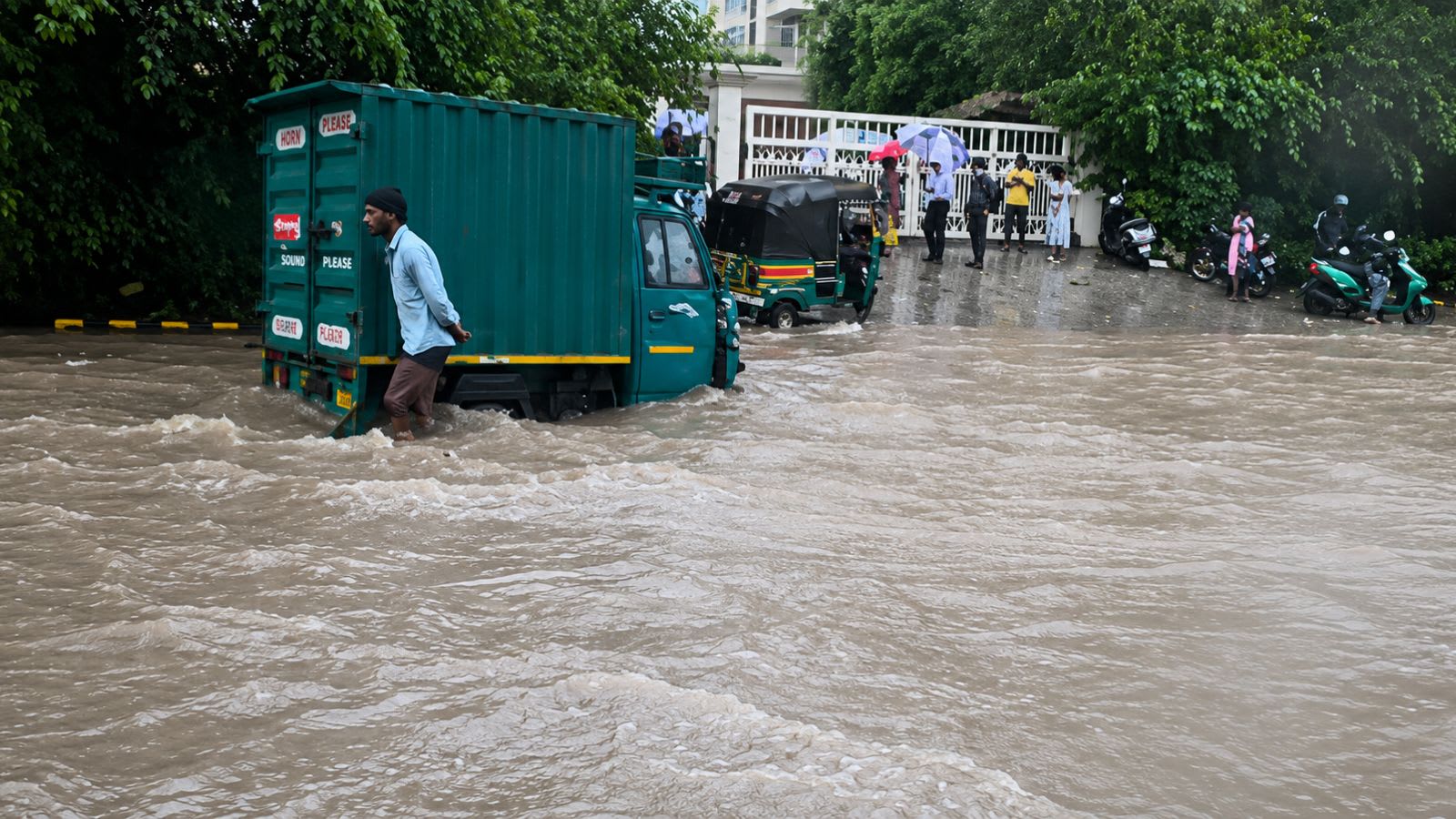
Severe monsoon rains have paralyzed Gurugram, causing significant flooding even in elite areas like Golf Course Road. The crisis has sparked a broader debate about the city's crumbling infrastructure and the limitations of private wealth in mitigating urban decay.
The Illusion of Urban Insulation: Gurugram’s Infrastructure Crisis
Recent monsoon events in Gurugram have laid bare the fragility of urban planning in India’s rapidly developing financial hubs. When 75 mm of rainfall—with 52 mm concentrated in a mere three-hour window—leads to total systemic collapse, it signifies more than just a seasonal weather challenge. It highlights a recurring pattern of infrastructure failure that transcends the boundaries between working-class localities and the ultra-wealthy enclaves of "Billionaires’ Row."
The Failure of the Elite Enclave
Perhaps the most striking aspect of the recent crisis was the flooding outside DLF Magnolias on Golf Course Road. In an area where real estate commands prices exceeding Rs 85,000 per square foot and individual units sell for as much as Rs 85 crore, one would expect a level of civic resilience that matches the financial investment. However, the viral footage of knee-deep, muddy water at such a prestigious address serves as a stark reminder that even private capital cannot fully insulate residents from the consequences of poor municipal drainage and systemic neglect.
The Limits of 'Buying Out' of Tribulations
For the affluent, the common strategy to navigate Indian urban life has been to "buy their way out" of systemic shortcomings. By utilizing air-conditioned private vehicles, relying on private schools, and outsourcing domestic care, the wealthy have historically maintained a bubble of comfort. This lifestyle creates a psychological distance from the realities faced by the majority, who rely on public infrastructure. Yet, as the recent waterlogging demonstrates, this bubble is porous. When public systems fail, the luxury of a private car or a gated community is insufficient against the rising tide of urban mismanagement.
Infrastructure and Accountability
The public outcry, exemplified by social media discourse, centers on a lack of accountability. Residents and observers note that despite the massive tax contributions and real estate investments in Gurugram, the drainage systems remain abysmal. The contrast between the city's status as a corporate hub and its inability to handle a standard monsoon spell raises critical questions about how urban development is prioritized. The focus appears to have been on vertical growth and high-end residential projects rather than the foundational utility networks required to sustain a modern city.
The Human Cost of Urban Collapse
Beyond the property damage and the disruption to luxury living, there is a profound human cost. The report of a father struggling to transport his daughter home during the deluge serves as a poignant reminder of the daily vulnerability of the average citizen. While the wealthy may face temporary inconvenience, the broader population faces significant risks to safety, health, and economic stability. This incident is not an isolated weather anomaly; it is a symptom of a city struggling to reconcile its rapid growth with its stagnant administrative capacity.
Future Outlook: A Call for Structural Reform
Looking ahead, the Gurugram crisis forces a re-evaluation of the 'gated community' model of urban development. If the most expensive real estate in the country cannot guarantee basic access during a monsoon, the model is inherently flawed. For Gurugram to remain a viable business and residential center, the focus must shift from superficial beautification to rigorous, long-term investment in drainage and public utility infrastructure. Without a fundamental change in governance and urban planning, the city risks becoming a cautionary tale of how unchecked development without foundational support inevitably leads to systemic failure.