Caste-based discrimination against Mallikarjun Kharge condemnable: Kerala Chief Minister Satheesan
Source Entity
India Latest News: Top National Headlines Today & Breaking News | The Hindu
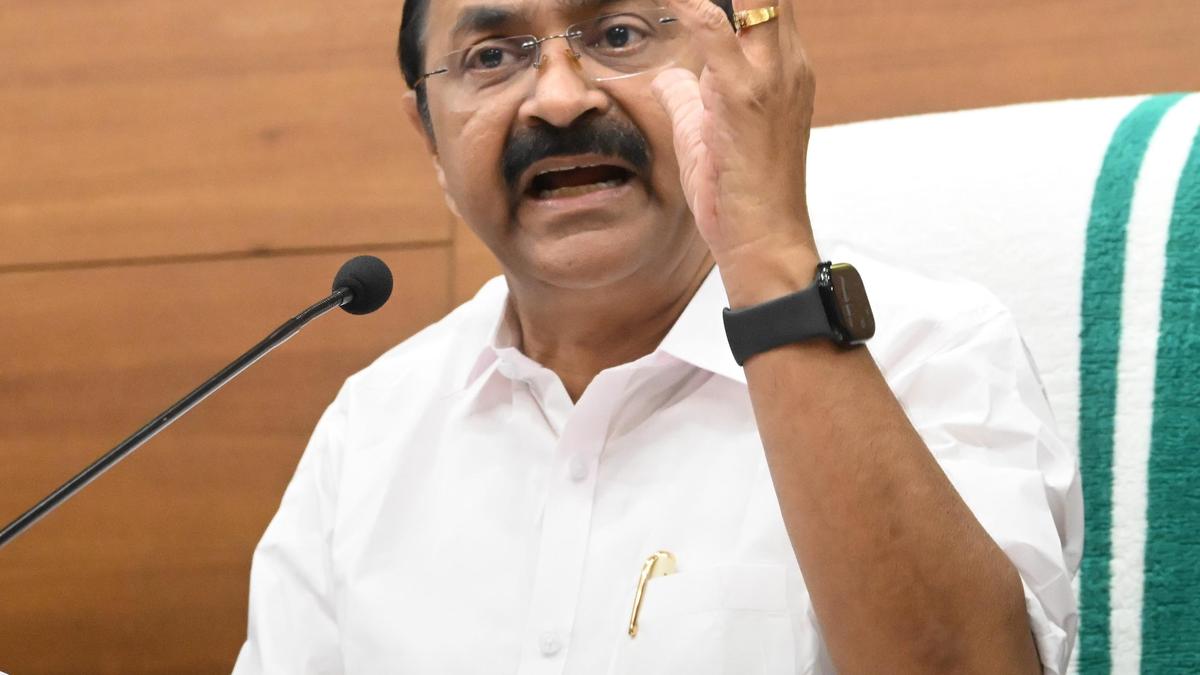
A political controversy has erupted in the Rajya Sabha following reports that a stage used by Congress President Mallikarjun Kharge for a rally in Uttarakhand was 'purified' with rituals. The incident has drawn sharp condemnation from political leaders, who label it a violation of constitutional values and caste-based discrimination.
The Haldwani Ritual Controversy: A Deep Dive
An Unprecedented Parliamentary Uproar
The political landscape in India witnessed a fresh wave of tension this week as the Rajya Sabha became the stage for a heated confrontation regarding an incident in Haldwani, Uttarakhand. Congress President and Leader of the Opposition, Mallikarjun Kharge, brought to the floor of the House allegations that a venue he had used for a public rally—the Ram Lila Maidan—was subjected to a 'shuddikaran' (purification) ritual by individuals linked to the BJP immediately following his departure. Rajya Sabha Chairman CP Radha Krishnan has since ordered a formal government inquiry into the matter, acknowledging the gravity of the accusations.
The Intersection of Ritual and Politics
At the heart of this dispute is the claim by the Congress party that the ritual, performed by members of the Shri Ram Sena Dharmarth Seva Nyas Sangathan, was motivated by caste-based prejudice. Kharge, a prominent Dalit leader, argued that such actions are not merely symbolic but represent a regressive attempt to stigmatize his presence at a public forum. By suggesting the stage required 'purification' after his address, critics argue that the perpetrators are reinforcing archaic social hierarchies that the Indian Constitution explicitly rejects.
Constitutional Implications and Democratic Values
The incident has sparked a wider debate regarding the sanctity of democratic spaces. Kerala Chief Minister V.D. Satheesan joined the chorus of condemnation, framing the event as a blatant violation of the right to equality guaranteed by the Constitution of India. From a legal and ethical standpoint, the use of religious rituals to 'cleanse' a public space after a political leader's visit challenges the secular ethos of public discourse, suggesting that certain individuals are deemed 'impure' based on their background or political identity.
The BJP's Response and Political Polarization
While the Congress party and its allies have framed this as a targeted insult against the Dalit community, the political fallout continues to deepen. The BJP and its associated organizations are now under intense scrutiny to explain the motivations behind the ritual performed on August 10. As the government prepares its inquiry report, the incident highlights the increasingly polarized nature of Indian politics, where religious symbols are frequently repurposed for political signaling, often leading to deep social fractures.
Future Trends in Political Discourse
This controversy serves as a bellwether for the upcoming political climate, where the intersection of caste identity and public conduct will likely remain a flashpoint. As the Rajya Sabha inquiry proceeds, the findings will be critical in determining whether such acts are treated as isolated incidents of overzealous activism or indicative of a systemic issue within local political cadres. The outcome will likely influence how political parties manage their grassroots supporters to avoid optics that could be perceived as discriminatory or inflammatory in an increasingly digital and hyper-aware public square.
Multiple Citing Sources
Verification Required?