Highways Dept. calls for consultants to prepare DPR on linking OMR, ECR
Source Entity
India Latest News: Top National Headlines Today & Breaking News | The Hindu
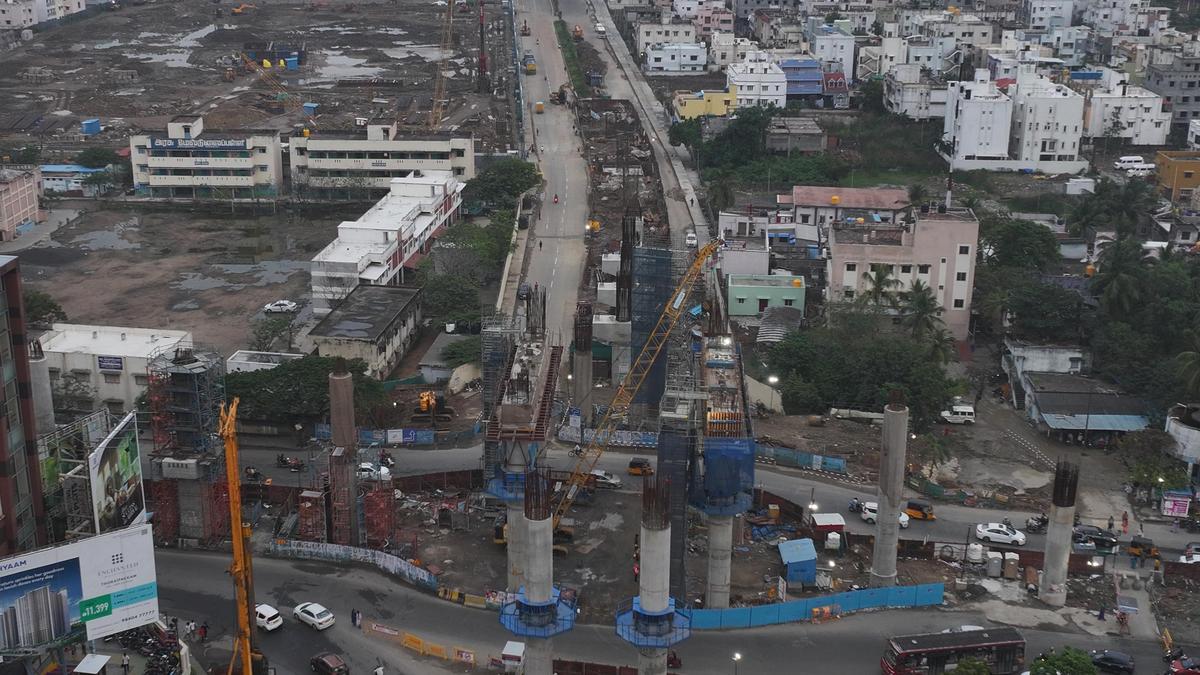
The Tamil Nadu Highways Department has initiated the process to link OMR and ECR between Sholinganallur and Kovalam. This project aims to decongest the IT corridor by providing a vital cross-link for high-volume traffic.
Enhancing Connectivity: The Strategic Link Between OMR and ECR
The Tamil Nadu Highways Department has officially invited consultants to prepare a Detailed Project Report (DPR) for a proposed road link connecting Rajiv Gandhi Salai (OMR) and the East Coast Road (ECR) between Sholinganallur and Kovalam. This infrastructure initiative marks a significant step in urban planning for the Chennai metropolitan area, specifically targeting the high-density IT corridor that has become the backbone of the region's economic activity.
Addressing the IT Corridor Congestion
OMR, widely recognized as Chennai’s primary IT corridor, currently struggles with the burden of approximately two lakh vehicles daily. The sheer volume of commuters and logistics traffic has led to persistent bottlenecks, impacting productivity and quality of life for residents and employees alike. By creating a cross-link to the ECR, the department intends to distribute traffic load more efficiently across the city’s coastal infrastructure.
Leveraging Parallel Infrastructure
Historically, OMR and ECR have functioned as parallel arterial roads extending toward Mamallapuram. While OMR remains saturated, the urban stretch of the ECR currently experiences significantly lower traffic density. This disparity in usage presents a unique opportunity for urban planners to divert overflow from the IT corridor, effectively utilizing the existing capacity of the ECR to serve as a relief valve for city-bound motorists.
Project Scope and Timeline
Valued at ₹14.20 lakh, the consultancy contract mandates a strict three-month turnaround for the delivery of the DPR. This aggressive timeline underscores the urgency with which the state government is approaching the congestion crisis. The scope of work is comprehensive, requiring consultants to perform a topographical survey of the proposed site, establish a viable road alignment, and conduct a classified traffic volume count to project long-term usage patterns.
Origin-Destination Analysis and Future Trends
Beyond mere construction, the project necessitates a rigorous origin-destination study. This analytical approach ensures that the new link will not only serve current commuters but also accommodate future urban expansion. By understanding where motorists originate and where they intend to travel, the Highways Department can ensure that the infrastructure is future-proofed against the inevitable growth of Chennai’s suburbs.
Conclusion
This initiative represents a proactive approach to metropolitan infrastructure management. By integrating the high-traffic OMR with the underutilized stretches of the ECR, the government is not merely building a road, but optimizing the entire transportation grid of the region. Successful execution of this project within the three-month window will be a critical benchmark for future infrastructure developments in the state.
Verification Required?