Fear of humanoid robots spurs human workers to strike at Hyundai auto factory
Source Entity
Jeremy Hsu
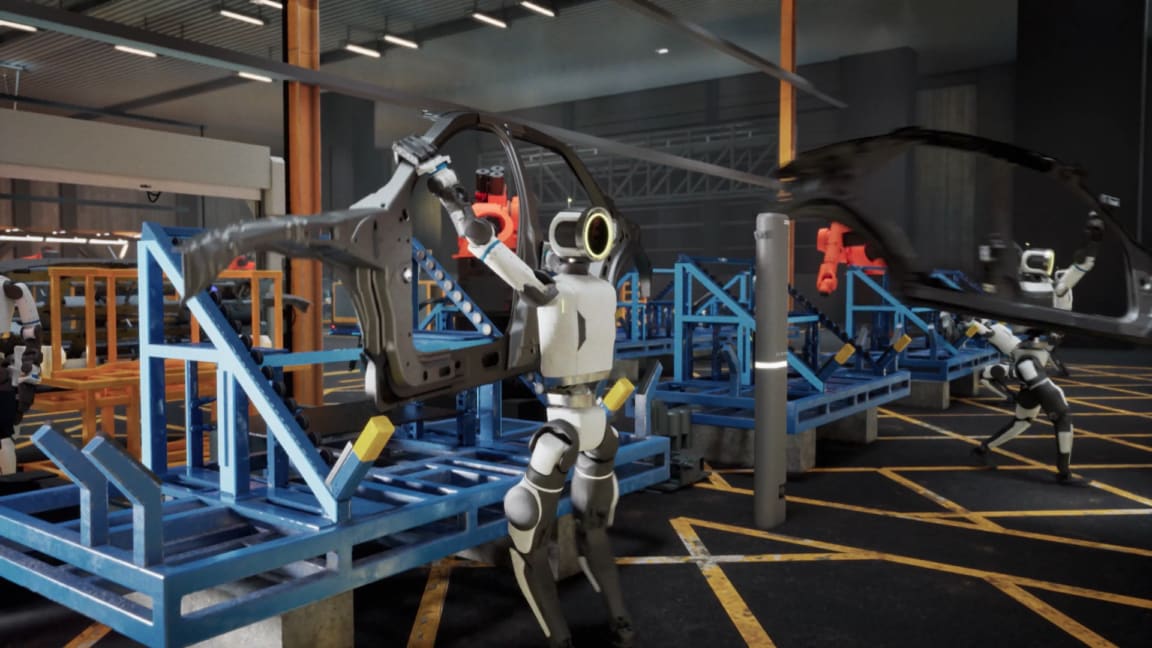
Hyundai workers at the Ulsan plant in South Korea have initiated partial strikes over the company's plan to deploy 25,000 Boston Dynamics Atlas humanoid robots. This event marks the first automotive industry stoppage specifically triggered by the introduction of humanoid automation.
The Collision of Automation and Labor: Hyundai's Humanoid Crisis
In a landmark confrontation between industrial labor and cutting-edge technology, thousands of unionized workers at Hyundai's automotive production complex in Ulsan, South Korea, have begun walking off the job. This dispute is not a standard wage negotiation but represents a fundamental clash over the future of work. The strike is specifically triggered by Hyundai's plans to integrate humanoid robots into its manufacturing process, marking what is being recognized as the car industry's first factory stoppage addressing humanoid robots. This event signals a new era of labor unrest where the fear is not just about efficiency, but about the total replacement of human dexterity with robotic precision.
The Technological Catalyst: Boston Dynamics and Atlas
At the center of this conflict is the Atlas robot, developed by the renowned US robotics firm Boston Dynamics. The strategic importance of this technology is underscored by the fact that Boston Dynamics is transitioning to become a wholly owned subsidiary of Hyundai. By bringing the developer in-house, Hyundai is positioning itself to lead the global shift toward advanced automation. The scale of the ambition is staggering: the company aims to deploy more than 25,000 Atlas robots across various Hyundai and Kia manufacturing plants. This massive rollout suggests a shift from robots as static tools to robots as mobile, adaptable workers capable of performing complex tasks previously reserved for humans.
The Economic Rationale vs. Human Cost
From a corporate and financial perspective, the transition to humanoid robotics is driven by a compelling return on investment. According to Esther Yim, an analyst at Samsung Securities Co., each Atlas robot is estimated to cost approximately $130,000. While this is a significant upfront capital expenditure, the projected operational efficiency is so high that the robots may pay for themselves within just two years. For Hyundai, the allure of reduced long-term labor costs and increased 24/7 productivity outweighs the immediate friction of labor disputes. However, for the workers in Ulsan, this economic efficiency translates directly into job insecurity and the devaluation of human skill.
Escalation of Labor Unrest
The intensity of the workers' pushback is evident in the breakdown of negotiations. Despite 15 rounds of talks, the union and the automaker have failed to reach an agreement, leading to a phased strike strategy. Workers initially expressed their grievances by ending day and night shifts two hours early between July 13 and July 15. The situation is expected to escalate further with planned four-hour strikes from July 20 to 22. This tactical approach to striking suggests a determined labor force that is utilizing strategic disruptions to force the company to provide guarantees regarding job security and the role of humans in a robot-integrated factory.
Global Implications and Future Trends
While the current unrest is centered in South Korea, the ripple effects will likely be felt globally, particularly in the United States. Hyundai has indicated that it plans to begin deploying Atlas robots in its US factories by 2028, though it has remained silent on the timeline for other regions. This foreshadows a potential wave of similar labor conflicts in North America, where automotive unions are already sensitive to automation. The Ulsan strike serves as a bellwether for the global manufacturing sector, suggesting that the transition to humanoid robotics will not be a seamless technical upgrade but a contentious socio-economic struggle.
Conclusion
Hyundai's attempt to revolutionize its production line with 25,000 humanoid robots has hit a critical wall of human resistance. The Ulsan strike underscores a growing tension in the global economy: the gap between the rapid pace of robotic innovation and the slower pace of labor policy and social adaptation. As the industry moves toward 2028 and beyond, the resolution of this conflict will likely set the precedent for how humanoid robots are integrated into the workforce worldwide, balancing the undeniable economic gains of automation against the essential need for human employment stability.