'Cause For Worry': Air Force Chief On Pak-China Fighter Jet Collaboration
Source Entity
NDTV News Search Records Found 1000
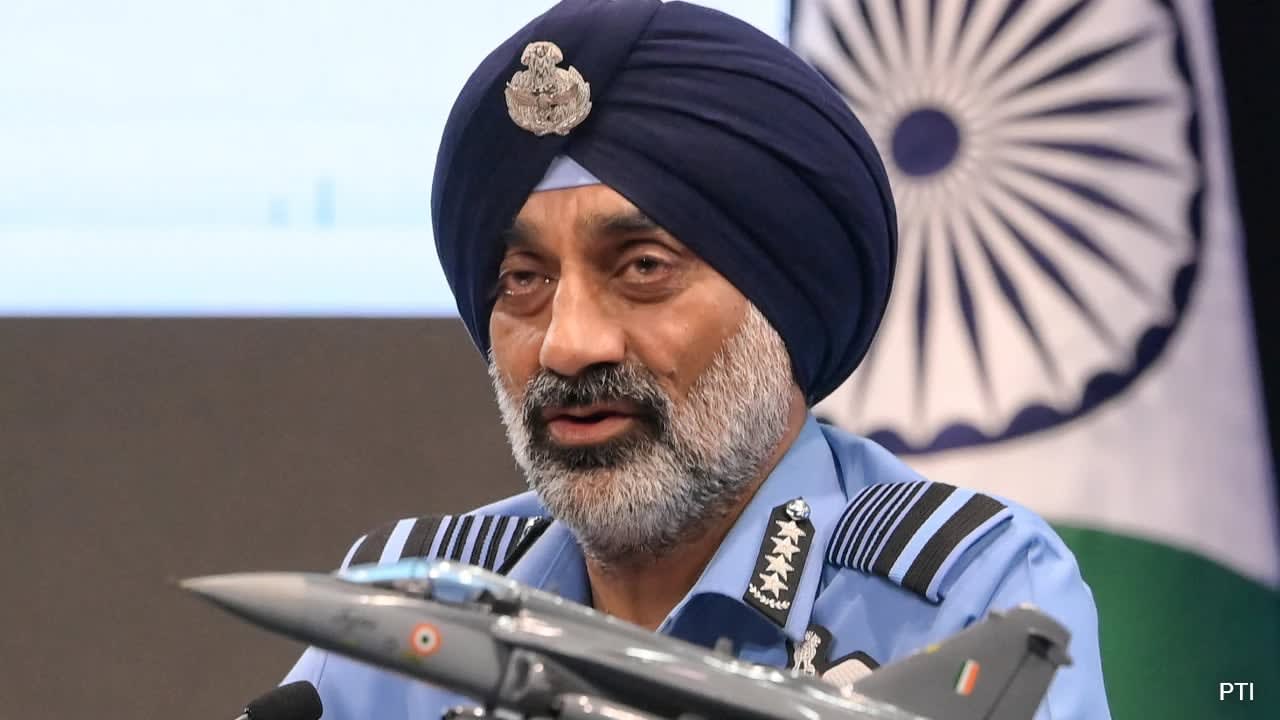
IAF Chief A.P. Singh aims to finalize the 114-jet MRFA deal by the current financial year to address urgent squadron depletion. The force is prioritizing domestic production and the AMCA program while keeping options like the Russian Su-57 open as contingencies.
Strengthening India's Aerial Deterrence: The MRFA Mandate
Indian Air Force (IAF) Chief Air Chief Marshal A.P. Singh recently highlighted a critical juncture for India's national security, emphasizing that the induction of new fighter jets must be accelerated to address persistent capability gaps. As the IAF approaches its 94th anniversary, the service faces the pressing challenge of maintaining a sanctioned strength of 42 combat squadrons. Currently, the force is struggling to keep its operational numbers from falling below the 30-squadron threshold, a gap that the Air Chief explicitly stated is causing tangible harm to the nation’s defensive posture.
The Strategic Importance of the MRFA Deal
The centerpiece of this modernization effort is the Multi-Role Fighter Aircraft (MRFA) program, which aims to procure 114 jets. Following the government's February 2026 approval of a framework to procure Rafale jets—a process nearly two decades in the making—the current focus has shifted toward finalizing price negotiations and local production logistics. Under the current proposal, these aircraft are slated to be manufactured in India through a partnership between French manufacturer Dassault Aviation and a local entity, aligning with the broader 'Make in India' defense industrial policy.
Industrial Scaling and Operational Requirements
To bridge the gap between current operational readiness and future requirements, Air Chief Marshal Singh underscored the necessity of producing between 36 and 40 aircraft annually. This industrial target is not merely an aspiration but a structural requirement to ensure that the IAF can sustain its combat readiness. The reliance on the Light Combat Aircraft (LCA) Mk-1A, the MRFA, and additional Sukhoi-30MKI units reflects a multi-layered approach to fleet management that balances indigenous manufacturing with necessary foreign acquisitions.
Contingency Planning and Fifth-Generation Aspirations
While the MRFA program remains the primary vehicle for fleet expansion, the IAF is also looking toward the future of fifth-generation warfare. The development of the Advanced Medium Combat Aircraft (AMCA) is a high-priority indigenous program, yet the Air Chief has adopted a pragmatic stance regarding potential delays. If the AMCA timeline slips, the IAF is prepared to evaluate alternatives, including the Russian Su-57, to ensure that India does not lose parity with regional adversaries who are also investing in fifth-generation technologies.
Beyond-Visual-Range (BVR) and Technological Superiority
Beyond airframe procurement, the IAF is aggressively bolstering its offensive capabilities through the integration of advanced weaponry. The planned induction of the indigenous ASTRA beyond-visual-range (BVR) air-to-air missile, along with supplementary foreign missile systems, is designed to enhance the lethality of the existing fleet. These technological upgrades are essential to maintaining air dominance in an increasingly contested regional environment.
Conclusion: A Path Toward Modernization
The ambition to finalize the MRFA deal by the end of the current financial year represents a significant milestone for Indian defense policy. By prioritizing consistent production rates and hedging against technological delays through diverse procurement strategies, the IAF is attempting to secure the necessary infrastructure to meet its 42-squadron mandate. As India moves forward, the success of these initiatives will be pivotal in maintaining the strategic balance of power in South Asia.
Multiple Citing Sources
Verification Required?