Embolo’s red vs Argentina in World Cup quarterfinal wrong, says IFAB
Source Entity
The Indian Express
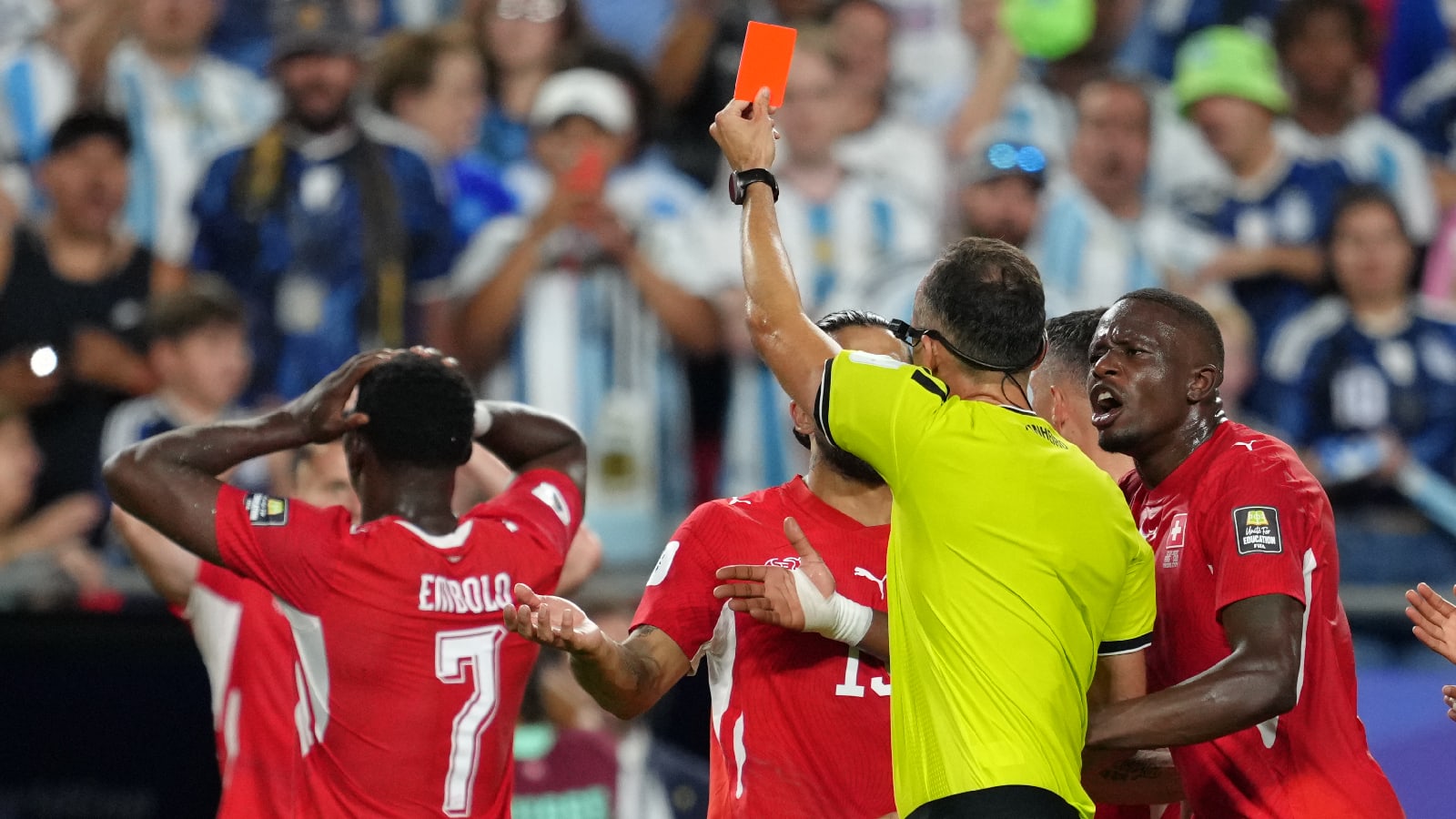
The International Football Association Board (IFAB) has officially ruled that the red card issued to Switzerland's Breel Embolo against Argentina was incorrect. This decision highlights ongoing controversies regarding officiating standards during the 2026 World Cup.
Controversial Officiating: The IFAB Ruling on Embolo
The footballing world remains gripped by the lingering controversies of the 2026 World Cup, even weeks after the conclusion of the tournament. The International Football Association Board (IFAB), the body responsible for governing the laws of the game, has officially declared that the red card issued to Swiss forward Breel Embolo during the quarter-final match against Argentina was a technical error. This admission adds a layer of complexity to the legacy of the tournament, questioning the consistency of match officials under high-pressure scenarios.
The Incident in Context
During the high-stakes quarter-final held in Kansas City, Missouri, Portuguese referee Joao Pinheiro dismissed Embolo following a second yellow card offense in the second half. At the time of the dismissal, the match was finely balanced at 1-1. The removal of the 29-year-old striker fundamentally altered the tactical landscape of the game, leaving Switzerland at a numerical disadvantage. Following the red card, Argentina capitalized on the space, scoring two goals during extra time to secure a 3-1 victory and progress to the next stage.
IFAB's Stance and Rule Interpretation
The specific incident involved Embolo going down after a challenge by Argentina's Leandro Paredes. IFAB’s intervention suggests that the interpretation of the challenge and the subsequent disciplinary action taken by Pinheiro did not align with the established laws of the game. By clarifying that the red card was unwarranted, IFAB has underscored the fallibility of on-field decision-making, even when utilizing modern officiating protocols. This ruling serves as a critical post-mortem for the match, highlighting the potential for refereeing errors to disproportionately influence the outcome of elite international competitions.
Broader Implications for Football
This incident is emblematic of the broader struggles faced by football authorities in balancing the speed of the game with the necessity for absolute accuracy. The fact that such a high-profile error occurred in a quarter-final match raises questions about the training and oversight of referees at the international level. As the sport continues to evolve, the pressure on officiating bodies to minimize such subjective errors only intensifies, particularly when outcomes have such significant historical consequences for the teams involved.
Historical Context and Future Trends
Historically, the intensity of World Cup matches often leads to debates regarding officiating, but the involvement of IFAB in post-tournament reviews signals a growing trend toward transparency and accountability. Moving forward, football governing bodies may need to consider more robust mechanisms for real-time intervention to prevent errors that fundamentally shift the momentum of knockout matches. The discourse surrounding the Argentina-Switzerland clash will likely serve as a case study for future refereeing seminars and potential adjustments to the Laws of the Game.
Conclusion
In summary, while the result of the match remains final, the acknowledgment by IFAB that Embolo should not have been sent off provides closure to one of the more contentious moments of the 2026 tournament. It reinforces the reality that even at the pinnacle of professional sports, human error remains an unavoidable variable. The legacy of this match will now forever be tied to the intersection of tactical prowess and the evolving standards of global football adjudication.