INCOIS warns of Marine Heat Wave, issues swell surge alert for east and west coasts
Source Entity
India Latest News: Top National Headlines Today & Breaking News | The Hindu
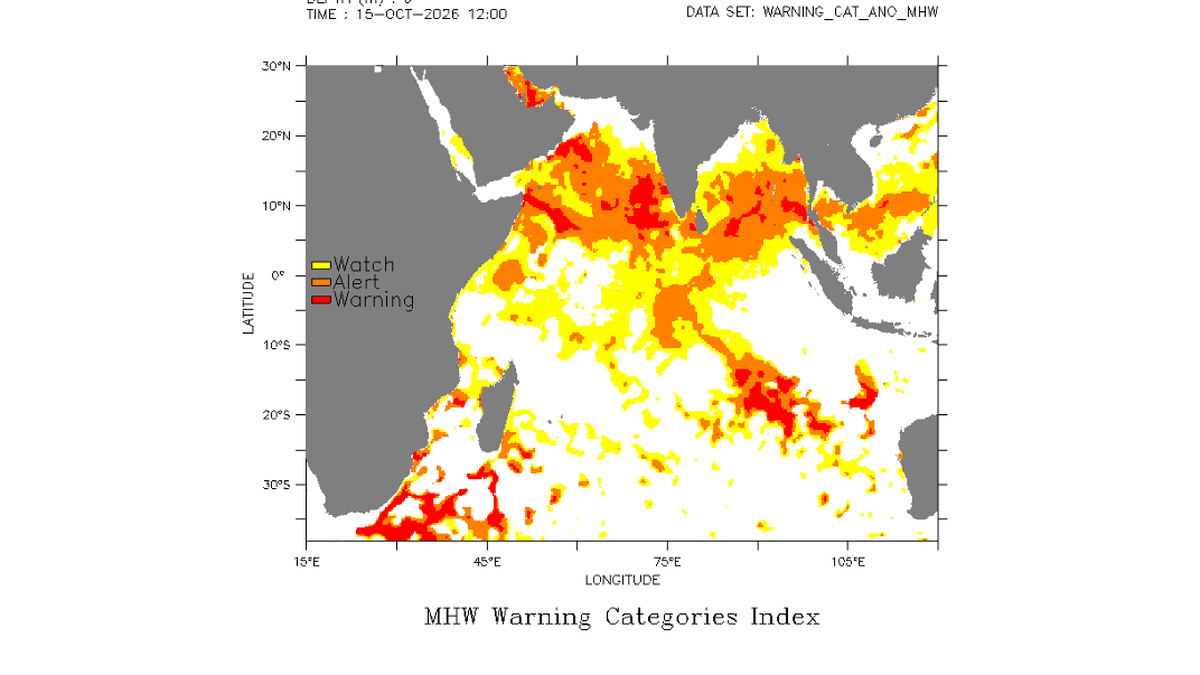
The INCOIS has issued a Marine Heat Wave warning for the Indian Ocean, Arabian Sea, and Bay of Bengal due to rising sea surface temperatures. These warming conditions pose significant risks to marine biodiversity, coral reef health, and overall ocean productivity.
Marine Heat Wave Alert: Understanding the Threat to Indian Coastal Waters
The Indian National Centre for Ocean Information Services (INCOIS), an autonomous body under the Ministry of Earth Sciences, has sounded a critical alarm regarding the emergence of Marine Heat Waves (MHWs) across the Arabian Sea, the Indian Ocean, and the Bay of Bengal. This warning, categorized under 'Watch' and 'Alert' levels, highlights a concerning rise in sea surface temperatures, which are currently recorded at anomalies of up to 1 degree Celsius above the long-term average.
The Ecological Impact of Thermal Stress
At the heart of this issue is the fragility of marine ecosystems. Coral reefs, which serve as the nurseries for a vast array of marine life, are highly sensitive to even minor fluctuations in thermal stability. When temperatures remain elevated for extended periods, corals often undergo bleaching—a process where they expel the symbiotic algae living in their tissues, ultimately threatening the survival of entire reef structures. Beyond corals, these heat waves disrupt the metabolic rates of marine species, potentially altering migration patterns and reducing overall marine productivity.
Regional Monitoring and Scope
To provide comprehensive data, INCOIS has segmented its monitoring operations into six major ocean basins, including the Persian Gulf, Red Sea, Southern Indian Ocean, and the South China Sea. Furthermore, the agency is tracking 14 specific sectors along the Indian coastline. This granular approach is essential for identifying localized thermal spikes that could lead to swell surges, which pose direct risks to coastal infrastructure and the livelihoods of fishing communities operating in these zones.
Broader Environmental Implications
Marine Heat Waves are not isolated events; they are often the oceanic equivalent of terrestrial heat waves and are increasingly linked to broader climate variability. The persistence of these anomalies can trigger a cascade of events, from the disruption of the nutrient-rich upwelling processes that support fish stocks to the potential exacerbation of extreme weather events along the coast. As the ocean absorbs the majority of the excess heat trapped by greenhouse gases, the frequency and intensity of these events are becoming a focal point of climate research.
Future Outlook and Mitigation
As INCOIS continues to monitor these basins, the focus remains on mitigating the socioeconomic impact of these thermal anomalies. The data provided by the 'Watch' and 'Alert' system is vital for policymakers, maritime authorities, and the scientific community to develop adaptive strategies. Future trends suggest that as global sea surface temperatures continue to climb, the frequency of such alerts may increase, necessitating a more robust integrated coastal management framework to protect India's vast maritime territory and its inherent biodiversity.
Verification Required?