India’s Asian Games 2026 report card: The big hits, painful misses and sports that made or broke the campaign
Source Entity
Latest News: Todays Latest News Headlines from India & World | Hindustan Times | Hindustan Times
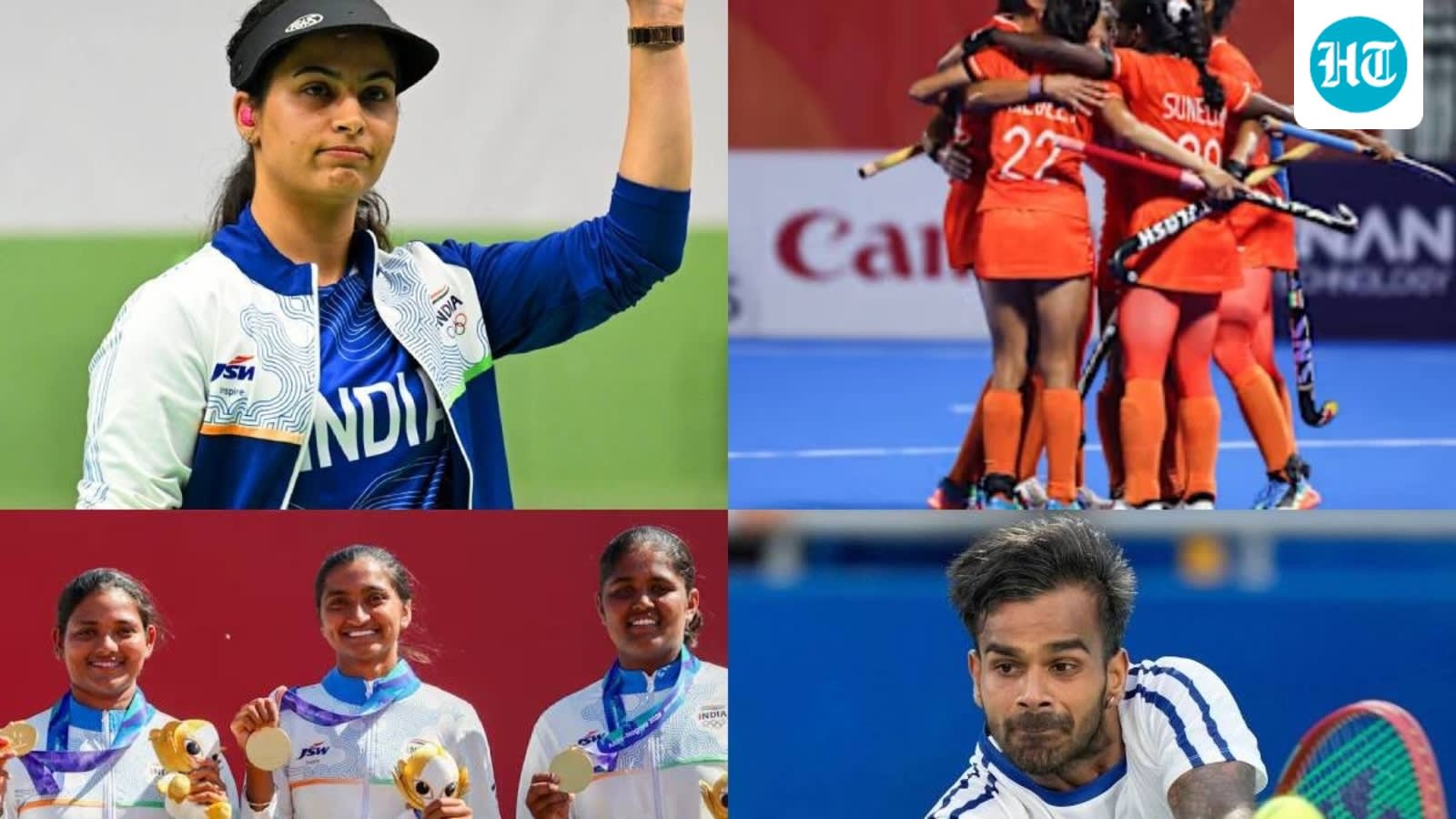
India concluded the 2026 Aichi-Nagoya Asian Games with a historic haul of 85 medals, securing a fourth-place finish. The campaign was defined by breakthrough performances in archery, shooting, and golf, signaling a new era of Indian sporting dominance.
A Historic Surge: India's 2026 Asian Games Campaign
India’s performance at the 2026 Aichi-Nagoya Asian Games marks a watershed moment in the nation's sporting history. Finishing with a total haul of 85 medals—comprising 21 gold, 27 silver, and 37 bronze—India secured a commendable fourth-place finish in the overall medal table. This outcome is particularly significant given the trajectory of the Games; as recently as the final Thursday, India sat outside the top 10 with only 10 gold medals. The late-stage surge, powered by a mix of veteran consistency and rookie brilliance, allowed the nation to leapfrog regional powerhouses like Uzbekistan, Iran, and Thailand.
Breaking Historical Strangleholds
The Games were defined by the shattering of long-standing historical barriers. Perhaps the most notable achievement was the women’s recurve archery team ending South Korea’s 28-year dominance in the event. This victory was complemented by individual brilliance, most notably from teenager Kumkum Anil Mohod, who became the first Indian woman to secure an individual recurve gold. Her journey, fueled by what she described as "bhook" (hunger), represents the rise of talent from India's grassroots, proving that elite-level success is no longer confined to traditional urban hubs.
Excellence in Shooting and Golf
Shooting emerged as a cornerstone of India's success, highlighted by Neeru Dhanda’s gold in women’s trap, which ended a 48-year drought for the country in the discipline. Further cementing this dominance, the mixed trap pair of Neeru Dhanda and Kynan Chenai established a new Asian record, showcasing a level of technical precision that positions India as a global contender in the sport. Simultaneously, Pranavi Urs etched her name into the history books by securing India’s first-ever golf gold medal, expanding the country’s footprint across diverse sporting categories.
Team Dynamics and Tactical Dominance
Team sports played a pivotal role in the final medal count. The men’s hockey team’s triumph provided a critical boost, securing a title that reinforces India's resurgence in the sport on the continental stage. Furthermore, the dominance in Kabaddi—with both the men’s and women’s teams securing gold—demonstrates the depth of India's athletic talent in indigenous sports. These team successes were balanced by strong showings in athletics, specifically the women’s 4x400m relay, and the mixed team 10m air pistol event.
Implications and Future Trends
This fourth-place finish is not merely a statistical success but a structural one. By overcoming early-Games volatility and maintaining composure in the final days, the Indian contingent has proven its ability to perform under high-pressure scenarios. The reliance on young debutants like Kumkum Mohod suggests a successful pipeline for talent identification, moving away from the "implosions" that have historically plagued Indian recurve archery at major international events.
Conclusion
As India looks toward future international competitions, the Aichi-Nagoya campaign serves as a blueprint for success. The combination of ending multi-decade droughts, establishing new continental records, and fostering a "hunger" for gold among the youth suggests that India's sports ecosystem is maturing. By finishing ahead of historically formidable nations, India has signaled its intention to remain a permanent fixture in the top tier of Asian athletics.
Multiple Citing Sources
Verification Required?