New UNSC permanent members without veto would be 'second-class': India
Source Entity
India Latest News: Top National Headlines Today & Breaking News | The Hindu
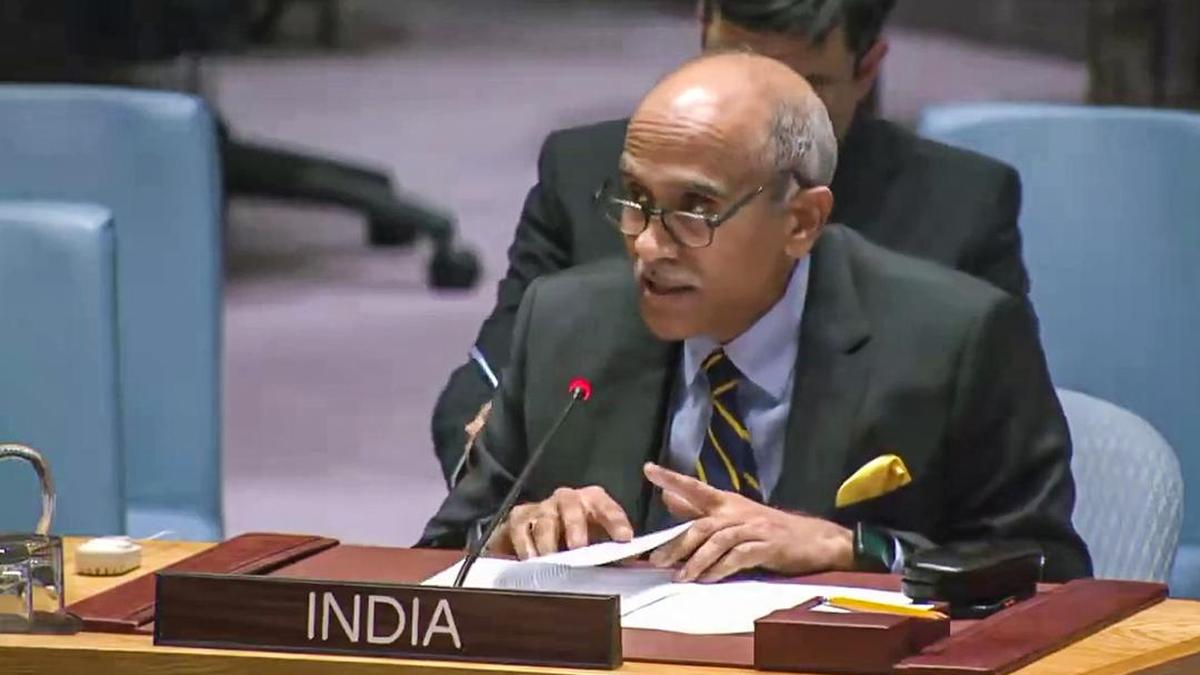
India has formally demanded that any expansion of the UN Security Council must include equal veto rights for all new permanent members. Ambassador Parvathaneni Harish argued that creating a 'second-class' tier would undermine the fairness and legitimacy of the global body.
The Quest for Parity in UN Security Council Reform
India has recently taken a firm diplomatic stance regarding the long-debated reform of the United Nations Security Council (UNSC). Ambassador Parvathaneni Harish, India’s Permanent Representative to the UN, has explicitly rejected proposals that would grant new permanent members a status subordinate to the existing 'P5' nations. By advocating for equal veto rights, India is challenging the current power structure that has remained largely static since the post-World War II era.
The 'Second-Class' Membership Concern
The core of India’s argument lies in the concept of institutional fairness. Ambassador Harish highlighted that creating a category of permanent membership without the veto power would effectively relegate new entrants to 'second-class' status. This, according to India, would do little to solve the democratic deficit within the Council, as the existing five permanent members—China, France, Russia, the U.K., and the U.S.—would retain unilateral control over critical international security decisions.
A Comprehensive Approach to Reform
India’s diplomatic strategy emphasizes that veto power cannot be viewed in isolation. Ambassador Harish argued that the question of the veto must be addressed alongside other vital clusters: categories of membership, regional representation, the overall size of the Council, and its working methods. By pushing for a comprehensive approach, India is signaling that piecemeal reforms will not suffice to address the geopolitical realities of the 21st century.
The Burden of Responsibility
Beyond the raw power associated with the veto, India has acknowledged that this privilege carries an 'immense burden of responsibility.' The Indian position suggests that if the veto is to exist, it must be exercised with restraint and a commitment to global justice. By demanding that all permanent members share this responsibility, India is attempting to shift the narrative from one of privilege to one of collective accountability in maintaining global peace.
Strategic Context and Future Outlook
This push for reform coincides with India’s active participation in the UN electoral process, as the nation is currently seeking a non-permanent seat for the 2028-29 term. This dual-track approach—seeking immediate inclusion while campaigning for long-term structural change—positions India as a persistent voice for the Global South. As the international community continues to debate the future of the UN, India's insistence on equality remains a significant hurdle for current power holders who are reluctant to dilute their veto influence.
Conclusion
In summary, India’s demand for equal veto rights is not merely a request for status, but a fundamental challenge to the exclusionary nature of the UNSC. Whether the international community can move beyond the current deadlock to create a more representative and equitable Council remains one of the most significant questions in contemporary international relations.
Verification Required?