Modi launches India’s first hydrogen train in Haryana, calls it Make in India milestone
Source Entity
The Indian Express
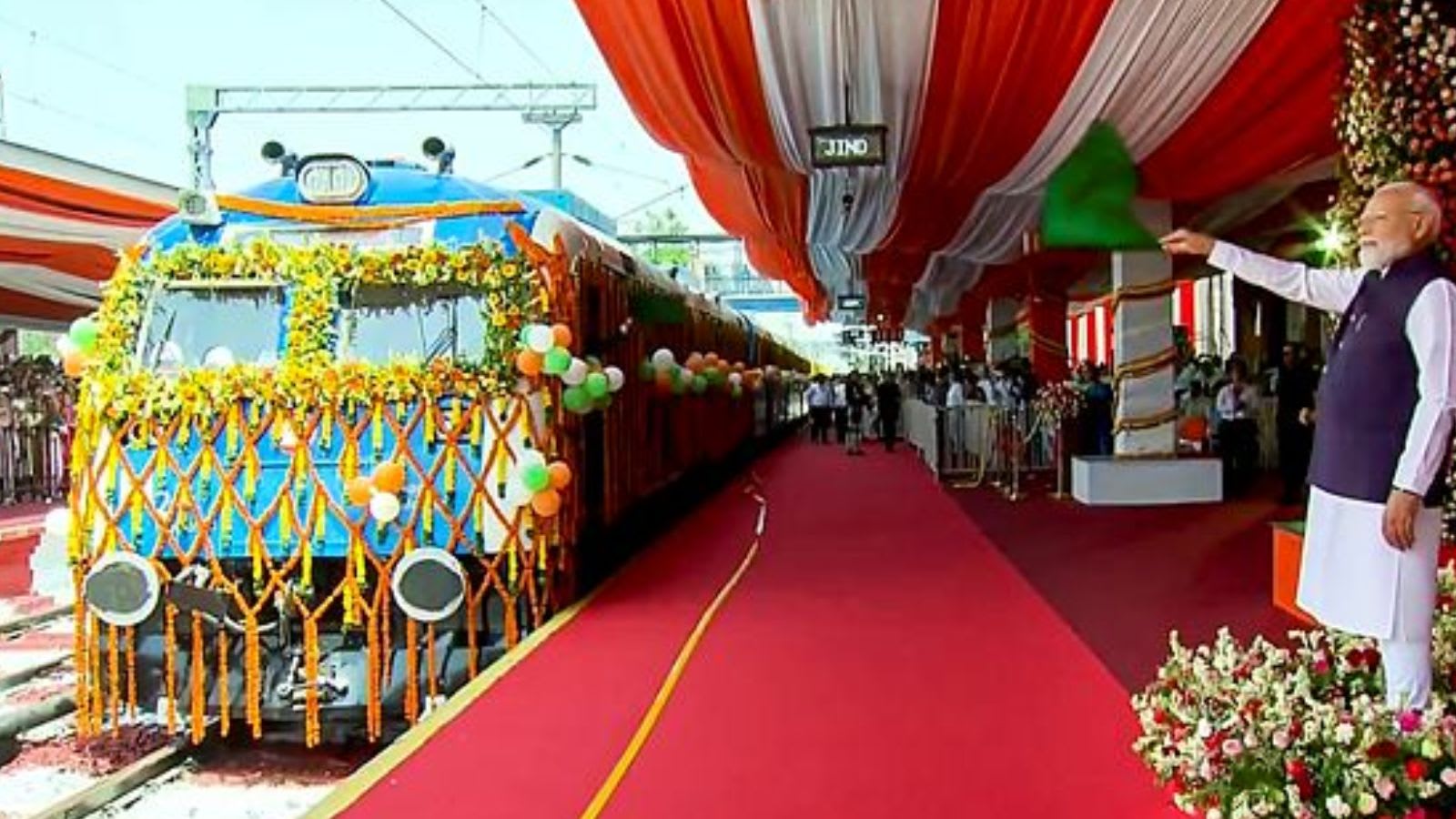
Prime Minister Narendra Modi flagged off India's first hydrogen-powered train in Haryana, running between Jind and Sonipat. This 10-coach, zero-emission train is a 'Make in India' milestone, featuring a 3,200-horsepower engine that emits only water vapor.
India's Leap into Green Mobility: The Inauguration of the First Hydrogen Train
Prime Minister Narendra Modi has officially flagged off India's first hydrogen-powered train, marking a transformative milestone in the nation's journey toward sustainable and greener transportation. Launched from the Jind railway station in Haryana, this initiative represents more than just a technological upgrade; it is a strategic shift toward zero-emission transit. By integrating hydrogen fuel cell technology into the national rail network, India is positioning itself as a leader in the global transition away from carbon-heavy locomotives, aiming to drastically reduce the environmental footprint of its massive railway infrastructure.
Technical Innovation and Zero-Emission Engineering
At the heart of this locomotive is the hydrogen fuel cell, a sophisticated system that generates electricity to power traction motors without the need for combustion. Unlike traditional diesel engines, this process produces no smoke or direct carbon emissions, with the only by-product being pure water vapor. To ensure operational stability and power efficiency, the train is supported by lithium iron phosphate batteries and specialized hydrogen storage cylinders. With a total power output of 3,200 horsepower, the train demonstrates that eco-friendly alternatives can match the performance requirements of heavy-duty rail transport.
A Triumph for the 'Make in India' Initiative
One of the most significant aspects of this project is its alignment with the 'Make in India' vision. The train was designed by Indian engineers and manufactured by an Indian company, showcasing the country's growing capacity for high-tech indigenous engineering. Prime Minister Modi highlighted a critical competitive advantage: while other nations have deployed hydrogen trains consisting of only three or four coaches, India has launched a massive 10-coach configuration. This scaling capability indicates that Indian industry can not only adopt global trends but optimize them for higher capacity and efficiency.
Operational Scope: The Jind-Sonipat Corridor
The train is set to operate on the 89-km route between Jind and Sonipat in Haryana. The journey is expected to take approximately two hours, encompassing 12 intermediate stations. This specific route serves as a vital testing ground for the viability of hydrogen mobility in regional transit. With a capacity to carry 2,600 passengers, the train is designed for high-volume commuter traffic, proving that hydrogen technology is scalable for public utility rather than being limited to small-scale prototypes.
Infrastructure and Future Implications
To support this technological leap, a dedicated hydrogen facility has been established at Jind, ensuring the necessary refueling infrastructure is in place. The importance of this project extends beyond the railways; it serves as a blueprint for the broader 'hydrogen mobility' ecosystem in India. As the country seeks to meet its climate goals, the successful deployment of this train suggests a future where hydrogen could potentially power other forms of heavy transport, reducing the nation's reliance on fossil fuels and lowering urban air pollution.
Conclusion: Setting a Global Benchmark
India's first hydrogen train is a multifaceted victory, combining environmental stewardship, indigenous engineering, and operational ambition. By launching the world's longest hydrogen-powered train, India has moved from the phase of conceptualization to large-scale implementation. This project not only modernizes the Jind-Sonipat corridor but also signals to the world that India is capable of leading the charge in the global race toward a carbon-neutral future.
Multiple Citing Sources