Indigenous bullet trains: What’s happening on country's first high-speed rail project
Source Entity
TOI BUSINESS DESK
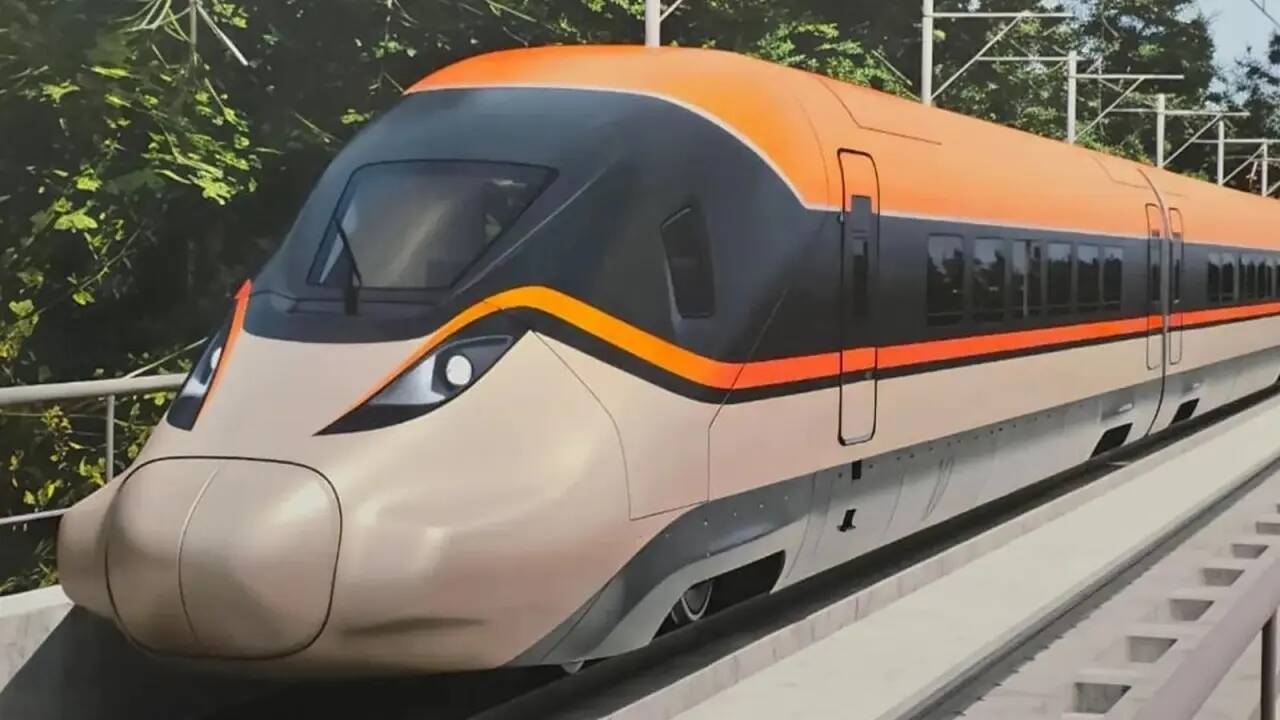
India has pivoted to developing its own high-speed rail technology after Japan's E10 Shinkansen delivery timeline was pushed to 2034. The MAHSR project will now feature indigenous trains capable of speeds exceeding 250 kmph, with initial trials slated for mid-2027.
India’s Strategic Pivot: Developing Indigenous High-Speed Rail
The Mumbai-Ahmedabad High Speed Rail (MAHSR) project, a landmark infrastructure endeavor, has reached a critical turning point. While the project was originally conceived as a collaboration heavily reliant on Japanese Shinkansen technology—specifically the E10 train sets, signaling systems, and Operation Control Centers (OCC)—recent logistical hurdles have forced a significant shift in strategy. With Japanese delivery timelines for the E10 model extending to 2034 due to ongoing design phases, the Indian government has opted to pursue the development of indigenous bullet trains to maintain the project's momentum.
The Challenge of Imported Systems
For a project of this magnitude, spanning 508 kilometers, the reliance on external partners for critical rolling stock and operational infrastructure was meant to ensure global standards of safety and speed. However, the realization that these essential components could not be delivered in a timely manner has necessitated a move toward self-reliance. By deciding to design and manufacture its own high-speed rail systems, India is effectively insulating the MAHSR project from the uncertainties inherent in international supply chains and foreign design timelines.
Technical Specifications and Goals
The indigenous high-speed rail initiative is not merely a fallback but an ambitious technical upgrade. The domestically developed trains are engineered for a design speed of 280 kmph, with operational capabilities exceeding 250 kmph. This performance profile aligns closely with the original aspirations for the MAHSR route, ensuring that the switch to local technology does not compromise the high-speed transit vision that the project initially promised to the public.
Progress on Civil Infrastructure
While the rolling stock strategy has evolved, the physical foundations of the project remain on track. The civil construction for the 97-km Surat-Vapi stretch is a major milestone, with completion slated for the current year. This progress underscores the dual-track nature of the project: while the government reconfigures the technological procurement for the trains and signaling, the massive civil engineering works continue to advance, creating the necessary physical environment for the future high-speed corridors.
Future Outlook and Strategic Implications
The move to begin trials of domestically developed bullet trains by mid-2027 represents a major maturation of India’s railway engineering capabilities. By taking ownership of the design, signaling, and OCC systems, India is positioning itself as a potential exporter of high-speed rail technology in the future. This decision reflects a broader national trend of prioritizing 'Make in India' initiatives, particularly in sectors of national strategic importance like high-speed connectivity.
Conclusion
Transitioning from a pure import model to an indigenous development strategy for the MAHSR project is a bold step that addresses the immediate constraints of the 2034 delivery delay. By balancing the ongoing civil construction with a new, localized approach to train manufacturing, India is demonstrating both agility and long-term ambition. As the 2027 trial date approaches, the success of these indigenous systems will likely serve as the blueprint for future high-speed rail corridors across the subcontinent.
Multiple Citing Sources