Rescue on as 27 workers trapped in Sikkim tunnel after landslides
Source Entity
Latest News: Today's Latest News Headlines from India & World | Hindustan Times | Hindustan Times
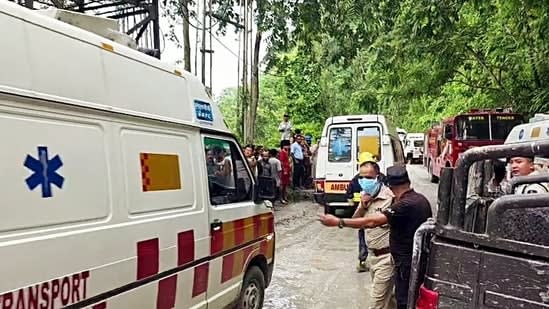
A major rescue operation successfully freed 27 workers trapped in Sikkim's Samardung tunnel following a landslide and a suspected gas leak. The incident occurred at the Teesta Stage VI hydroelectric project site in Namchi district.
Crisis and Resolution at the Samardung Tunnel
A harrowing ordeal unfolded in the Namchi district of Sikkim when a massive landslide struck the Samardung tunnel, part of the National Hydroelectric Power Corporation’s (NHPC) Teesta Stage VI hydroelectric power project. The incident, which occurred on a Monday afternoon, left 27 workers trapped underground after the debris completely blocked the entrance. While 43 workers were initially inside the tunnel, 16 managed to escape, leaving a significant number of personnel in a precarious situation that required a multi-agency emergency response.
The Complicating Factors of the Rescue
The rescue operation was severely hampered by environmental hazards, most notably a suspected gas leak triggered by the landslide. Authorities believe the gas emanated from underground strata or rock formations that were destabilized during the collapse. This forced the deployment of specialized teams from the National Disaster Response Force (NDRF), State Disaster Response Force (SDRF), and local fire services, all of whom had to utilize gas masks to navigate the hazardous environment inside the tunnel.
Operational Challenges and Failure Points
The complexity of the situation was underscored by the failure of three consecutive rescue attempts. District Collector Anupa Tamling noted the high degree of uncertainty regarding the health and safety of the trapped individuals during the peak of the crisis. The scale of the project—a major infrastructure development under the Teesta Stage VI power initiative—added logistical pressure to the rescue effort, as the site’s geography and the structural instability caused by the landslide made standard extraction methods difficult.
Infrastructure and Safety in Hilly Terrains
This incident highlights the inherent risks associated with large-scale infrastructure projects in the Himalayan region. Sikkim, characterized by its fragile mountainous terrain, is frequently susceptible to landslides, particularly during construction activities that alter the local geology. The Teesta Stage VI project represents a significant investment in national energy, but the Samardung tunnel incident serves as a stark reminder of the safety protocols required when working in sensitive geological zones.
Successful Extraction and Future Implications
Despite the initial setbacks and the dangerous presence of gas, a massive, coordinated effort by state and national agencies eventually resulted in the successful rescue of all 27 trapped workers. Ambulances and medical support had been kept on standby throughout the operation, ensuring immediate triage upon the workers' exit. Moving forward, this event will likely necessitate a comprehensive safety audit of the Teesta Stage VI project, focusing on geological stabilization and emergency ventilation protocols for underground construction in landslide-prone areas.
Multiple Citing Sources
Verification Required?