‘Even though BJP not in power here...’: PM Modi's big rail, road push in Punjab ahead of elections
Source Entity
Latest News: Today's Latest News Headlines from India & World | Hindustan Times | Hindustan Times
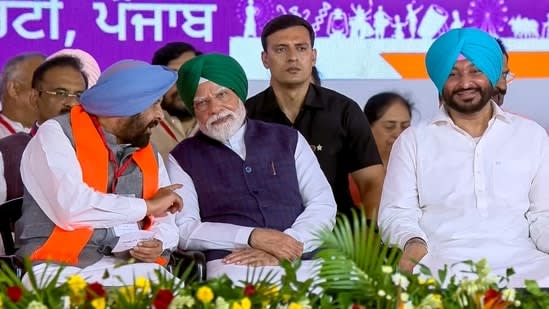
Prime Minister Narendra Modi recently inaugurated India's first hydrogen-powered train, marking a significant advancement in sustainable rail transportation. The launch coincided with a broader push for ₹5,470 crore in infrastructure projects across Punjab, signaling both environmental progress and political outreach.
India's Green Rail Revolution: The Hydrogen Milestone
India has officially entered the era of sustainable rail transit with the launch of its first hydrogen-powered train, a project championed by Prime Minister Narendra Modi. This technological leap represents a departure from traditional diesel-based locomotion, positioning the Indian Railways at the forefront of global green mobility efforts. By utilizing hydrogen fuel cells, the train operates without combustion or carbon emissions, emitting only water vapor, which aligns with India's broader climate commitments and the 'Make in India' initiative.
The Mechanics of Hydrogen Mobility
At the core of this innovation is a sophisticated power system. The train utilizes hydrogen fuel cells that generate 1,200 kW of power, complemented by lithium iron phosphate batteries and specialized hydrogen storage cylinders. This configuration allows for efficient energy conversion to drive traction motors. With a capacity of 2,600 passengers across 10 coaches, this project demonstrates that hydrogen technology is scalable for high-capacity public transport, moving beyond experimental prototypes into functional infrastructure.
Infrastructure and Strategic Expansion
Beyond the technological achievement, the launch was part of a larger infrastructure package for Punjab, totaling ₹5,470 crore in rail and road projects. The establishment of a hydrogen facility at Jind serves as a crucial technical cornerstone, ensuring that the necessary refueling infrastructure is available to support this new fleet. This suggests a long-term commitment to hydrogen as a viable alternative for non-electrified routes, reducing the nation's reliance on fossil fuels.
Political Context and Regional Development
Prime Minister Modi’s visit to Jalandhar carried significant political weight. By inaugurating these projects in a state where the Bharatiya Janata Party (BJP) does not hold power, the administration is emphasizing a model of development that transcends regional political boundaries. The focus on Punjab’s infrastructure, ahead of the 2027 Assembly polls, highlights the central government's efforts to bolster its influence in the Sikh-majority state through tangible economic and developmental outcomes.
Future Trends and Challenges
While the technology is groundbreaking, the path forward involves overcoming logistical challenges, such as the scale-up of green hydrogen production and the expansion of refueling networks across diverse terrains. However, the successful launch serves as a proof-of-concept that will likely catalyze further investment in hydrogen mobility. As India continues to balance its rapid urbanization with environmental targets, this hydrogen project stands as a benchmark for future public transport policy, blending technological innovation with national infrastructure development.
Multiple Citing Sources
Verification Required?