"Unwarranted Interference": India Slams UN's Remarks On Delhi Detentions
Source Entity
NDTV News Search Records Found 1000
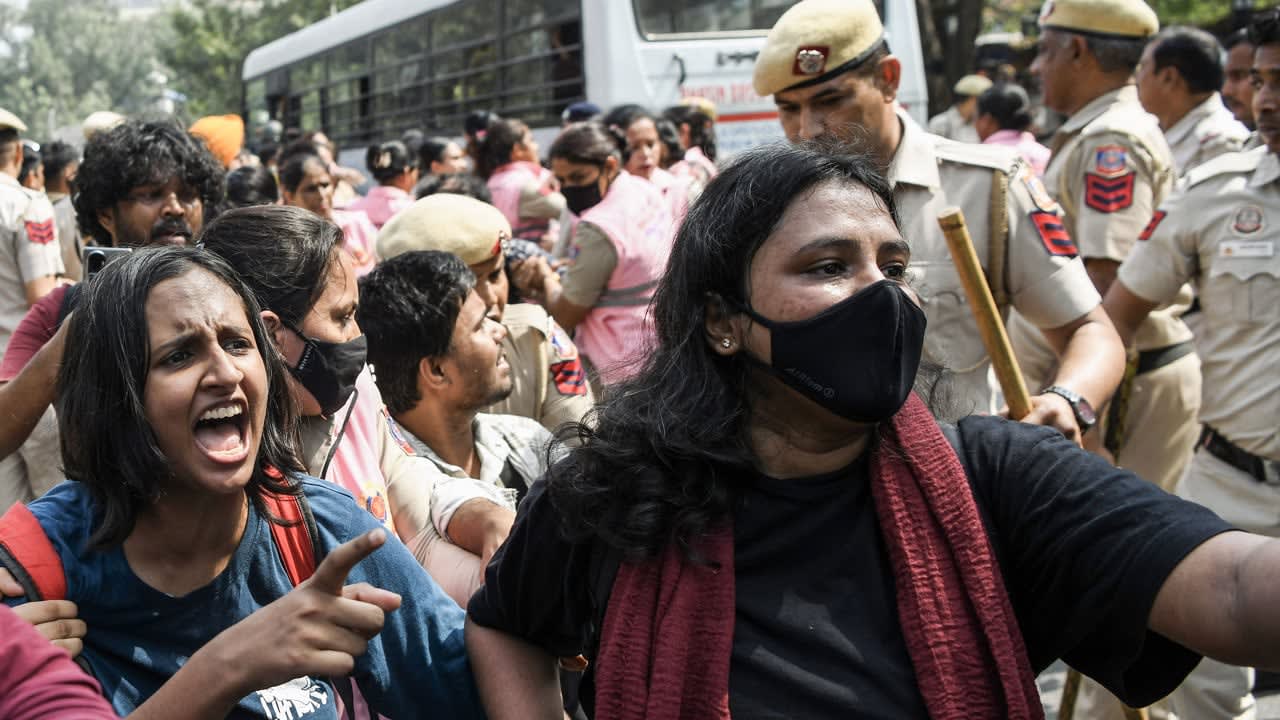
India has strongly rejected recent remarks by the UN Human Rights Office regarding mass detentions in Delhi during protests against the Chief Election Commissioner. The government maintains that its constitutional framework and independent institutions are fully equipped to handle public order and civil rights.
Diplomatic Tensions Rise Over Delhi Protests
The recent diplomatic friction between India and the United Nations Human Rights Office (OHCHR) stems from the detention of approximately 3,000 individuals during protests in New Delhi. The demonstrations, organized by the Cockroach Janta Party (CJP), were directed at Chief Election Commissioner (CEC) Gyanesh Kumar, with protesters alleging significant irregularities in electoral rolls. The subsequent police action to manage these crowds has triggered a global discourse on the balance between national security and democratic rights.
India’s Defense of Sovereignty
In response to the OHCHR’s call for the immediate and unconditional release of those detained, the Indian government issued a robust rebuttal. Describing the UN’s remarks as "unwarranted interference," New Delhi emphasized that its internal affairs are managed by a stable constitutional framework. The Indian mission in Geneva asserted that the right to peaceful assembly is a protected constitutional guarantee, though it remains subject to reasonable restrictions intended to maintain public order and safety in the capital.
The Role of Constitutional Institutions
India’s official stance highlights a reliance on its domestic institutional architecture—specifically an independent judiciary and a free media—to oversee the legality of police actions. By referencing these pillars, the government aims to assure the international community that the rule of law is being upheld. This narrative seeks to frame the detentions not as an assault on democracy, but as a necessary administrative procedure to manage large-scale public demonstrations that threatened to disrupt the capital's normalcy.
The OHCHR’s Perspective on Protests
Conversely, the OHCHR has urged Indian authorities to ensure that any restrictions placed on protesters strictly adhere to the international tests of "necessity and proportionality." Their concern centers on the scale of the detentions, which they categorize as arbitrary. This clash highlights a fundamental disagreement regarding the threshold of state intervention: while the UN advocates for broad, unfettered protest rights, the Indian state maintains that the integrity of public order takes precedence during volatile political gatherings.
Historical Context and Future Trends
This event is not isolated; it follows a pattern of heightened scrutiny regarding the management of protests in major democratic nations. The CJP’s call for subsequent protests at Jantar Mantar signals that the political unrest surrounding the CEC is far from resolved. As uncertainty persists regarding the whereabouts of certain detained leaders, the pressure on the government to provide transparency will likely increase. Moving forward, the relationship between the Indian government and international human rights bodies will likely remain strained as the state prioritizes sovereign control over its internal political dissent, while global observers continue to monitor the proportionality of administrative responses.
Verification Required?