Can India replace a satellite in days? Vikram-1 opens a bigger space question
Source Entity
RAJEEV SINGH
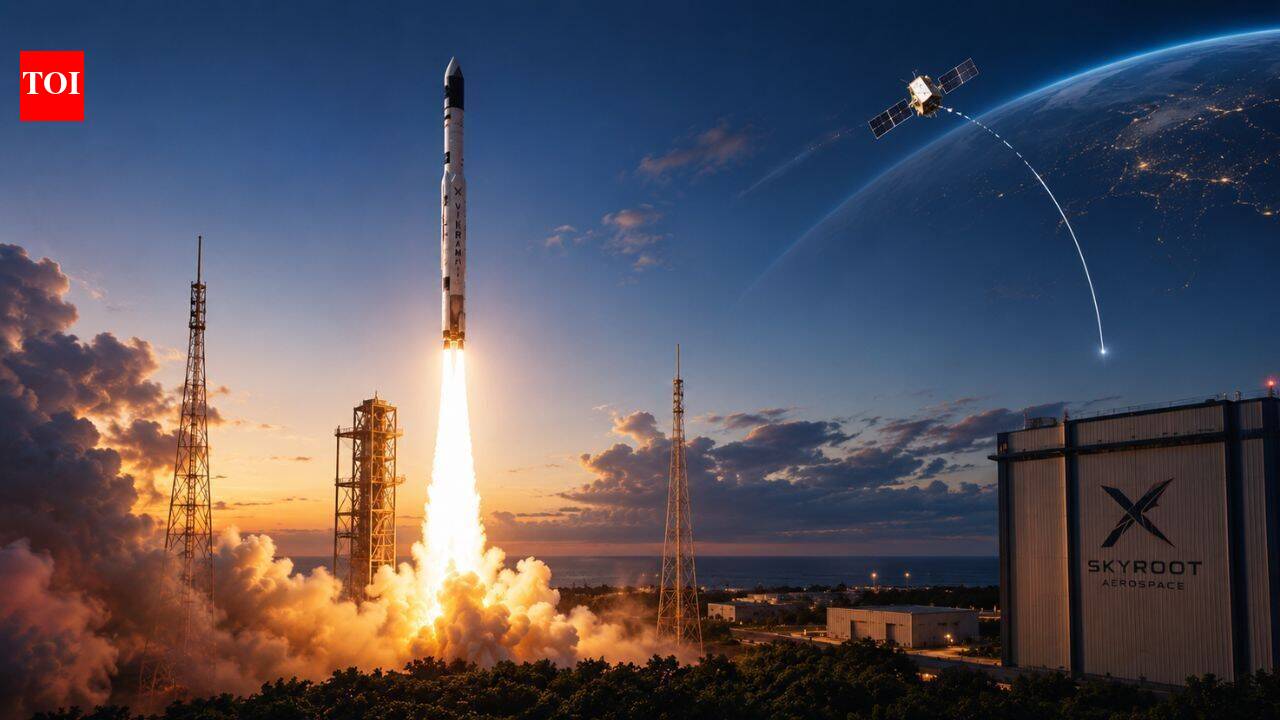
The successful development of the Vikram-1 orbital launch vehicle marks a historic shift in India's space sector. This transition empowers private companies to operate alongside ISRO, potentially revolutionizing launch capabilities and national space strategy.
A New Horizon: The Privatization of Indian Spaceflight
The successful development and operation of the Vikram-1 orbital launch vehicle represents a watershed moment for India's aerospace industry. For decades, the Indian Space Research Organisation (ISRO) held an absolute monopoly over orbital launches, serving as the sole architect of the nation’s journey into the cosmos. While private entities have long contributed as vendors for components and specialized technology, the Vikram-1 mission effectively shatters the traditional state-run paradigm, proving that private enterprise can now independently manage the complex lifecycle of an orbital launch.
The Shift from ISRO-Centricity to Private Participation
Historically, India's space narrative has been defined by ISRO's meticulous, state-funded achievements. By transitioning from a model where private players were merely ancillary suppliers to a framework where they function as primary mission operators, India is aligning itself with global trends seen in the United States and Europe. This evolution is not merely a change in administrative responsibility but a fundamental shift in technical capability, suggesting that private companies are now mature enough to shoulder the immense engineering risks associated with orbital delivery.
Strategic Implications for National Security
The ability of a private entity to operate an orbital vehicle opens significant questions regarding national security and rapid-response capabilities. Traditionally, government-led launches follow rigid, long-term scheduling. However, the emergence of private launch providers introduces the possibility of 'responsive space'—the ability to replace satellites or deploy new assets in a matter of days rather than months. This agility could prove decisive in maintaining communications, surveillance, and data integrity during unforeseen events or rapid shifts in geopolitical conditions.
Economic Potential and Industrial Scaling
Beyond the strategic benefits, the commercialization of the launch sector is poised to ignite a new wave of industrial growth within India. By fostering a competitive environment, the Vikram-1 milestone will likely attract increased venture capital and encourage the development of a robust supply chain tailored for commercial spaceflight. This creates a multiplier effect: as launch costs drop due to private sector efficiencies, the barrier to entry for smaller satellite manufacturers and start-ups is lowered, democratizing access to space-based data and services.
Future Trends and Technological Sovereignty
Looking ahead, the success of private launch vehicles suggests that India is entering an era of technological diversification. As these private entities refine their launch systems, we can expect to see a surge in specialized payloads, including constellations for low-Earth orbit (LEO) internet and advanced climate monitoring. This shift does not diminish ISRO's role; rather, it allows the national agency to focus on deep-space exploration and scientific research, while private partners handle the commercial and operational heavy lifting of orbital logistics.
Conclusion
The breakthrough of the Vikram-1 vehicle is a testament to the maturation of India's engineering ecosystem. By demonstrating that an Indian private company can successfully navigate the complexities of orbital flight, the nation has effectively expanded its capacity for space exploration. This move toward a hybrid model of state-led innovation and private-sector agility will likely define India's space trajectory for the coming decades, ensuring that the country remains a competitive and resilient player in the global space economy.