'Systemic exploitation': India urges world to hold Pak 'fully accountable' over PoK unrest
Source Entity
TOI NEWS DESK
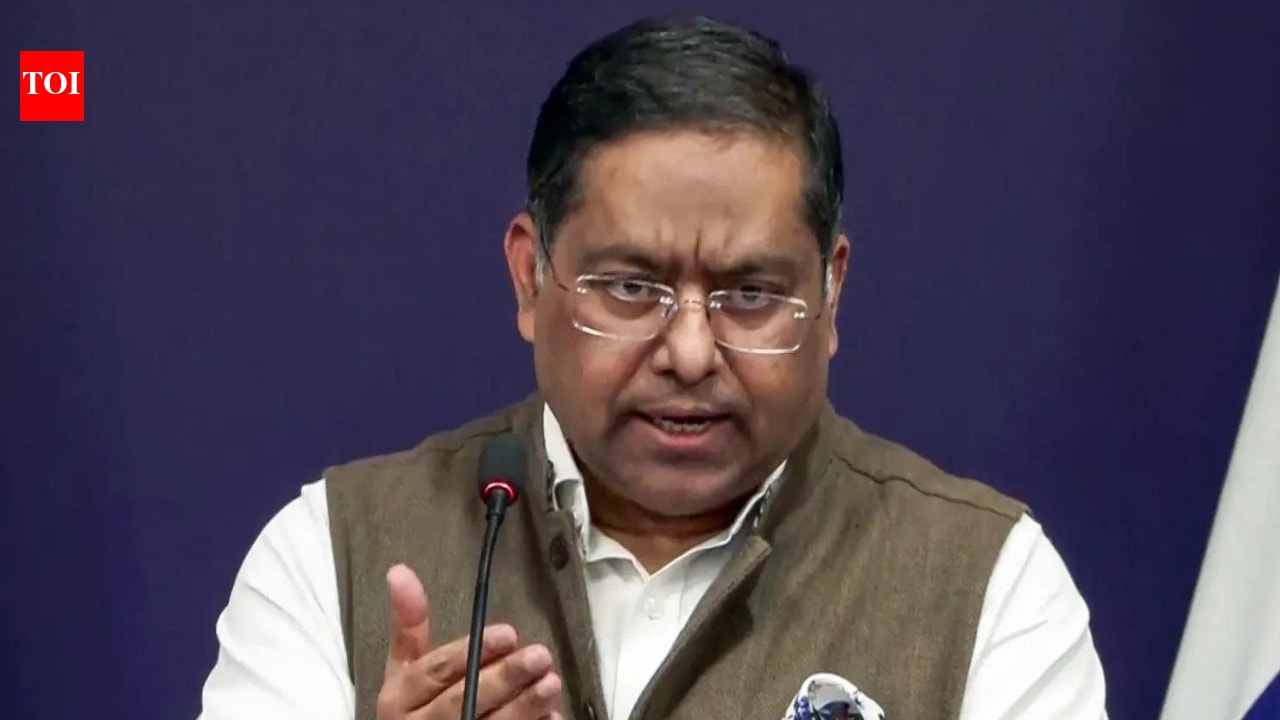
India stated Pakistan's exploitation causes protests in Pakistan-occupied Jammu and Kashmir. The ministry of external affairs spokesperson Randhir Jaiswal accused Islamabad of excessive force against public dissent. India maintains Pakistan-occupied Jammu and Kashmir is an integral part of India. New Delhi also accused Pakistan of human rights violations in the region.
Diplomatic Escalation: India's Stance on PoK Unrest
India has intensified its diplomatic offensive against Pakistan, calling upon the global community to hold Islamabad "fully accountable" for the escalating unrest in Pakistan-occupied Jammu and Kashmir (PoK). The Ministry of External Affairs (MEA), through spokesperson Randhir Jaiswal, has characterized the turmoil as a direct consequence of "systemic exploitation" by the Pakistani administration. This move signals New Delhi's intent to internationalize the internal instability within PoK, framing the protests not as isolated incidents, but as a systemic failure of Pakistani governance.
The Accusations of Systemic Exploitation
At the heart of India's claim is the assertion that the people of PoK are suffering under a regime of economic neglect and political suppression. By using the term "systemic exploitation," India suggests that the Pakistani state has historically marginalized the region, extracting resources or maintaining control through coercion while failing to provide basic infrastructure, economic opportunities, and political autonomy. The current protests, which India highlights, are viewed as the breaking point for a population exhausted by mismanagement and the heavy-handedness of the state.
Human Rights and the Use of Force
Furthermore, India has specifically accused Pakistan of utilizing excessive force to stifle public dissent. The MEA's statements emphasize a pattern of human rights violations, suggesting that Islamabad's response to peaceful protests has been characterized by violence and intimidation. By bringing these allegations to the world stage, India aims to paint Pakistan as a state that suppresses the fundamental rights of the people in PoK, thereby contrasting its own administrative claims over the region with Pakistan's alleged authoritarian approach.
Sovereignty and Historical Context
Central to this diplomatic friction is India's unwavering position that the entire region of Jammu and Kashmir, including PoK, is an integral and inseparable part of India. This claim is rooted in the historical events of 1947 and the subsequent legal instruments of accession. By linking the current unrest to Pakistan's "illegal" occupation, India reinforces its territorial integrity claims. The narrative suggests that the unrest is a natural outcome of an unnatural political arrangement, implying that the people of PoK seek liberation from Pakistani rule to reunite with India.
Strategic Implications for International Relations
India's call for the world to hold Pakistan accountable is a strategic attempt to isolate Islamabad on the international stage. By framing the issue as one of human rights and systemic exploitation, New Delhi is appealing to global norms and international law. This strategy is designed to pressure Pakistan through multilateral forums and bilateral relations with Western powers, potentially influencing international perceptions of Pakistan's stability and its treatment of minority or marginalized populations within its controlled territories.
Future Trends and Regional Stability
Looking forward, this escalation suggests that India will continue to leverage any internal instability within PoK to strengthen its geopolitical position. As protests persist, New Delhi is likely to present more detailed evidence of human rights abuses to international bodies. This could lead to increased diplomatic pressure on Pakistan, which is already grappling with severe economic crises. The volatility in PoK remains a flashpoint; any further crackdown by Pakistan could lead to a more aggressive diplomatic or strategic response from India, further straining the already fragile peace along the Line of Control (LoC).
Summary
In essence, India is utilizing the current unrest in PoK to highlight what it describes as the failure of Pakistani governance. By emphasizing systemic exploitation and human rights violations, New Delhi is not only asserting its sovereign claim over the region but also attempting to mobilize international opinion against Islamabad, framing the struggle of the PoK residents as a fight against an oppressive and exploitative regime.