Indian national killed as helicopters collide near Mount Everest; video captures crash
Source Entity
VIJAYA SRIVASTAVA
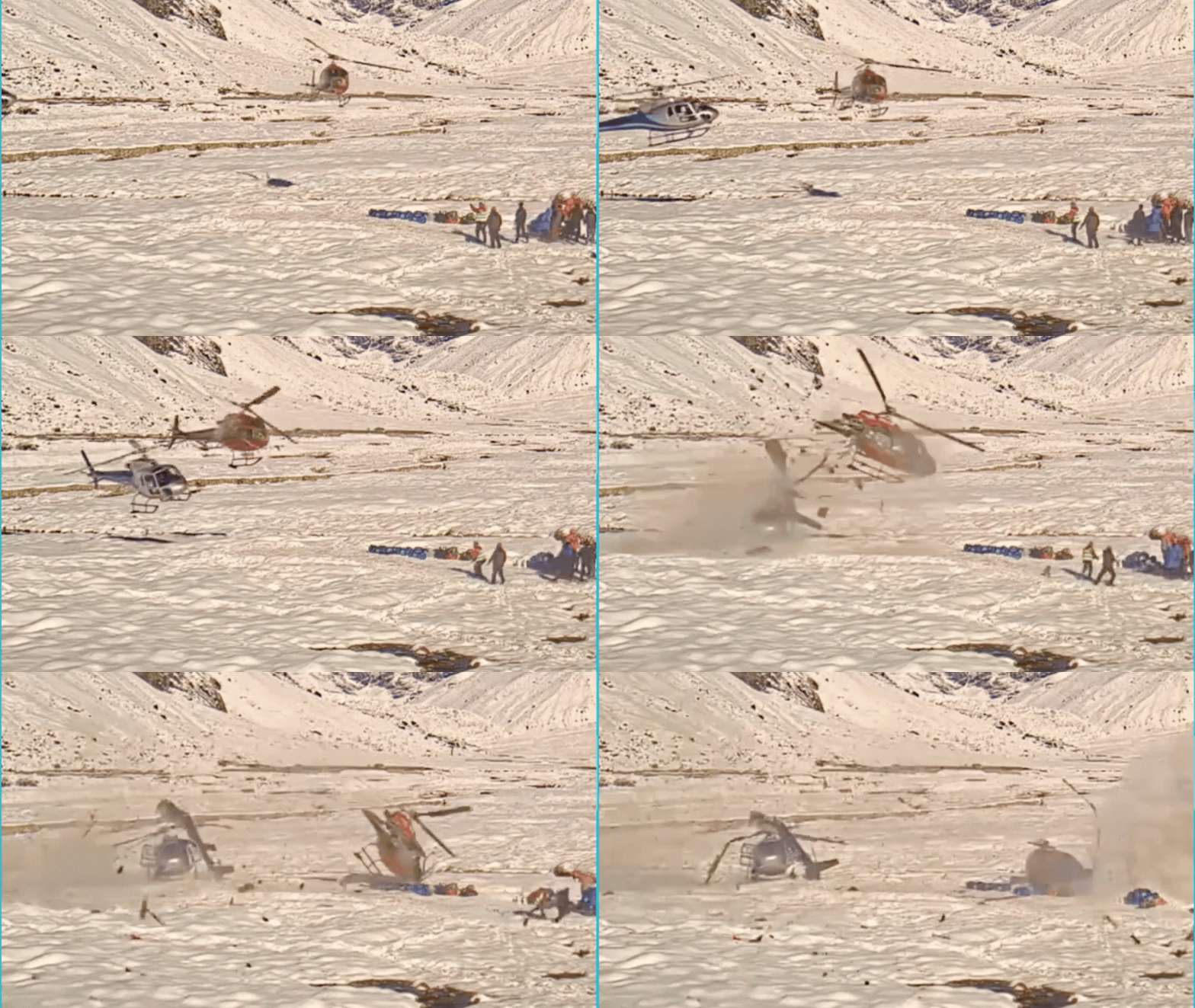
A fatal helicopter collision occurred in Nepal's Solukhumbu district, resulting in the death of one Indian national. Two aircraft from Fishtail Air and Air Dynasty crashed while attempting to land simultaneously near the Everest base camp.
Fatal Helicopter Collision Near Mount Everest: A Detailed Analysis
The Incident Overview
On Tuesday morning, a tragic aviation accident occurred in the Solukhumbu district of Nepal, specifically within Ward 4 of the Khumbu Pasang Lhamu Rural Municipality. Two helicopters, operated by Fishtail Air and Air Dynasty, collided at approximately 8:15 am while attempting to land at the same location near the Mount Everest base camp. The incident, which was captured on video and has circulated widely, resulted in the death of one Indian national, identified as Vasanth Kumar Balaramaramadu, who was aboard the Fishtail Air flight. Three other individuals, including a New Zealand citizen of Indian origin, Shailesh Krishna Patel, sustained injuries and were subsequently airlifted to Mediciti Hospital in Kathmandu for treatment.
Operational Context and Safety Challenges
Operating aircraft in the Khumbu region presents extreme challenges due to the high altitude and unpredictable weather conditions characteristic of the Himalayan range. The fact that both helicopters were attempting to land at the same spot simultaneously suggests a critical breakdown in air traffic coordination or communication. The Everest base camp area is a hub for tourism and expedition logistics, often seeing a high volume of helicopter traffic as they ferry climbers, trekkers, and supplies. This density of traffic requires precise scheduling and communication between operators to ensure safety in a terrain where there is little margin for error.
Regulatory and Safety Implications
This collision raises significant questions regarding the oversight of commercial aviation in Nepal’s mountainous regions. While helicopter transport is the primary lifeline for remote communities and the tourism sector in the Solukhumbu district, the frequency of accidents in Nepal's aviation sector has long been a concern for international safety bodies. The involvement of two distinct companies—Fishtail Air and Air Dynasty—indicates a potential failure in ground-level coordination or air traffic management at the landing site. Authorities will likely conduct a thorough investigation to determine if the collision was the result of mechanical failure, pilot error, or systemic deficiencies in landing protocols.
Historical Context of Himalayan Aviation
Nepal’s aviation history is marked by the inherent difficulties of navigating the world's most extreme topography. The Khumbu region, home to the Everest base camp, is particularly notorious for sudden fog, high winds, and rapidly changing visibility. Over the years, the reliance on light aircraft and helicopters for tourism has led to various incidents. This accident serves as a somber reminder of the risks faced by both operators and travelers in one of the most rugged environments on Earth. The integration of modern tracking technology and stricter landing protocols remains a constant topic of debate among aviation experts tasked with improving safety standards in the region.
Future Trends and Safety Prospects
Moving forward, the industry is likely to face increased pressure from both the Nepalese government and international stakeholders to implement more robust safety management systems. This may include the mandatory installation of advanced collision avoidance systems (TCAS) and more rigorous training for pilots specifically operating in high-altitude landing zones. As the popularity of Everest-region tourism continues to grow, the infrastructure supporting these flights must evolve to prevent such catastrophic incidents. The investigation into this collision will be pivotal in shaping future operational procedures and ensuring that the risks associated with Himalayan aviation are mitigated as effectively as possible.