SC restored people's faith: Kapil Sibal a day after venting frustration
Source Entity
DHANANJAY MAHAPATRA
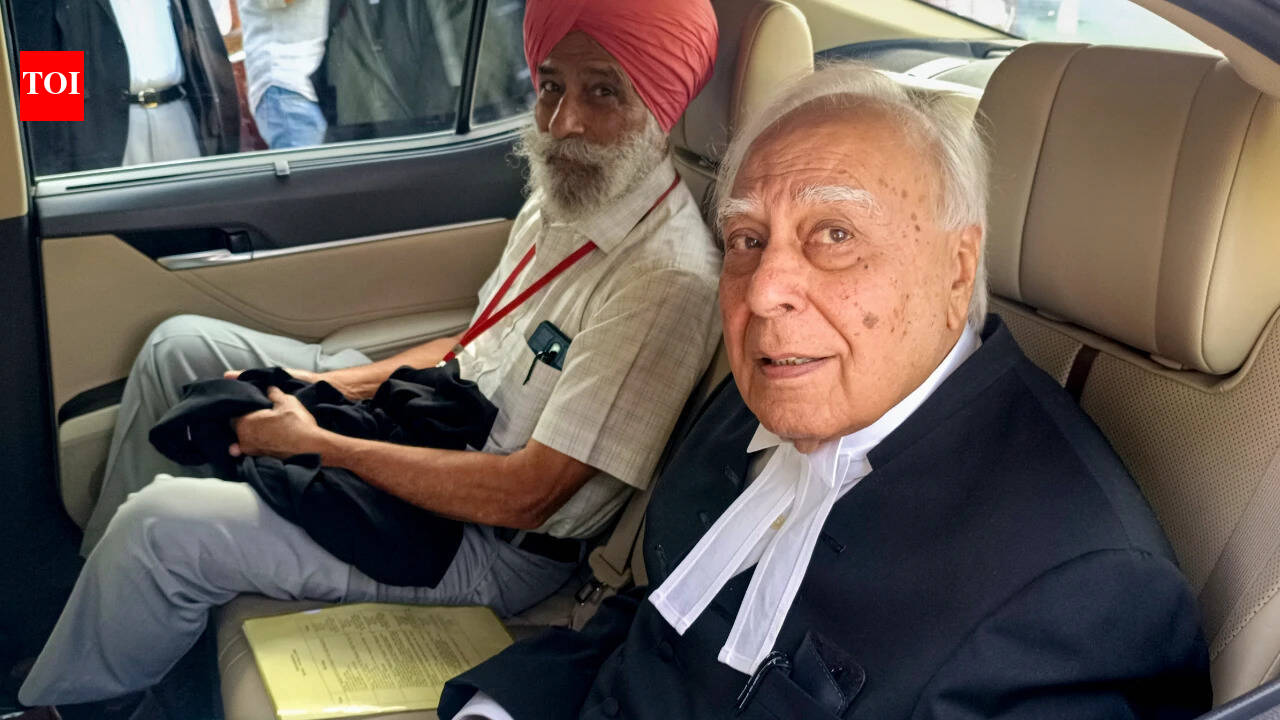
Indian political discourse is currently dominated by debates over judicial faith, opposition leadership failures, and the regulation of protest spaces. Prominent figures like Kapil Sibal and Shivraj Chouhan have offered conflicting perspectives on the state of democracy and institutional integrity.
The Evolving Landscape of Indian Political Discourse
Recent political developments in India have highlighted a complex interplay between judicial oversight, the effectiveness of political opposition, and the fundamental right to public assembly. The discourse is currently framed by three distinct yet interconnected narratives: the restoration of faith in the Supreme Court, the introspection within the Congress party regarding election losses, and the ongoing struggle for civic spaces in the capital.
Judicial Faith and Institutional Trust
Senior advocate Kapil Sibal’s recent remarks regarding the Supreme Court indicate a notable shift in sentiment. After previously venting frustrations, Sibal’s acknowledgement that the court has restored people’s faith underscores the cyclical nature of public confidence in the judiciary. In a democracy, the judiciary acts as the final arbiter of constitutional values, and such shifts in perception from influential legal voices often signal broader trends in how the public perceives the balance of power between the executive and the bench.
Accountability in Political Leadership
Simultaneously, the political arena is grappling with the aftermath of electoral defeats. Shivraj Chouhan, a senior leader, has attributed the Congress party's recent poll failures to 'directionless leadership' rather than the conduct of the Election Commission. This critique shifts the focus from institutional questioning toward internal structural reform within opposition parties. It raises essential questions about whether the failure to secure electoral mandates stems from systemic external factors or the internal inability to formulate a coherent, resonant platform for the electorate.
The Battle for Public Space
The controversy surrounding the designation of protest sites—specifically the reaction to changes at Jantar Mantar—reflects the tension between public order and the right to dissent. The assertion that 'the whole country will become Jantar Mantar' suggests a militant shift in how activists and political groups plan to navigate restrictions on physical protest spaces. When designated areas for public outcry are curtailed, it often leads to a decentralization of protest, which can pose new challenges for municipal governance and security forces.
Historical Context and Future Trends
Historically, Jantar Mantar has served as the epicenter of civil society movements in India, symbolizing the democratic right to petition the government. The current friction over its accessibility suggests that the government is increasingly sensitive to mass gatherings, while the opposition is seeking new ways to organize outside of traditional frameworks. Moving forward, we can expect a heightened emphasis on digital activism and decentralized protest models if the government continues to limit access to traditional physical sites of dissent.
Conclusion: Assessing the Democratic Pulse
In summary, these disparate events collectively paint a picture of an India in transition. The interplay between judicial perception, internal political critiques, and the management of civil unrest remains a key indicator of the health of the nation's democratic institutions. As parties realign their strategies and the judiciary continues to navigate high-stakes constitutional questions, the coming months will likely see a hardening of positions regarding both the legitimacy of democratic processes and the scope of public protest.