Indian Railways expands Kavach 4.0 to 2,490 Route km on Delhi-Mumbai and Delhi-Howrah routes
Source Entity
Anish Mondal
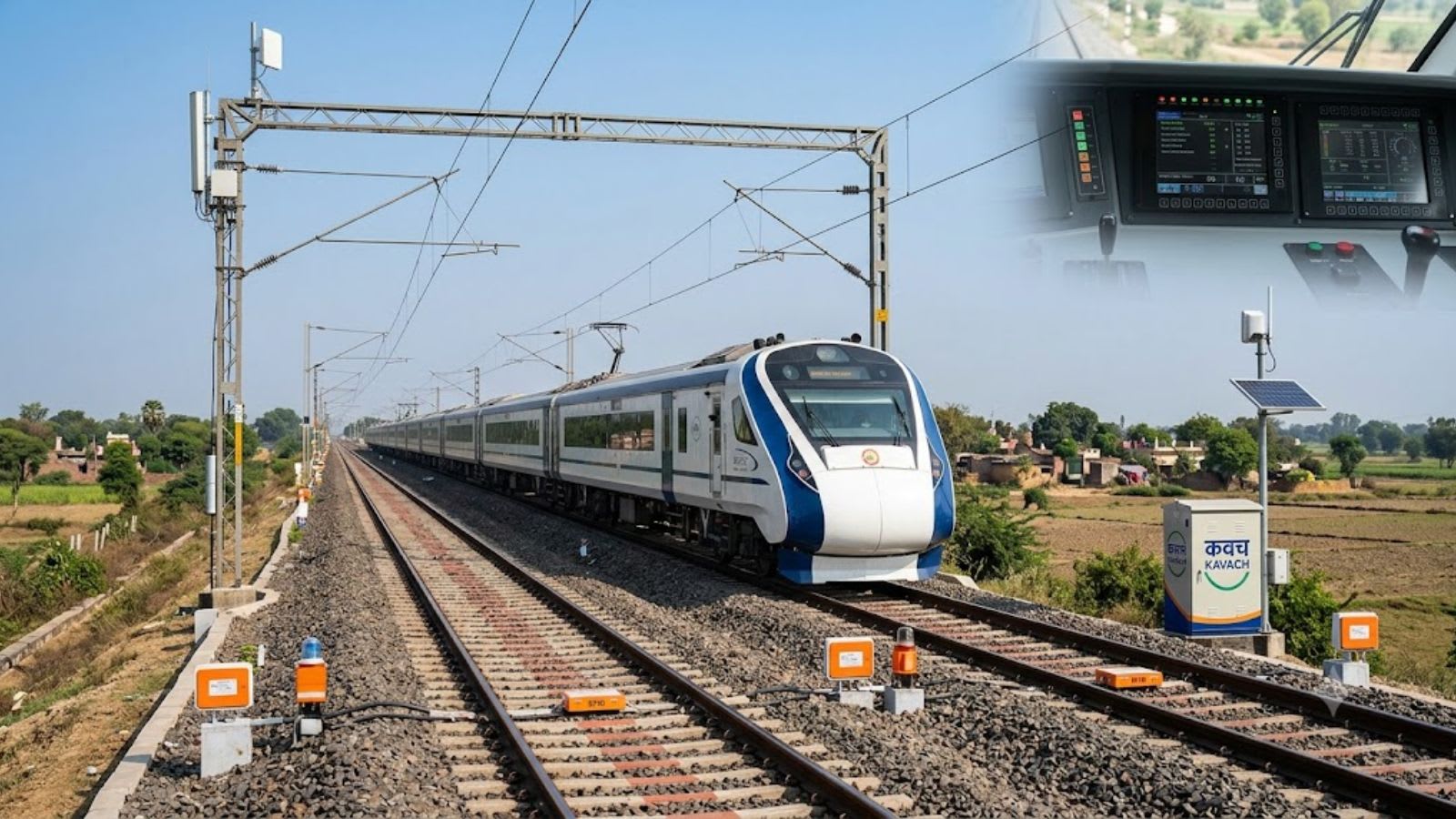
Indian Railways has expanded the indigenous Kavach 4.0 automatic train protection system across 2,490 route kilometers on key corridors. This technology enhances passenger safety by automatically managing speed and braking during critical operations.
Enhancing Rail Safety: The Expansion of Kavach 4.0
The Indian Ministry of Railways has marked a significant milestone in national infrastructure safety by expanding the Kavach 4.0 automatic train protection (ATP) system across 2,490 route kilometers. Covering the critical Delhi-Mumbai and Delhi-Howrah rail corridors, this deployment represents a major leap forward in modernizing one of the world's largest railway networks. By integrating advanced safety protocols, the government aims to mitigate human error and bolster the resilience of passenger transit across these high-traffic arteries.
Understanding the Kavach Mechanism
At its core, Kavach is an indigenously developed system designed to act as a fail-safe for train operations. The technology functions by automatically applying brakes if a locomotive pilot fails to respond to signals or exceeds prescribed speed limits. This is particularly vital during adverse weather conditions, such as dense fog, where visibility is compromised. By ensuring that trains remain within safe operating parameters, Kavach effectively serves as a digital guardian, significantly reducing the risk of collisions and derailments.
Historical Context and Development
The journey of Kavach began long before its current rollout, with the first field trials on passenger trains commencing in February 2016. Following these initial tests, the system underwent rigorous evaluation and independent safety assessments, leading to its formal adoption as the National ATP system in July 2020. The current iteration, Kavach 4.0, reflects years of iterative improvement, incorporating data-driven insights gathered from previous versions to provide a more robust and reliable safety framework.
Broader Strategic Implications
The deployment of this technology is not merely a localized upgrade but part of a broader strategic vision for Indian Railways. As the country moves toward high-speed rail, including the development of seven new bullet train corridors with standardized designs, the need for a unified, high-tech safety net becomes paramount. Kavach provides the necessary technological backbone to support these faster, more frequent train services without compromising the safety standards expected by millions of daily commuters.
Future Trends and Outlook
Looking ahead, the successful implementation of Kavach 4.0 on the Delhi-Mumbai and Delhi-Howrah routes will likely serve as a blueprint for nationwide expansion. As the Ministry of Railways continues to scale this technology, the focus will likely remain on refining the system's responsiveness and interoperability across diverse locomotive types. The transition to a digitized, automated safety environment is expected to become the new standard for Indian rail travel, reflecting a global trend toward intelligent transportation systems that leverage indigenous innovation to solve complex logistical challenges.