Why residents are opposing data centres in Andhra Pradesh and Maharashtra? | Explained
Source Entity
India Latest News: Top National Headlines Today & Breaking News | The Hindu
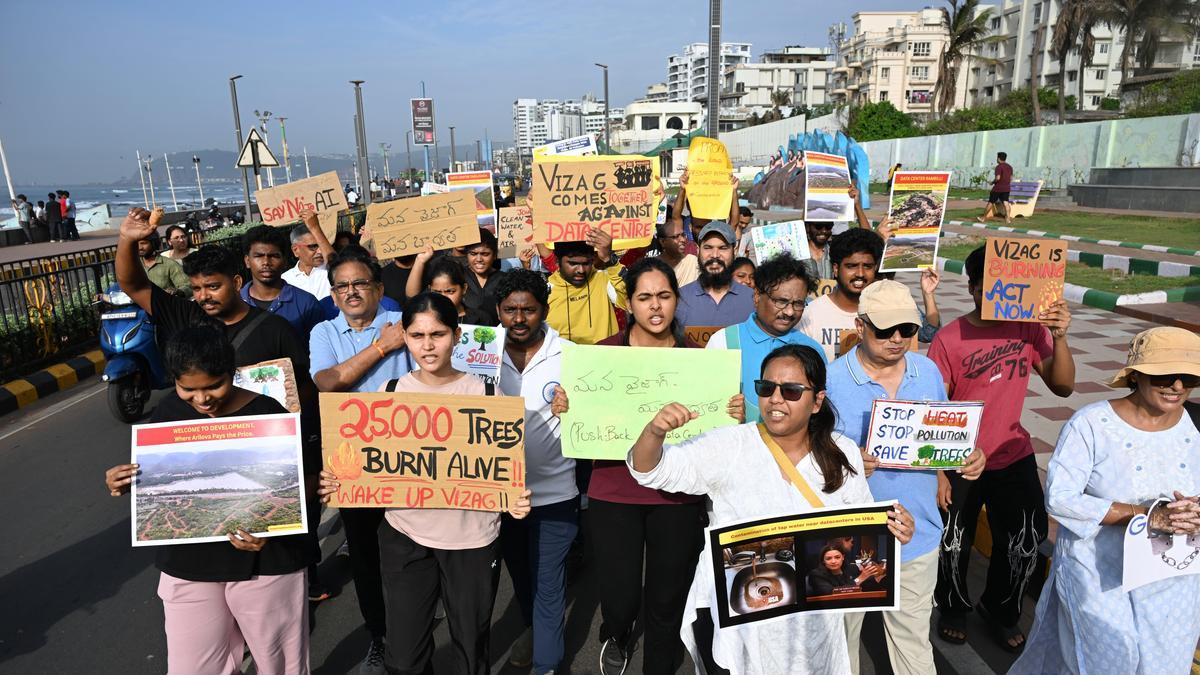
Residents in Andhra Pradesh and Maharashtra are protesting large-scale data center projects led by Google and Amazon. Concerns center on the massive water consumption required for cooling these facilities and the potential impact on local resources.
The Growing Friction Between Digital Infrastructure and Local Communities
Recent demonstrations in Andhra Pradesh and Maharashtra signal a burgeoning conflict between India's rapid digital expansion and the immediate resource needs of local populations. As global technology giants like Google and Amazon seek to establish hyperscale data centers to power the nation’s AI and cloud infrastructure, the physical footprint of these projects—specifically their demand for land and water—has placed them on a collision course with residents.
The Scale of Digital Expansion
In Andhra Pradesh, the scale of development is significant, with the government allocating 601 acres across Visakhapatnam and Anakapalli for a 1GW AI hub spearheaded by Raiden Infotech India Pvt. Ltd. (a Google company) in partnership with AdaniConneX. Similarly, in Maharashtra, Amazon is constructing a massive facility in Thane valued at ₹7,203.29 crore. These projects represent the backbone of India's digital economy, yet they are increasingly viewed by local stakeholders as extractive industries rather than community-building assets.
The Water Crisis Factor
At the heart of the opposition lies the critical issue of water security. Data centers are notoriously water-intensive, requiring millions of liters daily for cooling systems to maintain optimal server temperatures. In regions where water scarcity is already a pressing concern, residents fear that prioritizing the cooling needs of massive server farms will inevitably lead to a depletion of local water tables and reduced availability for domestic and agricultural use.
Land Use and Local Livelihoods
Beyond water, the physical land acquisition for these projects has sparked significant unrest. The 53.73-acre Amazon site in Thane, spanning the villages of Balkum Pada and Majiwada, highlights the tension between urban industrialization and existing residential or agricultural land rights. When massive tracts of land are converted for industrial use, the local ecosystem and the socioeconomic fabric of surrounding villages are often permanently altered, fueling the protests seen this past week.
Future Implications and Policy Challenges
This standoff suggests that the current model of data center deployment may be unsustainable without more robust environmental safeguards. As India aims to become a global hub for AI and cloud computing, the government must balance its industrial ambitions with transparent environmental impact assessments. Future trends suggest that if developers continue to ignore the 'social license to operate,' these projects will face increased litigation, project delays, and potential regulatory hurdles.
Conclusion: A Path Forward
For these projects to succeed, companies and policymakers must engage in proactive dialogue with local communities. This includes exploring alternative, water-neutral cooling technologies, ensuring transparent resource management plans, and demonstrating tangible benefits for the local population. Without a shift toward more sustainable site selection and resource management, the friction between the digital future and local realities is likely to intensify, potentially stalling India's digital momentum.
Verification Required?