Knowledge Nugget | How is Indian Railways rethinking safety and security?
Source Entity
Raveena Baneta
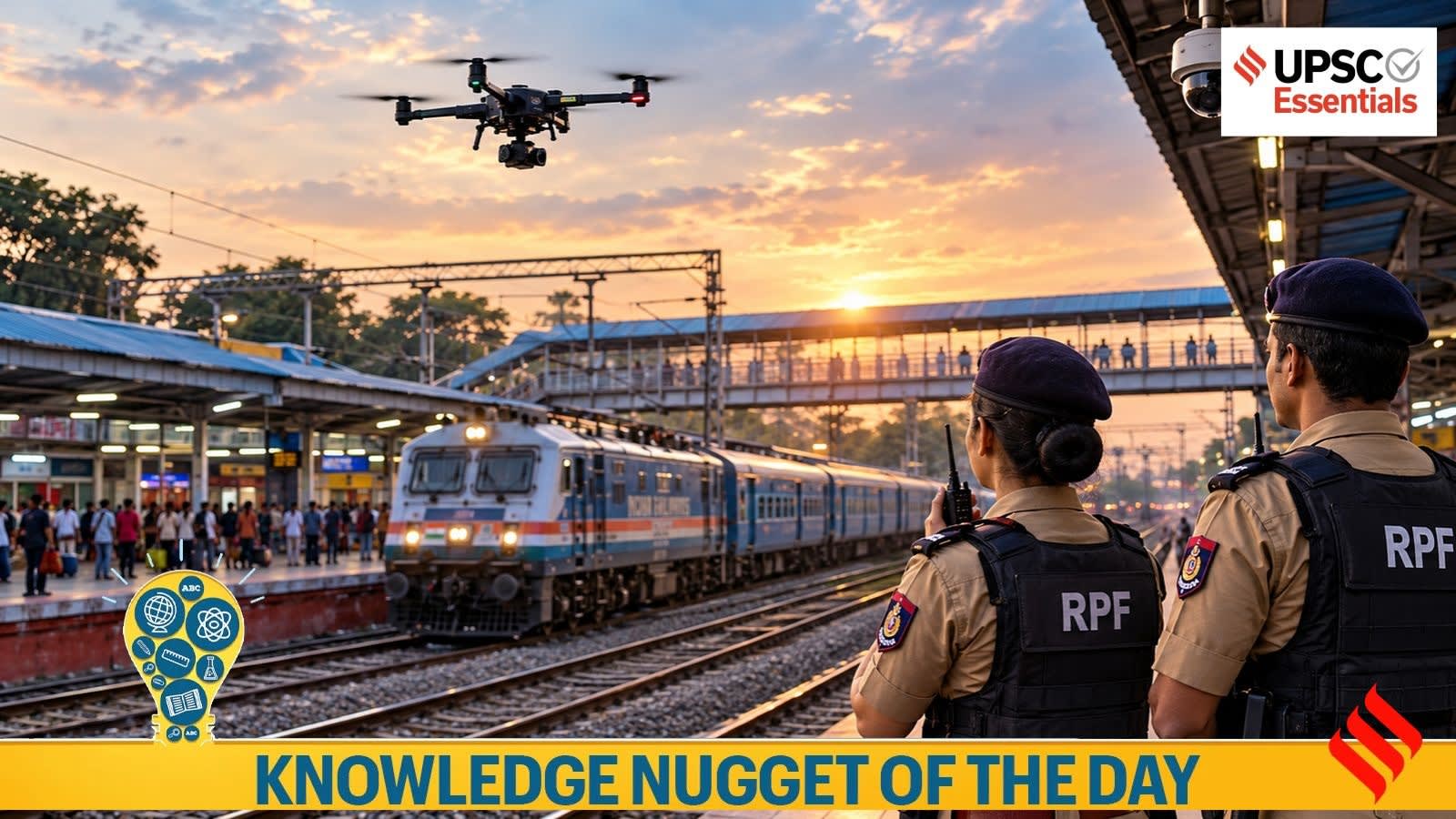
The Indian Railways is prioritizing enhanced passenger safety through the integration of advanced technology and improved inter-agency coordination. These strategic initiatives were finalized during the 8th All India Conference of GRP Chiefs in New Delhi.
Strengthening the Backbone: Indian Railways' New Safety Paradigm
Indian Railways, the lifeline of the nation, is undergoing a critical transformation in its approach to safety and security. As passenger volumes continue to surge, the necessity for a robust, multi-layered security framework has become paramount. The recent 8th All India Conference of Government Railway Police (GRP) Chiefs in New Delhi serves as a testament to this shift, marking a strategic pivot toward proactive rather than reactive security management.
Integrating Technology and Human Intelligence
At the core of these new initiatives is the integration of cutting-edge technology. Modern security is no longer limited to physical surveillance; it now encompasses digital monitoring, real-time data analysis, and predictive threat assessment. By leveraging technology-driven measures, the Railways aims to minimize response times and enhance the efficacy of security personnel across vast, sprawling networks that traverse diverse terrains.
Inter-Agency Synergy and Leadership
Presided over by RPF Director General Sonali Mishra and attended by Railway Board Chairman and CEO Satish Kumar, the conference underscored the importance of institutional alignment. Effective security in a federal structure requires seamless coordination between the Railway Protection Force (RPF) and the state-level GRP. This collaborative spirit, bolstered by the presence of GRP chiefs from across states and Union Territories, ensures that jurisdictional gaps are bridged, creating a unified defense front for travelers.
Community Engagement as a Security Pillar
Beyond hardware and bureaucracy, the initiative emphasizes the role of community engagement. By fostering a relationship between law enforcement and the public, the Railways hopes to create a 'see something, say something' culture that acts as a force multiplier. Empowering passengers to participate in their own security creates a more vigilant environment, effectively turning millions of commuters into eyes and ears for the security agencies.
Future Trends in Railway Security
Looking ahead, the commitment shown by the Railway Board suggests a future where safety protocols are continuously audited and upgraded. The focus on coordination and technology is likely to lead to standardized security operating procedures across all zones. As India continues to modernize its rail infrastructure, these security measures will become the bedrock upon which high-speed and high-capacity rail projects are built, ensuring that rapid development does not come at the cost of passenger well-being.
Conclusion
The initiatives discussed in New Delhi represent a comprehensive roadmap for the future. By balancing technological innovation with administrative synergy and community involvement, Indian Railways is setting a new standard for public transport safety. This multi-faceted approach not only addresses current challenges but also prepares the network for the complexities of modern-day logistics and transit security.